hang seng index

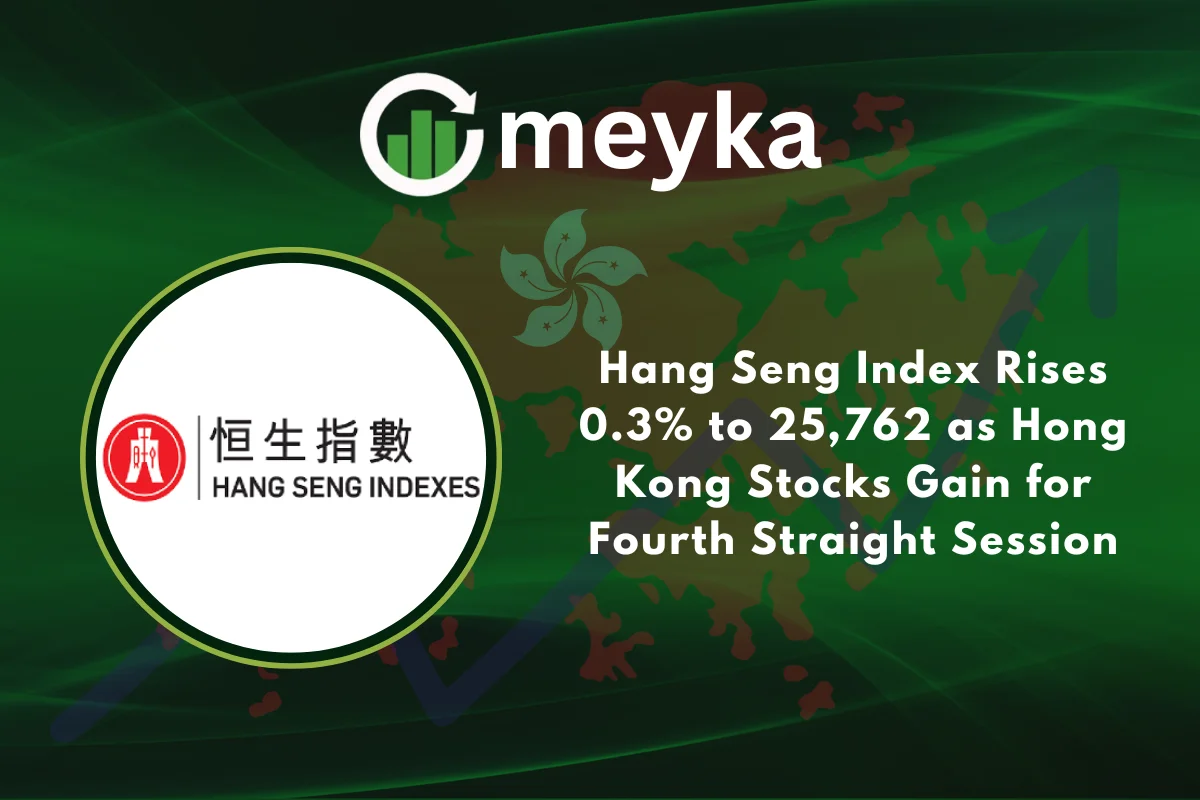
Hang Seng Index Rises 0.3% to 25,762 as Hong Kong Stocks Gain for Fourth Straight Session

The Hang Seng Index rose 0.3 percent to 25,762 on Monday morning trading in Hong Kong, marking its fourth straight session of gains as investors showed renewed confidence in local stocks and broader market sentiment strengthened.

This increase reflects optimism among traders as key sectors advanced, driven by positive cues from global equities and supportive economic policies out of China. While the movement is modest in percentage terms, it illustrates resilience in one of Asia’s most important market benchmarks as the year draws to a close.

What Is the Hang Seng Index and Why It Matters

The Hang Seng Index is a key gauge of the Hong Kong stock market and includes the largest and most actively traded companies listed on the Hong Kong Stock Exchange.

It reflects investor sentiment toward Chinese and Hong Kong equities, and its movements often signal broader trends in Asian markets, especially when compared with other indexes such as the Nikkei or Shanghai Composite. The benchmark covers top companies across sectors like finance, technology, telecommunications, and industrials, making it a critical barometer of economic confidence in the region.

Because of its broad coverage, the Hang Seng is closely watched by global investors and analysts conducting stock research. Its performance can impact investment funds, exchange traded instruments, and cross-border capital flows.

Why the Hang Seng Index Gained for Four Sessions

Several factors contributed to the recent uptrend in the Hang Seng Index:

1. Positive International Market Signals

Hong Kong stocks have benefited from gains in other major markets, particularly in the United States where major indexes showed strength in recent sessions. Global momentum often spills over into Asian trading, lifting confidence in risk assets.

The recovery in technology shares and investor appetite for growth sectors has played a role, although markets remain sensitive to inflation data and monetary policy expectations. Gains in sectors tied to digital platforms and future-focused companies have helped steady the broader index.

2. Supportive Chinese Economic Policy

Recent announcements from Chinese policymakers have helped sustain market optimism. For example, the People’s Bank of China has maintained a supportive stance on interest rates and credit, encouraging lending and borrowing that can fuel investment activity.

This policy backdrop has boosted investor confidence that economic growth can continue without abrupt tightening, encouraging inflows into equities listed in Hong Kong.

3. Sector-Wide Strength

Multiple sectors contributed to the gains in the Hang Seng Index. Technology names, which often overlap with AI stocks and global innovation themes, showed resilience and helped offset weakness elsewhere. Energy, materials, and financial markets also displayed encouraging behavior, underscoring broad participation in the rally.

Notable listed companies that benefitted include some of the region’s largest names known for digital services, internet platforms, semiconductor production, and consumer tech.

How Investors Are Interpreting the Movement

Many market participants see the fourth straight session of gains as a sign that the rebound has some durability, at least in the short term. Traders and analysts continue to monitor risk sentiment, especially given the uncertain backdrop of global interest rates and economic data flows.

Some analysts also point to technical indicators that support the continuation of the uptrend, such as improvement in volume and price momentum. This can attract more trading activity if confidence persists.

However, it is worth noting that markets are not immune to sudden shifts in sentiment, especially when volatility in global growth data or geopolitical tensions increases. For now, the Hang Seng Index’s rise reflects a cautiously optimistic tone among investors.

The Broader Asian Market Context

Hong Kong’s market gains are part of a larger picture where Asian equities have been climbing in recent weeks. Domestic news from China and positive sentiment toward reopening sectors have buoyed multiple regional indexes.

In addition, expectations around interest rate policy and easing inflation have supported investor appetite for equities over fixed income. This dynamic has encouraged traders to resume positions in equities, particularly in growth oriented parts of the market.

When Asian markets perform well, foreign investors often reassess allocations and may increase exposure to markets like Hong Kong, Seoul, and Tokyo. For funds tracking global equities, this can result in noticeable shifts in flows.

Role of Technology and AI Stocks in Recent Gains

Within the Hang Seng Index, technology and innovation focused names have frequently drawn attention from traders looking to capitalize on long term growth trends. These companies often overlap with themes like cloud computing, digital services, and artificial intelligence, which remain focal points for many investors.

Even as some technology stocks experienced volatility earlier in the year, renewed interest in these names has contributed to a more positive market tone. For analysts conducting stock research, movements in these segments can provide clues about broader investor confidence and expectations for future earnings growth.

What This Means for Traders and Long-Term Investors

For short-term traders, four consecutive sessions of gains may signal an opportunity to lock in profits or adjust positions depending on risk appetite and market conditions. Technical signals from charts and volume indicators will play a significant role in near term decisions.

Long-term investors may view the uptick in the Hang Seng Index as part of the natural ebb and flow of market cycles, using dips and rallies to reevaluate portfolio balance. Given the index’s mix of financial, technology, and industrial components, it often reflects broader economic fundamentals.

It is important for individual investors to align their decisions with financial goals, risk tolerance, and research insights rather than reacting solely to daily price moves.

Key Takeaways on the Current Trend

  • The Hang Seng Index gained 0.3% to 25,762, extending a multi-day rally as sentiment improved across sectors.
  • Positive international markets and supportive Chinese policy helped bolster confidence among investors.
  • Technology and innovation oriented stocks contributed to gains, reflecting interest in future growth areas including AI stocks.
  • Ongoing market gains suggest cautious optimism but still require close monitoring given global economic uncertainties.

Conclusion

The steady rise in the Hang Seng Index highlights improving investor confidence as Hong Kong stocks extend gains for a fourth straight session. Supportive policy signals, strength in key sectors, and better global market sentiment have all helped lift the market. While short-term momentum appears positive, investors are likely to remain cautious and continue tracking economic data, policy moves, and broader stock market trends when making decisions.

FAQs

What is the Hang Seng Index?

The Hang Seng Index is a major stock market index that tracks the largest companies listed on the Hong Kong Stock Exchange, serving as a key gauge of market performance in the region.

Why did the Hang Seng Index rise recently?

The index rose due to positive investor sentiment, supportive economic policy in China, gains in major sectors, and favorable global market cues.

How can movements in the Hang Seng Index impact investors?

Movements in the index can influence global investment decisions, reflect broader economic trends, and affect portfolios that include Hong Kong equities or related exchange-traded instruments.

Disclaimer:

The content shared by Meyka AI PTY LTD is solely for research and informational purposes. Meyka is not a financial advisory service, and the information provided should not be considered investment or trading advice.

Similar Posts

Leave a Reply

Your email address will not be published. Required fields are marked *