Hong Kong Deadly Fire: Blaze Exposes Corruption and Systemic Lapses
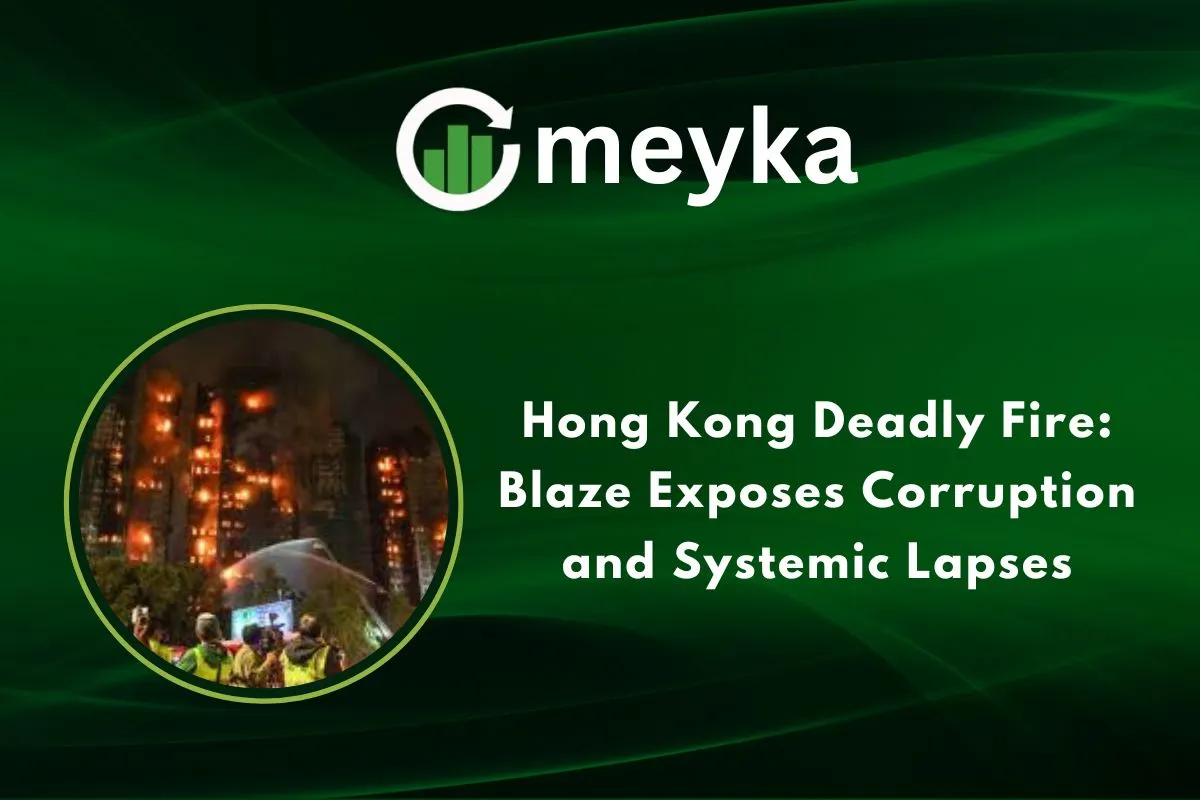
On 26 November 2025, a massive fire broke out at the Wang Fuk Court apartment complex in Hong Kong’s Tai Po district. The flames spread fast. The final toll reached at least 151 people killed, including a firefighter, and dozens were injured. This was not just another accident. It became a symbol, a mirror reflecting deep failures. Failures in building safety. Failures in oversight. Failures born from negligence and, many now say, corruption. We believe this tragedy must wake up Hong Kong and the world to the hidden dangers of lax regulation.
The Fire Incident: What Happened
According to official records, the fire began at 14:51 HKT (local time) on 26 November 2025. Fire officials quickly raised the alarm level: from a small alert to a full “five-alarm” fire by evening. The site was no ordinary building. The entire complex, eight tall towers housing almost 2,000 units, was under exterior renovation. Bamboo scaffolding encased the buildings. Over it hung green mesh and plastic tarps. Foam boards covered the windows. Once ignited, at a corner of one tower, fire raced up the scaffolding. Flames leapt from floor to floor. Within hours, seven out of the eight towers were engulfed. By the time the fire was finally declared under control, roughly 43 hours later, damage was immense. Buildings charred. Smoke still lingered. Many apartments were gutted.
Residents described horror. Some said fire alarms never rang. No warning, no escape. Others knocked door to door to warn neighbours.
Investigation Findings
As rescue operations turned into investigations, authorities began uncovering grim truths. The protective netting used during renovation, supposedly flame‑resistant, failed safety standards. Tests revealed samples from several sites lacked sufficient fire resistance. Foam boards covering windows made the situation much worse. They acted as fuel, allowing fire to spread into apartments quickly. Fire alarm systems reportedly failed to activate during the blaze. Residents claim they didn’t hear any alarms. Authorities have now arrested multiple people connected to the renovation project. Among them are directors, consultants, and subcontractors from the firm hired for the work. Their suspect: gross negligence and possibly corrupt shortcuts to meet deadlines or reduce costs.
Investigators seized bidding documents, employee lists, and communications from the contractor’s offices in police raids. What started as a renovation meant to improve the estate turned into a deadly trap.
Systemic Issues Exposed
This fire isn’t just about one bad contractor. It lays bare deeper structural problems. First: weak regulation and oversight. Multiple inspections reportedly occurred before the fire. Yet defective materials passed safety checks. That raises a critical question: are standards in name only? Second: reliance on outdated construction practices. Bamboo scaffolding is common, but with plastic mesh and foam boards, the risk skyrocketed. Third: poor emergency readiness. Fire alarms failed. Evacuation plans are either missing or ineffective. For a densely populated city like Hong Kong, with many high-rises and renovation projects, that is a recipe for disaster. Fourth: lack of transparency and accountability in renovation contracts. Subcontracting layers, opaque bidding, and possible cost-cutting all create opportunities for corruption.
At its core, the fire exposed a broken system, one where profit and convenience overshadow human safety.
Human and Social Impact
The human toll is more than numbers. It’s lives lost. Families shattered. Futures wiped out. At least 151 people died. Among them, a firefighter died saving others. Many injured remain in the hospital, some in critical condition. Several are still missing. Residents of Wang Fuk Court, long-time dwellers, lost homes, possessions, and memories. Some had lived there for decades. One resident said they bought the flat over 20 years ago. Now it’s all gone. Workers from other countries, including domestic helpers, were among the victims. Their families are far away, now facing grief, guilt, and uncertainty.
The fire stirred deep fear. People across Hong Kong felt vulnerable. If one of the most regulated cities in Asia can fall prey to such an anisaster, what does it say for less regulated areas? Public trust in construction firms and regulatory bodies took a hard blow. Many residents now openly question: “Could this happen again?”
Lessons and Reforms Needed
We cannot let this end as a tragic memory. There must be a change.
Stricter regulation and enforcement
Building materials used in renovations must meet verified fire-safety standards. Fire‑resistant nets and non‑flammable cladding should be mandatory. Every approval must be based on verified compliance, not paper.
Upgrade construction methods
Replace flammable bamboo‑mesh scaffolding setups with safer, modern scaffolding. This may cost more, but protecting lives must be worth it.
Better emergency planning
All residential towers, especially high-rises, need functional fire alarms, sprinklers, escape routes, and regular drills. Residents must know how to evacuate.
Transparency in contracts and oversight
Renovation projects must be open to audit. Bidding processes, material sourcing, and subcontracting must all be traceable. Corruption must be rooted out.
Support for victims & displaced families
Funds, shelter, counselling, and medical care, crucial until lives can be rebuilt. The government and the community must step up.
Conclusion
The “Hong Kong fire” at Wang Fuk Court was more than a blaze. It was a warning. A warning that buildings, our homes, are only as safe as the system that builds and regulates them. We lost over 150 lives. Many are injured or still missing. Entire families destroyed. Homes turned to ashes. This must not be in vain. The tragedy should drive reforms. Stronger laws. Better oversight. Transparent construction. Real safety. Because in the end, real security does not come from fancy renovation projects or green mesh coverings. It comes from respect, respect for human life. And from the willingness to act when safety is at stake.
FAQS
The main cause of death in Hong Kong is cancer (malignant neoplasms).
Hong Kong remains a global city with strong life expectancy and public health standards. However, its economy is under pressure from a real‑estate slump and rising fiscal deficits.
Hong Kong struggles with a weak real‑estate market and shrinking land‑sale revenue. It also faces growing social and environmental problems: older population health issues, air pollution, waste, and housing stress.
Disclaimer:
The content shared by Meyka AI PTY LTD is solely for research and informational purposes. Meyka is not a financial advisory service, and the information provided should not be considered investment or trading advice.