Hang seng index

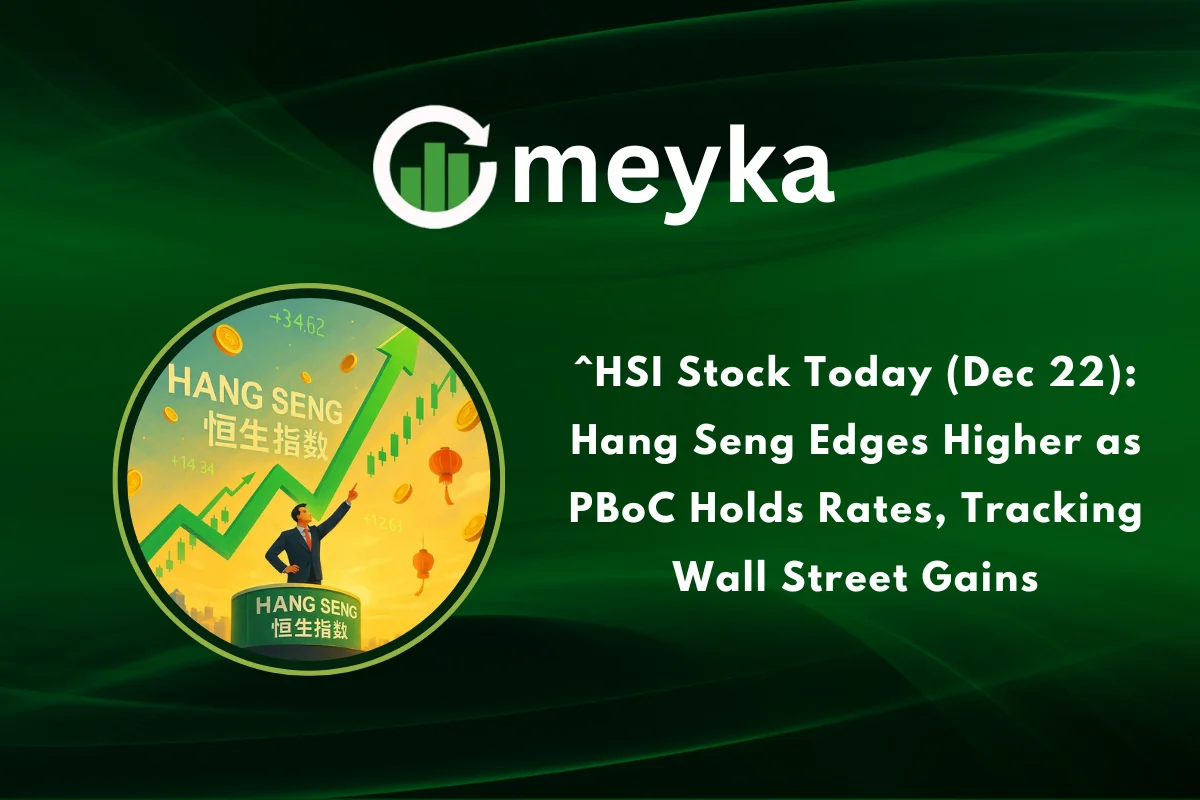
^HSI Stock Today (Dec 22): Hang Seng Edges Higher as PBoC Holds Rates, Tracking Wall Street Gains

The Hang seng index edged higher on Monday, December 2,2 as Hong Kong stocks rose in tandem with gains on Wall Street and after the People’s Bank of China (PBoC) left key interest rates unchanged. Investors in the stock market welcomed the stability in monetary policy and broad positive sentiment from global exchanges, helping push the benchmark slightly above previous levels.

Asian markets continued to digest inflation data and economic signals from both China and the United States, while traders focused on year-end positioning and sector rotations. The Hang Seng, which reflects the performance of major companies in Hong Kong, showed resilience as key sectors such as finance and technology supported the upward move. For many observers and those conducting stock research, the session offered clues about market confidence heading into the final trading days of 2025.

PBoC Holds Rates and Market Reaction

The People’s Bank of China surprised few analysts by maintaining its existing policy stance, keeping both the one-year and five-year loan prime rates unchanged. The decision came after several months of steady economic indicators, including moderated inflation and targeted stimulus measures aimed at stabilizing growth. Although China’s economic data has shown mixed signals, the PBoC’s hold on interest rates was interpreted as support for steady economic momentum.

The decision helped reduce uncertainty among investors who feared further rate tightening could slow economic activity. Instead, market participants saw value in a stable interest rate environment that encourages borrowing and investment. This context played a role in supporting the Hang seng index as investors weighed the implications for corporate earnings, financing costs, and consumer demand.

Tracking Wall Street Boosts Confidence

Global market influence remains strong for Hong Kong equities, especially given the interconnected nature of financial markets. In the United States, major indexes closed higher in the previous session, with gains in technology and industrial sectors leading the way. This positive sentiment flowed into Asian markets, including Hong Kong, as traders anticipated similar strength and momentum.

The Wall Street rally was supported by easing inflation concerns and upbeat earnings reports from corporate America. Technology shares, while volatile at times, contributed to the broader upside, reinforcing confidence among investors that major markets can continue to climb even amid cautious economic signals. The influence of broader global markets on the Hang Seng underscores how international trends can shape local price action.

Sector Drivers Behind the Hang Seng Rise

Several key sectors contributed to the Hang seng index rise on December 22. Financial stocks, which make up a significant portion of the index, responded positively to stability in interest rate expectations. Banking and insurance companies often benefit from predictable monetary policy, as it reduces uncertainty around loan pricing and investment strategies.

Technology and consumer names also supported gains. Although some tech stocks remain volatile, renewed interest in growth areas, including digital services and cloud adoptio,n helped lift sentiment. In some cases, companies tied to longer-term innovation themes similar to AI stocks captured investor interest as potential beneficiaries of future demand, even if short-term earnings are mixed.

Real estate and property-related names showed modest gains as well, driven by expectations that more supportive policies from Beijing could help stabilize the sector. Housing markets in major Chinese cities have faced headwinds this year, and market participants are watching for signs of recovery or targeted government support.

What Investors Are Watching Next

Looking ahead, investors on both sides of the Pacific will monitor several key indicators that could shape future movements in the Hang seng index. First, upcoming economic data releases such as retail sales, manufacturing activity, and employment figures will provide insights into whether consumer and business confidence is strengthening or weakening.

Second, any signals about future monetary policy from the PBoC or other major central banks could influence market direction. While the PBoC held rates this week, traders will be alert to comments from senior policymakers that might hint at future support or tightening efforts. Similarly, Federal Reserve communications in the United States could impact global liquidity and appetite for risk assets.

Finally, corporate earnings announcements in both Hong Kong and global markets will be important. Stronger-than-expected earnings could help sustain the positive momentum, while disappointing results may weigh on sentiment and lead to renewed volatility.

Market Research Considerations

For investors engaged in stock research, it is important to look beyond daily price movements and consider fundamental trends that may shape returns over time. Valuation metrics, earnings growth prospects, and sector-specific drivers remain key components of long-term investment analysis.

For example, financial companies within the Hang Seng often trade on valuations tied to interest rate expectations and credit growth. Technology names may derive value from innovation adoption rates and global demand for digital services. Real estate firms can be influenced by policy actions and consumer confidence in property markets.

Investors should also consider market breadth. While headline index gains like those seen in the Hang Seng can be encouraging, it is equally important to assess whether a broad range of stocks are participating in the rally or whether gains are narrowly concentrated in only a few names.

Risk and Market Volatility

Despite the modest gains seen in the Hang seng index on December 22, there are risks to consider. Global macro conditions, geopolitical tensions, and shifts in investor sentiment can all affect market performance. Trade negotiations, currency fluctuations, and changes in fiscal policy can have outsized impacts on markets that are tightly linked to global growth cycles.

Volatility tends to increase around major economic events, earnings announcements, and policy changes. For traders and investors alike, it is important to manage risk through diversification, defined entry and exit points, and ongoing review of investment theses.

The Broader Market Outlook

As 2025 draws to a close, investors are reflecting on a year that featured mixed economic signals, sector rotations, and episodic volatility. While the Hang seng index managed to edge higher on the last trading week before the holidays, sentiment remains cautiously optimistic rather than exuberant.

Many market watchers believe that stability in monetary policy, coupled with tentative signs of economic stabilization in China, can support a constructive backdrop for markets in 2026. However, they also note that external challenges such as global growth concerns and shifting consumer trends could create headwinds.

This dynamic environment emphasizes the need for thoughtful analysis and long-term perspective. While short-term moves in the Hang Seng and other global indexes may capture headlines, sustainable investment success requires a disciplined approach grounded in data and market insight.

Conclusion

Overall, the Hang seng index showed resilience on December 22 by edging higher amid a stable rate announcement from the PBoC and positive cues from Wall Street. Investors in the stock market demonstrated confidence in key sectors such as finance and technology even as economic indicators continue to evolve. For those engaged in stock research, these market developments serve as a reminder of the importance of balancing near-term news with long-term fundamentals.

Frequently Asked Questions

What is the Hang seng index?

The Hang seng index is a major stock market index that tracks the performance of the largest companies listed on the Hong Kong Stock Exchange and serves as a key gauge of market sentiment in the region.

How did the PBoC’s rate decision affect markets?

The People’s Bank of China held key interest rates steady, which helped reduce uncertainty and supported investor confidence in equities, including the Hang Seng.

Why do Wall Street gains influence the Hang Seng?

Global markets are interconnected, so positive performance in the United States often spills over into Asian markets, lifting sentiment and driving similar moves in benchmarks like the Hang Seng.

Disclaimer:

The content shared by Meyka AI PTY LTD is solely for research and informational purposes. Meyka is not a financial advisory service, and the information provided should not be considered investment or trading advice.

Similar Posts

Leave a Reply

Your email address will not be published. Required fields are marked *