Infosys

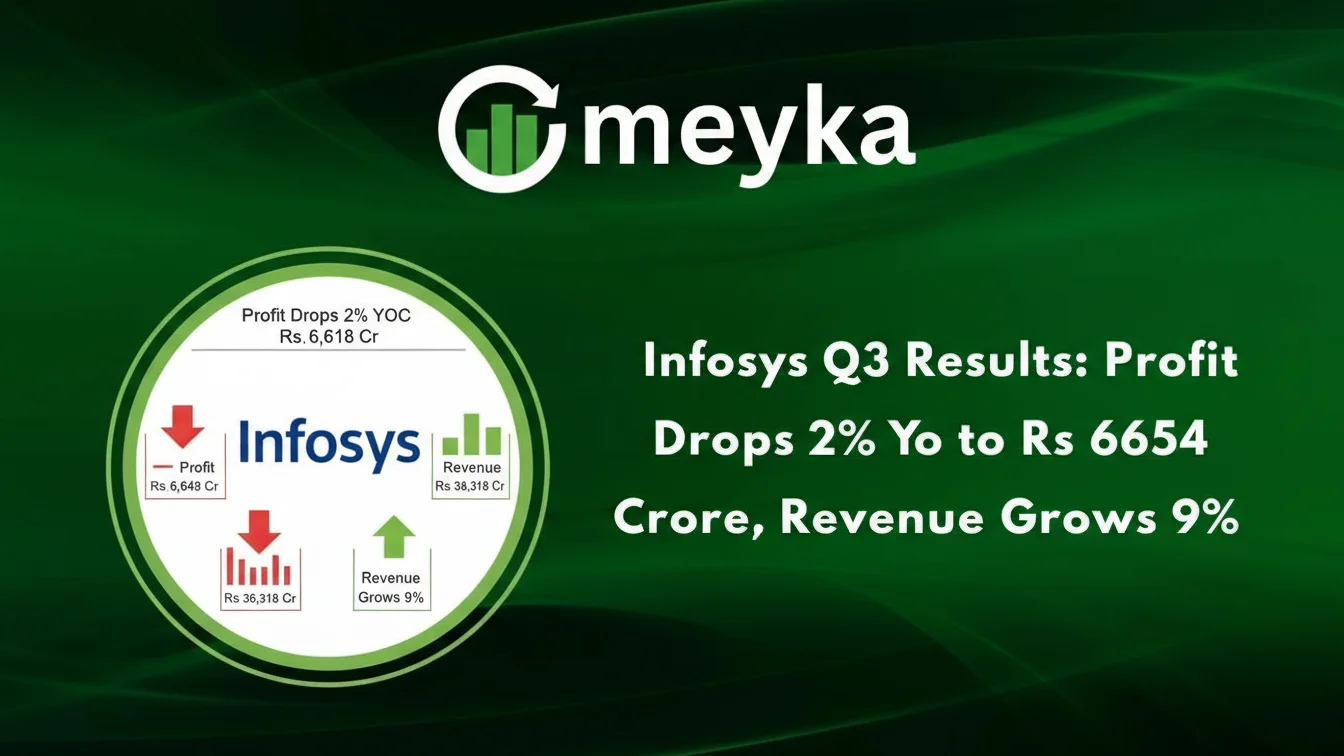
Infosys Q3 Results: Profit Drops 2% YoY to Rs 6,654 Crore, Revenue Grows 9%

India’s IT sector delivered a mixed performance in the third quarter of fiscal year 2026 as Infosys, one of the country’s largest and most influential software services companies, released its Q3 financial results on January 14, 2026. The company reported a 2 percent year‑on‑year (YoY) decline in net profit, with the figure coming in at Rs 6,654 crore for the quarter. Despite the dip in profit, revenue grew by 9 percent, demonstrating resilience in demand for technology services in a changing global economic environment.

The results show that Infosys continues to navigate a complex market marked by shifting client priorities, tight budgets, and ongoing investment in digital transformation. The performance also provides important context for investors conducting stock research, especially as tech stocks and AI stocks continue to shape the broader stock market landscape.

Profit Decline and Revenue Growth Explained

The key highlight from the quarter was that Infosys registered a year‑on‑year drop in profit from the previous period’s levels, despite an encouraging increase in sales. The company achieved revenue of Rs 45,479 crore, up 9 percent compared with the same period last year. This growth was driven by strong demand across financial services and communication sectors, where digital transformation and cloud migration remain focal areas for enterprises.

Analysts note that the profit decline was partly influenced by one‑time impacts and new regulatory expenses, such as costs associated with changes in India’s labour laws, which affected overall profitability. Despite these challenges, Infosys managed to sustain healthy top‑line growth, a sign that clients are still investing in technology and outsourcing partnerships.

Sector Performance and Deal Wins

Infosys’s revenue growth came on the back of a diversified portfolio of deals across industries. The financial services segment recorded solid growth of about 3.9 percent, while the communication sector recorded near double‑digit gains, underlining continued corporate spending on digital projects. Large deals, including those driven by next‑generation technologies such as cloud computing and enterprise automation, contributed to the overall revenue expansion.

One of the noteworthy aspects of the quarter was the company’s ability to secure significant contracts, including major engagements with global clients. These deals not only helped boost revenue but also reinforced Infosys’s position as a trusted partner in delivering complex tech solutions.

This positive trend in deal pipelines is particularly important in a period where client spending across certain discretionary areas remains cautious. The company also reported strong order bookings, with large total contract values up markedly compared to recent quarters.

Margin and Cost Dynamics

While revenue expanded robustly, margins came under slight pressure due to increased costs and investments in strategic areas. Infosys has been allocating more resources toward cloud capabilities, enterprise AI stocks, related solutions, and reskilling its workforce to support evolving client needs.

Operating expenses also included adjustments for regulatory compliance and wage increases, which weighed on profitability. Despite these pressures, the company’s operating margin remained in a reasonable range for the industry, showcasing the firm’s discipline in balancing growth investments with cost management.

Investors and analysts often watch margin metrics closely because they serve as a gauge of how well a company is managing costs while expanding the business, especially in comparison with peers such as TCS and HCLTech.

Impact on Share Price and Investor Sentiment

Following the earnings announcement, the Infosys share price reacted moderately in the market. While some investors were cautious due to the drop in profit, many focused on the strong revenue performance and the raised guidance outlook as reasons for optimism. In the broader stock market, technology stocks often react to both bottom‑line and top‑line indicators, so the mixed results led to a blend of sentiment among traders.

For long‑term investors, the emphasis has been on Infosys’s ability to sustain revenue momentum and maintain healthy deal pipelines, particularly as digital transformation remains a central theme for corporate budgets worldwide. Many market participants conducting stock research highlighted that consistent revenue growth, even amid profit headwind, is preferable to declining sales in a challenging macro environment.

Guidance and Future Outlook

Infosys raised its revenue guidance for the full fiscal year, signaling confidence in continued business demand. The company expects demand to remain solid, particularly in cloud services, AI‑related work, cybersecurity, and enterprise digital transformation. Continued investments in these areas suggest that the firm is positioning itself to capture growth opportunities even as the industry adapts to new technologies and shifting market dynamics.

CEO and Managing Director statements emphasized that while macroeconomic headwinds and short‑term cost pressures exist, the long‑term outlook for technology services remains positive. Companies around the globe continue to prioritize IT modernization, data analytics, application development, and automation, which aligns with Infosys’s strategic focus areas.

Comparisons with Other IT Firms

In the current earnings season, Infosys’s results can be contrasted with results from other major IT services firms. For example, HCLTech posted double‑digit revenue growth, driven by strong demand in certain verticals, while TCS reported revenue increases in its third quarter. These comparisons provide context for evaluating sector performance and competitive positioning.

Investors often track trends across the stock market to assess whether results at one company are isolated or part of a larger industry cycle. In this case, the mixed results from several IT companies suggest that while demand remains healthy, cost pressures and regulatory changes are affecting profitability.

Role of Digital Transformation and AI Services

A key reason why revenue continued to grow at Infosys was increasing client interest in digital transformation solutions, particularly around cloud, data analytics, automation, and AI‑driven platforms. As businesses seek to modernize their operations and improve efficiency, partners like Infosys are well-positioned to support these initiatives.

AI‑related services, in particular, have been gaining traction as enterprises look to embed intelligence into workflows, consumer experiences, and backend systems. While Infosys does not directly equate its success with AI stocks, its growth in areas tied to artificial intelligence and machine learning aligns with broader investment trends where technology leads continue to benefit from innovation initiatives.

Investor Takeaways

For investors and analysts focused on long‑term trends rather than short‑term volatility, the Infosys Q3 results provide several key insights:

  • Revenue Growth Matters: Even with a drop in profit, sustained revenue growth signals ongoing demand for the company’s services.
  • Cost and Margin Discipline: While margins faced pressure, active cost management and selective investment can help drive future scale.
  • Industry Positioning: Infosys remains a leader in IT services with a solid global presence and diversified client base.

Investors conducting stock research should consider both financial performance and strategic positioning when evaluating future prospects, especially in a sector where innovation and client partnerships are crucial for growth.

FAQs

Why did Infosys’s profit decline even though revenue grew?

The profit drop was mainly due to increased costs, investments in strategic growth areas, and one‑time regulatory impacts, while revenue grew due to strong demand for IT services.

How does Infosys’s performance compare with other IT companies?

While some peers reported strong growth in revenue and profit, Infosys’s results were mixed with top‑line expansion but bottom‑line pressure, reflecting broader industry dynamics.

What should investors focus on after these results?

Investors should focus on long‑term demand trends, deal pipelines, margin management, and strategic investments, especially in digital and AI‑related services, when conducting stock research.

Disclaimer:

The content shared by Meyka AI PTY LTD is solely for research and informational purposes. Meyka is not a financial advisory service, and the information provided should not be considered investment or trading advice.

Similar Posts

Leave a Reply

Your email address will not be published. Required fields are marked *