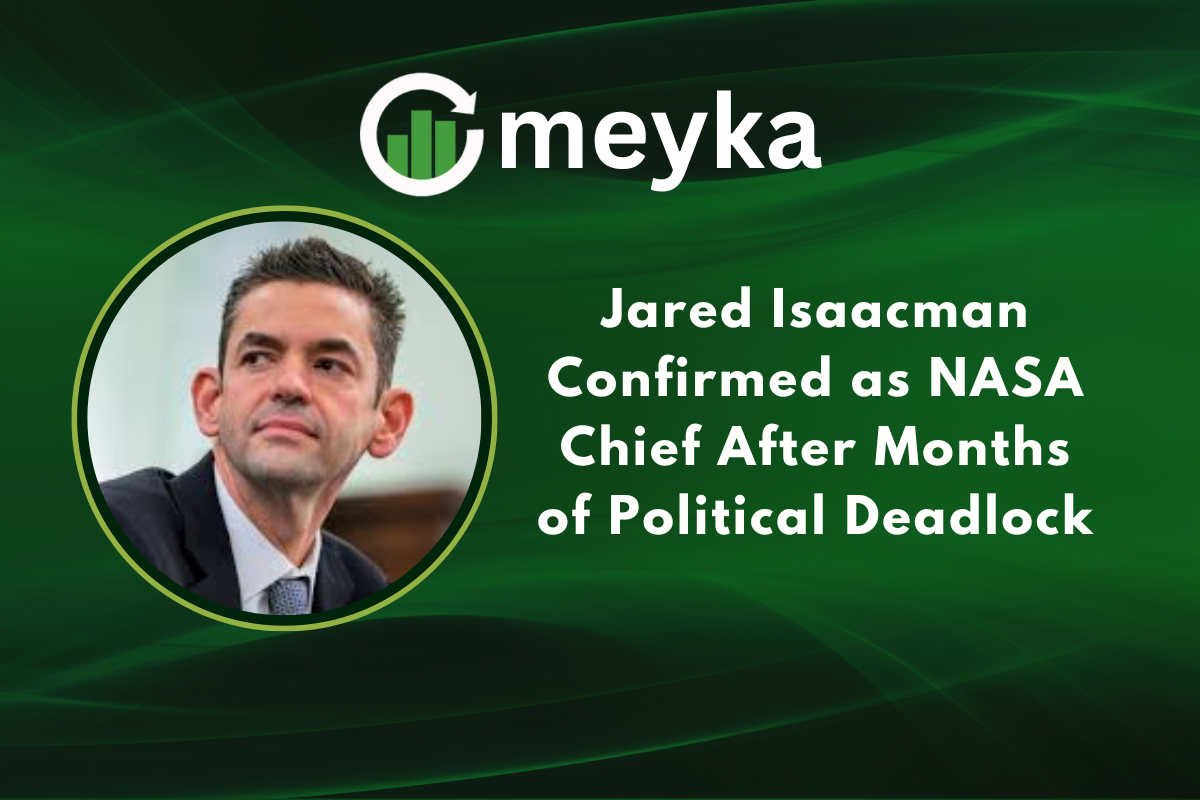
Jared Isaacman Confirmed as NASA Chief After Months of Political Deadlock
After months of waiting, debate, and political tension, Jared Isaacman has finally been confirmed as the new chief of NASA. The decision brings relief to the US space agency, which had been operating without a permanent leader during a crucial time for space missions, lunar plans, and global competition.
The Senate vote ends a long standoff that followed disagreements in Washington and concerns raised over Isaacman’s close ties to private space companies. Still, supporters say his background, experience, and vision make him a strong fit to lead NASA into its next chapter.
So why did this confirmation take so long, and what does it mean for the future of space exploration? Let us break it down step by step.
Who is Jared Isaacman, and why does His Appointment matter
Jared Isaacman: A Business Leader Turned Space Figure
Jared Isaacman is best known as a billionaire entrepreneur and private astronaut. He founded Shift4 Payments and later gained global attention after commanding the Inspiration4 mission, the first all-civilian spaceflight to orbit Earth.
His journey from business to space leadership is unusual, but many see it as a sign of how space exploration is changing.
Why is that important?
Because NASA today works closely with private companies, including SpaceX, Blue Origin, and others. Leaders who understand both government systems and private innovation are now seen as valuable.
How the Political Deadlock Delayed Jared Isaacman’s Confirmation
Months of Senate Delays and Concerns
The confirmation of Jared Isaacman was delayed for months due to political disagreements in the Senate. Lawmakers raised questions about his close relationship with Elon Musk and SpaceX, as well as his lack of traditional government experience.
Some critics worried that NASA’s independence could be weakened if its leader had strong private sector ties.
Others argued the delay was less about Isaacman himself and more about broader political tension following disagreements between former President Trump and Elon Musk.
According to reports from The Guardian and CNBC, these factors combined to stall the process far longer than expected.
What Finally Changed in the Senate Vote
Bipartisan Support Breaks the Deadlock
Despite earlier resistance, the Senate ultimately confirmed Jared Isaacman after bipartisan negotiations. Supporters emphasized his leadership during private missions, his focus on safety, and his public statements committing to NASA’s independence.
Several senators noted that NASA could not afford further delays, especially with Artemis missions, Mars planning, and international cooperation at stake.
A widely shared tweet from political commentators reflected this shift in tone and urgency:
Jared Isaacman’s Vision for NASA
A Focus on Innovation and Exploration
In his confirmation statements, Jared Isaacman said his top priorities include deep space exploration, astronaut safety, and scientific discovery.
He highlighted the importance of the Artemis program, which aims to return humans to the Moon and prepare for future missions to Mars.
What makes his vision different?
Isaacman supports stronger public-private partnerships, faster development cycles, and smarter use of taxpayer funds.
Public and Expert Reactions to Jared Isaacman’s Appointment
Mixed Views but Growing Support
Public reaction has been mixed but increasingly positive. Space industry experts say Jared Isaacman brings hands-on experience that previous NASA chiefs often lacked.
Supporters argue that having someone who has personally flown to space gives him unique insight into astronaut needs.
A tweet capturing public excitement about the confirmation circulated widely online:
At the same time, critics continue to stress the need for transparency and strong ethics rules.
How This Appointment Impacts NASA’s Relationship With SpaceX
Balancing Ties With Oversight
One of the biggest questions surrounding Jared Isaacman is how he will manage NASA’s relationship with SpaceX, where he has flown on missions funded by Elon Musk.
Isaacman has pledged to step back from any conflicts of interest and follow strict ethics guidelines.
Why does this matter?
NASA relies heavily on SpaceX for launches, cargo delivery, and crew missions. Trust and fairness are critical to maintain public confidence.
Another widely shared tweet raised these concerns and hopes:
What This Means for Artemis and Moon Missions
Artemis Program Gets Leadership Stability
With Jared Isaacman now confirmed, NASA’s Artemis program finally has steady leadership. The program aims to land astronauts on the Moon and build long-term lunar infrastructure.
Delays in leadership had raised concerns about schedules and budgets. Isaacman’s confirmation reassures partners and international allies.
Experts believe his background in managing large-scale projects will help keep Artemis on track.
International Response to Jared Isaacman as NASA Chief
Global Space Partners Watch Closely
NASA works with space agencies across Europe, Japan, Canada, and beyond. International partners welcomed the end of uncertainty.
They are now watching how Jared Isaacman balances innovation with diplomacy.
A viral post from international observers summed up the moment:
Concerns Raised and How Jared Isaacman Addressed Them
Ethics and Independence Promises
During hearings, Jared Isaacman faced tough questions about conflicts of interest. He responded by promising transparency, ethics compliance, and clear separation from private ventures.
He agreed to financial disclosures and oversight measures to ensure NASA remains a public first agency.
Will this be enough?
Time will tell, but many lawmakers say his commitments were clear and strong.
Why This Moment Is Important for US Space Policy
A Turning Point for NASA Leadership
The confirmation of Jared Isaacman marks a shift toward leaders who blend government roles with private sector experience.
This reflects how space exploration itself has changed. NASA no longer works alone. It collaborates with startups, global partners, and private astronauts.
Supporters say this approach keeps the US competitive in a fast-changing space race.
What Comes Next for Jared Isaacman and NASA
First Challenges on the Job
As NASA chief, Jared Isaacman faces immediate challenges. These include budget negotiations, mission timelines, and workforce morale.
He also must address long-term goals like Mars exploration, climate science, and space safety.
Can he deliver?
His supporters believe his track record suggests he can.
Conclusion: A New Chapter Begins for NASA
The confirmation of Jared Isaacman as NASA chief ends months of uncertainty and opens a new chapter for the agency.
His mix of business leadership, spaceflight experience, and public accountability sets him apart from past leaders.
While concerns remain, the focus now shifts to action, results, and the future of space exploration.
For NASA, for astronauts, and for the world watching the stars, this moment matters.
And for Jared Isaacman, the journey has only just begun.
FAQ’S
Jared Isaacman is a billionaire entrepreneur and private astronaut known for leading the Inspiration4 space mission. He was chosen because of his strong leadership background, firsthand spaceflight experience, and understanding of public-private partnerships that now play a key role in NASA missions.
The confirmation was delayed due to political deadlock in the US Senate, concerns over his close ties to private space companies like SpaceX, and broader disagreements in Washington over space policy and leadership independence.
His appointment brings stability to NASA leadership and is expected to support major programs such as the Artemis Moon missions, Mars planning, and international space cooperation with a stronger focus on innovation and efficiency.
Jared Isaacman has committed to strict ethics rules, full financial transparency, and stepping back from private space ventures to ensure NASA decisions remain independent and focused on public interest.
The confirmation marks a shift toward leadership that blends government oversight with private sector experience, reflecting how modern space exploration relies on collaboration between NASA and commercial space companies.
Disclaimer
The content shared by Meyka AI PTY LTD is solely for research and informational purposes. Meyka is not a financial advisory service, and the information provided should not be considered investment or trading advice.