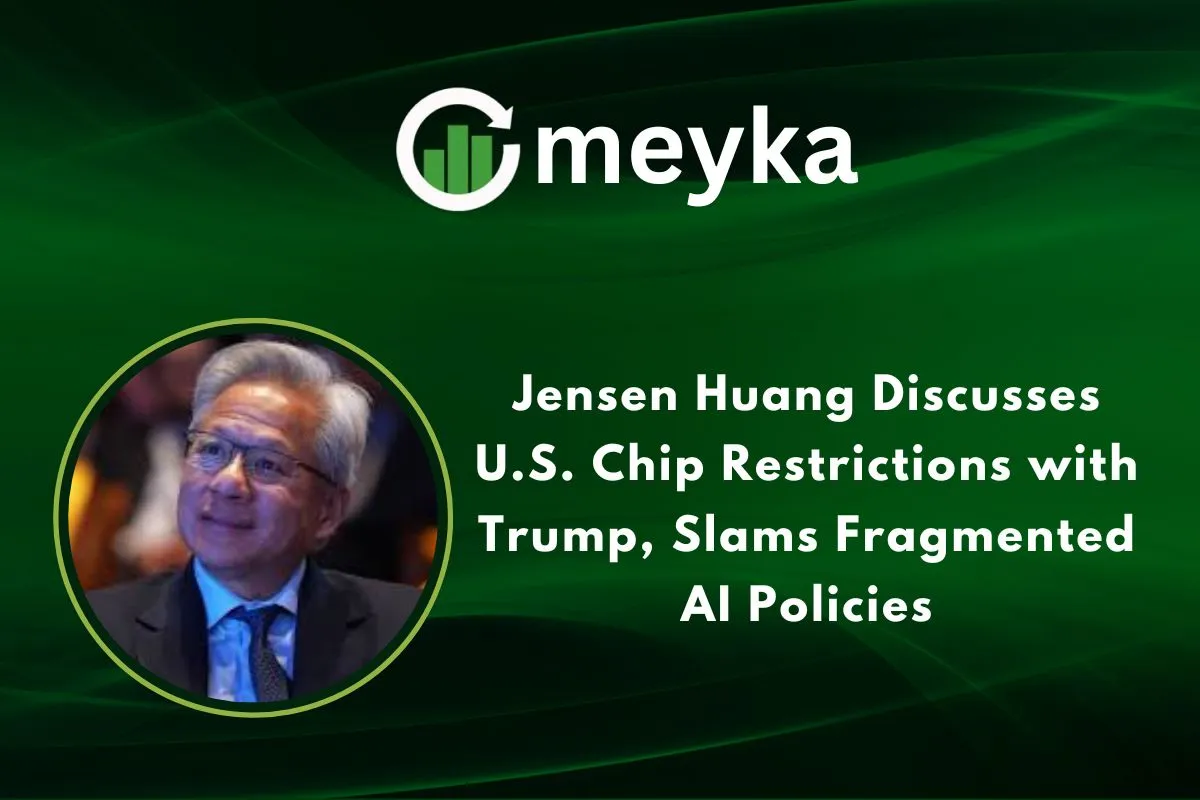
Jensen Huang Discusses U.S. Chip Restrictions with Trump, Slams Fragmented AI Policies
We are at a turning point, where technology, business, and politics meet. Recently, Jensen Huang, CEO of Nvidia, sat down with Donald Trump and top U.S. lawmakers to discuss America’s chip restrictions. Their talk matters. Because the chips in question power the global AI revolution. The world is watching. As restrictions tighten, the race for AI dominance grows fiercer. Who wins, and who loses, could reshape the future of technology.
Why Chip Restrictions Became a Flashpoint
In recent years, the U.S. government has placed strict export controls on advanced AI chips, aiming to keep cutting-edge technology from reaching rivals. These rules were meant to protect national security. But critics argue that they damage American companies more than they slow down foreign rivals. According to Huang, the controls have already taken a big toll. At a tech conference in Taipei, he said the restrictions slashed Nvidia’s AI-chip market share in China from about 95% to 50%. He labeled the export controls a “failure,” saying they pushed Chinese firms to innovate faster rather than hold back.
For Nvidia, this matters not only in lost sales, but it also undermines its role in the global AI economy. As Huang puts it, China remains home to a large share of the world’s AI researchers and developers.
What Happened in the Meeting with Trump
On December 3, 2025, reports confirmed that Jensen Huang met with Trump in Washington. During their discussion, Huang voiced concern that strict U.S. chip-export rules and “fragmented” AI policy could hamper America’s lead in global tech. Trump, in turn, praised Huang as a “smart man” and acknowledged his arguments. The conversation highlights how important Nvidia, and more broadly, the chip industry, has become in shaping U.S. AI strategy.
Why Huang Calls U.S. AI/Chip Policies “Fragmented”
When Huang talks about “fragmented policies,” he refers to a mix of complex rules, shifting export licenses, and an unclear long-term strategy. This patchwork can make it hard for companies to plan ahead. He argues this uncertainty hurts innovation more than it helps. Companies hesitate to invest; researchers delay projects. Meanwhile, global competitors quietly build their own tools. That, he says, puts America’s leadership at risk. This point came up during his meeting with U.S. lawmakers.
How Nvidia Is Being Affected
For Nvidia, the impact is real. Sales to China, once a major market, have fallen sharply. The company took a multi-billion-dollar hit on unsold chips blocked by export rules. Still, Huang says Nvidia hopes to bring business back. The company received export licenses to resume sending modified chips, like H20, to China. And Huang has not ruled out eventually exporting Nvidia’s newest family of chips (the “Blackwell” lineup) to China, though no decision exists yet. But this comeback depends on stable, clear policies, the kind Huang has been pushing for.
Bigger Picture: What This Means for Global AI
The back-and-forth between regulatory control and market demand is more than corporate drama. It may shape who leads global AI. Because when the U.S. slows itself, others may fill the gap. For example, companies in China have accelerated the development of their own AI tools and chips. By cutting off the supply of U.S.-made chips, policies can unintentionally fuel foreign innovation. If the U.S. continues with unclear or shifting rules, businesses worldwide may lose confidence. That could give other countries a chance to set the future standards of AI, not America.
What to Watch Next
After the meeting, attention turns to the U.S. Congress and the White House. Will they create clearer, unified rules for AI and chip exports? Or will controls tighten further in the name of security? The outcome could change everything. For companies like Nvidia, but also for AI researchers, startups, and consumers everywhere. Meanwhile, Nvidia continues to push for access to global markets. Huang has said he will keep pressing for a more stable framework.
Conclusion
Right now, we’re witnessing a critical moment. The U.S. stands at a crossroads: continue with heavy restrictions that may slow down global AI progress, including America’s, or craft smart, open policies that balance security and innovation. Huang warns that without clarity and consistency, America could lose its edge. And he may be right. These chips don’t just power computers. They power ideas. They power progress.
If we want America and the world to stay at the forefront of AI, we need rules that help, not hinder. And for now, what happens next will matter to all of us.
FAQS
Jensen Huang spoke out because he believes the chip rules hurt U.S. tech companies. He says the limits slow innovation and push other countries to make their own chips faster.
The rules cut Nvidia’s sales in key markets like China. This reduces revenue and slows product plans. Nvidia also must redesign chips often to follow changing policies.
He thinks mixed rules create confusion for companies and researchers. Clear and unified AI policies help teams plan better, invest safely, and keep the United States strong in global technology.
Disclaimer:
The content shared by Meyka AI PTY LTD is solely for research and informational purposes. Meyka is not a financial advisory service, and the information provided should not be considered investment or trading advice.