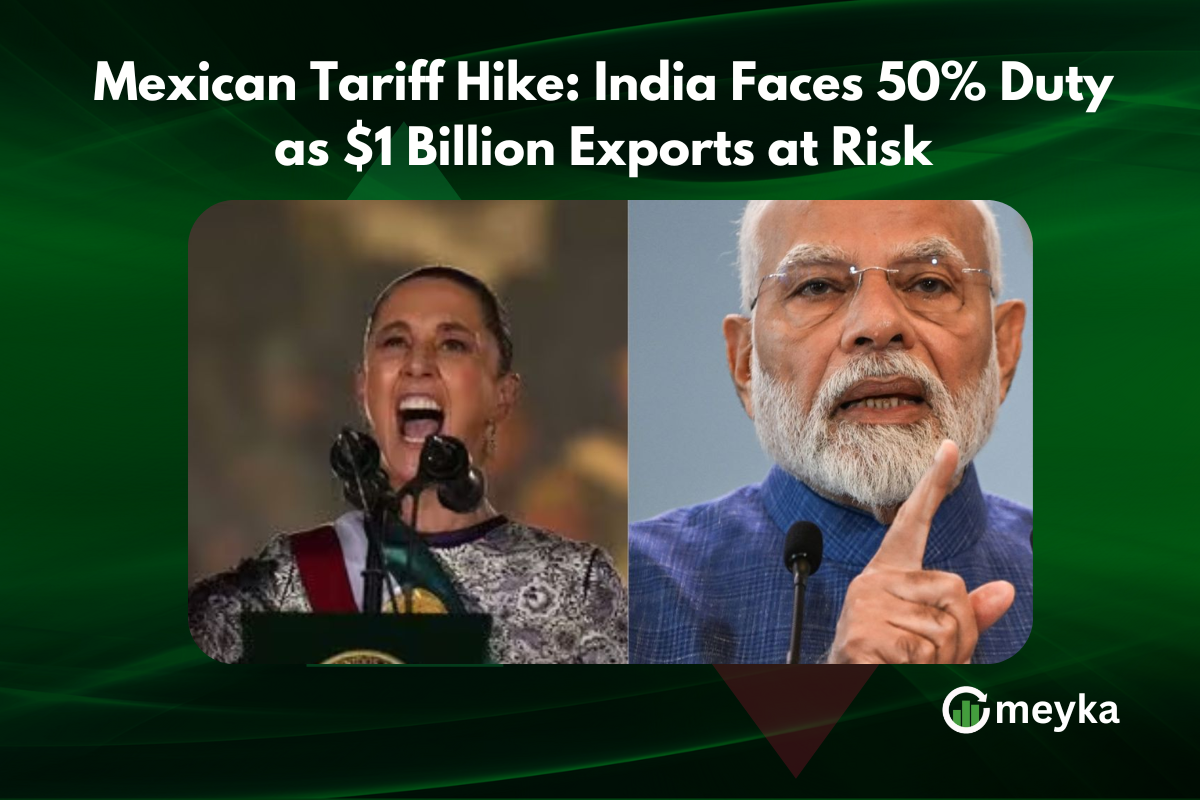
Mexican Tariff Hike: India Faces 50% Duty as $1 Billion Exports at Risk
In a major shift in global trade policy, Mexico has introduced a significant Mexican tariffs increase that will impose up to 50% import duties on goods from countries without free-trade agreements, including India.
This decision, set to take effect from January 1, 2026, threatens as much as $1 billion in Indian car exports and places pressure on key industrial sectors that have flourished in recent years due to expanding global supply chains.
This article explains what the Mexican Tariff means, why it was introduced, how India is affected, and what could happen next.
What Is the Mexican Tariff and Why Has It Been Raised?
The Mexican Tariff refers to the new import duties introduced by the Mexican government that raise tariff rates to as much as 50% on selected foreign goods. The products affected include automobiles, auto parts, steel, textiles, plastics, electronics, and other industrial items exported from nations that do not have a trade agreement with Mexico.
Why Is Mexico Raising Tariffs Now?
Mexico says the hike is aimed at protecting domestic industries, helping local jobs, and reducing reliance on imported products. This protectionist strategy comes at a time when global trade tensions have been intensifying, and Mexico is aligning certain policies to maintain its competitive position under the United States-Mexico-Canada Agreement (USMCA) and more broadly in global markets.
Some experts also suggest that geopolitical factors and pressure from major trading partners may have influenced the timing of the tariff hike.
What exactly does this tariff do?
Simply put, a Mexican Tariff of up to 50% means that goods imported into Mexico from India and similar countries will cost much more, making them less competitive and far more expensive for Mexican buyers.
How Will the Mexican Tariff Impact India’s Exports?
$1 Billion in Indian Auto Exports at Risk
The biggest worry for Indian exporters is the automobile sector, where shipments to Mexico total around $1 billion annually. The Mexican Tariff raises the duty on passenger cars from 20% to 50%, making Indian vehicles less price-competitive compared with local production or imports from trade-agreement partners.
Major Car Exporters Affected
Indian carmakers that could feel the pinch include:
- Volkswagen Group from India
- Hyundai Motor India
- Nissan
- Maruti Suzuki
Many of these companies rely on Mexico as a key export market to improve production economies of scale and global distribution.
Are Other Sectors Also Affected?
Yes. Beyond automobiles, the Mexican Tariff will affect a broad range of goods exported from India, including:
- Auto parts and engineering goods
- Steel and metal products
- Textiles and apparel
- Plastics and synthetic materials
- Household and consumer items
- Electronics and chemicals
Estimates suggest that as much as $5.75 billion in total exports could face increased tariffs, though the real impact will vary across categories.
Why Is Mexico Targeting Countries Like India?
Mexico’s tariff policy applies to nations without a free trade agreement with it. Countries with such deals are exempt or have lower duties. India does not have a free trade agreement with Mexico, which makes Indian goods subject to steep duties.
Is this aimed at one country in particular?
While some may think the move targets China, analysts say it affects all non-FTA partners equally, and India is part of a larger group that includes South Korea, Thailand, and Indonesia.
Is There a Strategic or Political Angle to This Tariff?
Many economists believe that the Mexican Tariff has a political dimension. Since Mexico’s largest trading partner is the United States, aligning trade policies with the US may be seen as a strategic move ahead of another USMCA review and in the context of wider protectionist trends globally.
What exactly is being taxed at 50%?
Passenger cars, auto parts, steel products, textiles, and similar items from India and other non-FTA partners will see their import duties rise to around 50%.
Why is Mexico doing this now?
Mexico wants to boost domestic manufacturing, reduce import reliance, and align its trade policies with larger partners under agreements like USMCA.
Will the tariff affect consumer prices in Mexico?
Yes. Higher import tariffs usually mean that foreign goods become more expensive for buyers, which can lead to higher retail prices in Mexico.
What Are the Immediate Reactions in India?
Industry Pushback
Trade bodies like the Federation of Indian Export Organisations (FIEO) have expressed concern about the tariff hike, noting that it may undermine India’s export competitiveness and damage long-standing trade relations with Mexico.
Industry representatives have been urging the Indian government to engage with Mexican authorities and seek relief or exemptions.
Government Response
India is closely monitoring the development, and officials are considering diplomatic and trade policy options, including pushing for a bilateral trade agreement that could mitigate tariff barriers in the future.
Will there be negotiations?
Sources suggest that trade talks, including possible negotiations on free trade or partial trade agreements, could be pursued to address the tariff issue, though outcomes remain uncertain.
What Could Happen Next for Indian Exporters?
Restructuring Trade Strategies
Indian companies may consider:
- Shifting export focus to markets with better trade terms
- Forming partnerships with Mexican firms to partially localise production
- Exploring tariff mitigation strategies through negotiated trade deals
Possible Diplomatic Talks
India may intensify trade diplomacy with Mexico and other nations to seek exemptions or gradual tariff reductions in sensitive sectors.
Adjusting Supply Chains
To stay competitive, exporters might alter supply chain routes, produce goods locally, or diversify export baskets to include items not heavily taxed.
Global Trade Context: Where Does the Mexican Tariff Fit?
The Mexican Tariff is part of a broader set of global trade shifts that include similar actions by other nations. Some connections include:
- Protectionist tariffs by the United States against India, also imposed at 50% on certain goods earlier in 2025.
- Rising global focus on local manufacturing incentives
- Geopolitical trade adjustments with supply chain realignments
Together, these elements highlight a broader trend toward trade policy shifts aimed at strengthening domestic industry, but also risking friction with major trading partners.
What This Means for Indian Businesses and Consumers
Impact on Exporters
Indian manufacturers, especially in the automobile sector, may face:
- Declining competitiveness in the Mexican market
- Fewer export orders due to higher duties
- Pressures to rethink production and distribution strategies
Impact on Consumers in Mexico
Mexican consumers could see:
- Higher prices for imported Indian goods
- A shift toward locally produced or alternative goods from FTA partners
Long-Term Trade Relationships
While short-term disruptions are likely, businesses and government negotiators may work toward more stable, long-term trade agreements that benefit both countries.
Featured Video Explainers
Here is a clear visual explanation of this topic:
This video helps break down why Mexico raised tariffs, the industries affected, and potential long-term consequences for global trade.
Another perspective on Mexico’s new tariff impact:
Conclusion: Mexican Tariff Effects and What Comes Next
The Mexican Tariff hike up to 50% is a major development that will reshape export dynamics between India and Mexico starting in 2026. It presents both a challenge for Indian exporters and an opportunity to rethink trade strategies, including pushing for bilateral trade agreements, enhancing export competitiveness in new markets, and diversifying industrial exports.
While the tariff hike could disrupt $1 billion in vehicle exports alone, it also highlights the importance of international trade diplomacy and flexible supply chains in an evolving world economy.
FAQ’S
The Mexican government has imposed a 50 percent tariff on several Indian exports, mainly affecting cars and automotive shipments. This tariff makes Indian products costlier in the Mexican market and puts nearly 1 billion dollars of export value at risk for India.
Mexico raised the tariff to support its domestic auto industry and reduce dependency on low-cost imported vehicles from countries like India and China. The decision came despite heavy lobbying efforts from global automakers, who warned that the tariff could harm supply chains and increase consumer prices.
The 50 percent duty will raise the landing cost of Indian made cars in Mexico, reduce competitiveness, and may lead to a significant drop in export volumes. Automakers like Hyundai, Suzuki, Kia, and other India-based exporters may face production cuts, disrupted export schedules, and reduced profitability due to the sharp decline in demand.
India is expected to hold diplomatic trade discussions with Mexico to seek relief or tariff exemptions. However, early reports indicate that Mexico is firm about supporting local manufacturing, making negotiations challenging. Any breakthrough will likely depend on future trade agreements, diplomatic pressure, or changes in Mexico’s industrial policy.
Disclaimer
The content shared by Meyka AI PTY LTD is solely for research and informational purposes. Meyka is not a financial advisory service, and the information provided should not be considered investment or trading advice.