LinkedIn Down

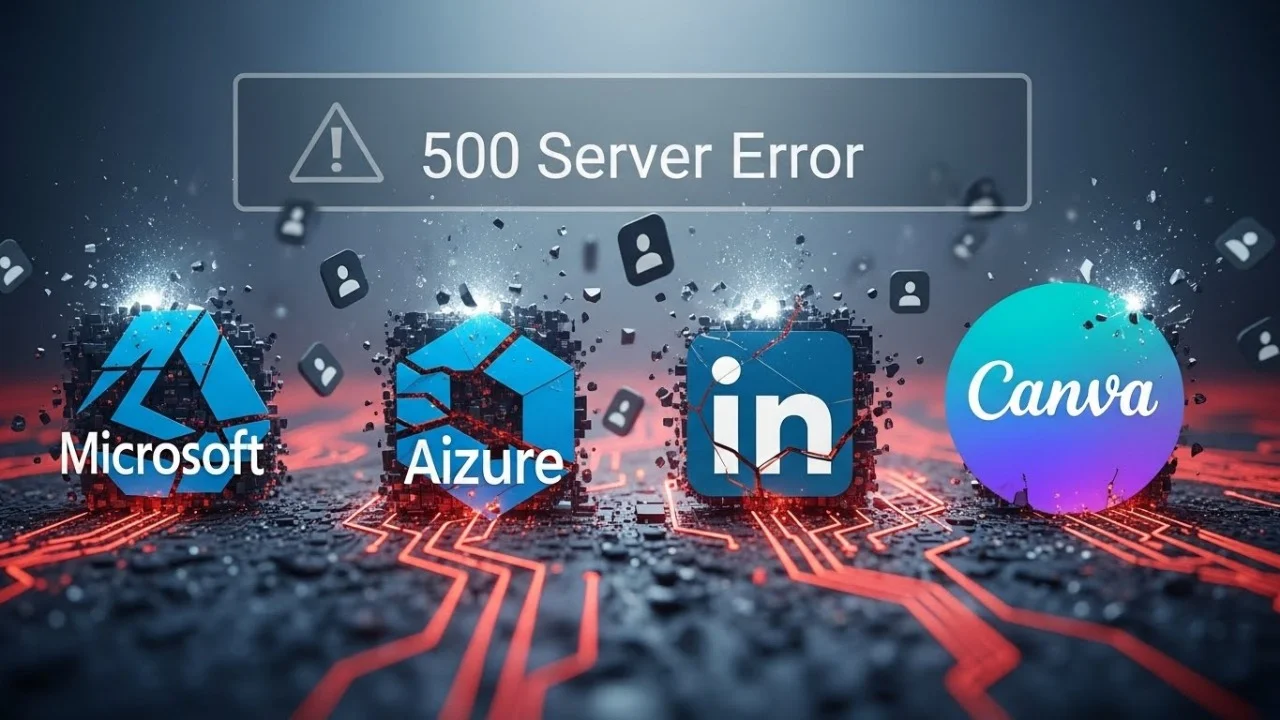
Microsoft azure down? LinkedIn, Canva Down Users Report 500 Server Error: What’s Causing the Outage?

On December 5, 2025, clouds formed over the internet, quite literally. Microsoft Azure experienced a global outage that disrupted access to many major services worldwide. As billions of users scrambled to reload pages and sign in again, reports surfaced that LinkedIn, Canva and other popular platforms were showing the dreaded 500 Internal Server Error.

What Went Wrong with Azure on December 5, 2025

According to Microsoft, the outage began around midday ET after a configuration change in Azure’s infrastructure, specifically affecting Azure Front Door, a global content delivery and application delivery network. This glitch caused DNS failures, routing delays, and widespread service disruptions.

Major services that rely on Azure, including cloud‑hosted applications, enterprise tools, and websites, were impacted. Some companies reported thousands of user‑incident reports at the peak of the outage. Among the affected services were business‑critical platforms, social media, productivity suites, and design tools.

By late evening, Microsoft announced that services were being restored. Error rates and latency dropped to pre‑incident levels, though a few users reported intermittent issues for some time afterward.

Did LinkedIn and Canva Go Down, Or Is It Just a Perception?

As word spread of the Azure failure, many users flocked to community forums and outage trackers reporting that LinkedIn was down. The phrase LinkedIn Down quickly began trending across social media and status‑polling websites. One tracker showed multiple “Inaccessible” and “Error Received” reports from users in the United States, Europe, and beyond.

Similarly, Canva, which relies on cloud infrastructure to serve millions of users globally, registered its own spike in error reports. Users saw failures while loading designs, saving work, or downloading assets. The site’s official status page later confirmed a major outage for certain users on that day.

Why the Outage Was a Big Deal

1. Reliance on Cloud Infrastructure

The incident exposed how deeply we depend on a handful of cloud providers. When one major service goes down, especially one as central as Azure, it can ripple across countless apps.

2. Business and Productivity Disruption

For professionals, creatives, and enterprises that depend on platforms like LinkedIn for networking or Canva for design work, even a few hours of downtime can mean lost productivity, missed deadlines, or disrupted campaigns.

3. Reputation & Trust Risks for Platforms

Frequent or long outages can damage a platform’s reputation. Businesses that promise uptime and reliability may face scrutiny or lose user trust if outages become common.

4. Reminder: Backup & Multi‑Cloud Strategies Matter

Many experts now view this outage as a clear warning: depending solely on one cloud provider is risky. Using multiple cloud services or backup solutions can help avoid future disruptions.

Social Pulse, What Users Were Saying

Many users report service disruptions on social media, with hashtags like #LinkedInDown trending on X.

Today’s Reddit posts, users vented frustration and confusion about the outage:

“Was posting on LinkedIn and got a Cloudflare error. Checked Downdetector — multiple services seem down at the same time.” (reddit.com)

These posts confirm that the December 5, 2025 outage is affecting real users globally and generating significant chatter online. Many of the reports reflect intermittent access issues, confirming that the problem is widespread but not necessarily affecting every region equally.

What’s Next, Will This Happen Again?

Microsoft says the root cause was a configuration error in Azure Front Door.The company is reviewing its change‑management and deployment procedures and recommends clients use multi‑region and multi‑cloud strategies for critical services.

For users, experts suggest: always keep backups, enable local caching where possible, and if you run a business relying heavily on the web, consider redundancy across multiple providers.

Given how much of the internet is underpinned by a few infrastructure giants, occasional disruptions may continue. But with clearer processes and redundancy measures, the impact can be minimized.

Final Thoughts

The December 5, 2025 outage at Microsoft Azure, which caused downtime for LinkedIn, Canva, and many other services, was a stark reminder of the central role cloud providers play in daily digital life. For users and businesses alike, it underscored the need for reliable infrastructure, backup plans, and awareness that even the biggest platforms can go offline.

If you experienced this outage, or are managing online services yourself, treat it as a wake-up call: build for resilience, expect disruptions, and stay informed.

FAQs

Was LinkedIn actually down today?

Yes. Many users reported access issues and “500 Internal Server Error” messages today, corroborated by outage trackers and social platforms like Reddit.

What caused the outage?

Microsoft confirmed the outage was triggered by a configuration error in Azure Front Door, a core routing and content delivery service. That error disrupted DNS and routing, which hampered access to multiple cloud‑hosted services globally.

Is LinkedIn safe now, and how can I avoid issues in future?

As of December 5, 2025, LinkedIn’s reported downtime numbers are back to normal, and the service is operational. For future protection, using multi-cloud services or keeping backups helps reduce risk from similar outages.

Disclaimer:

The content shared by Meyka AI PTY LTD is solely for research and informational purposes. Meyka is not a financial advisory service, and the information provided should not be considered investment or trading advice.

Similar Posts

Leave a Reply

Your email address will not be published. Required fields are marked *