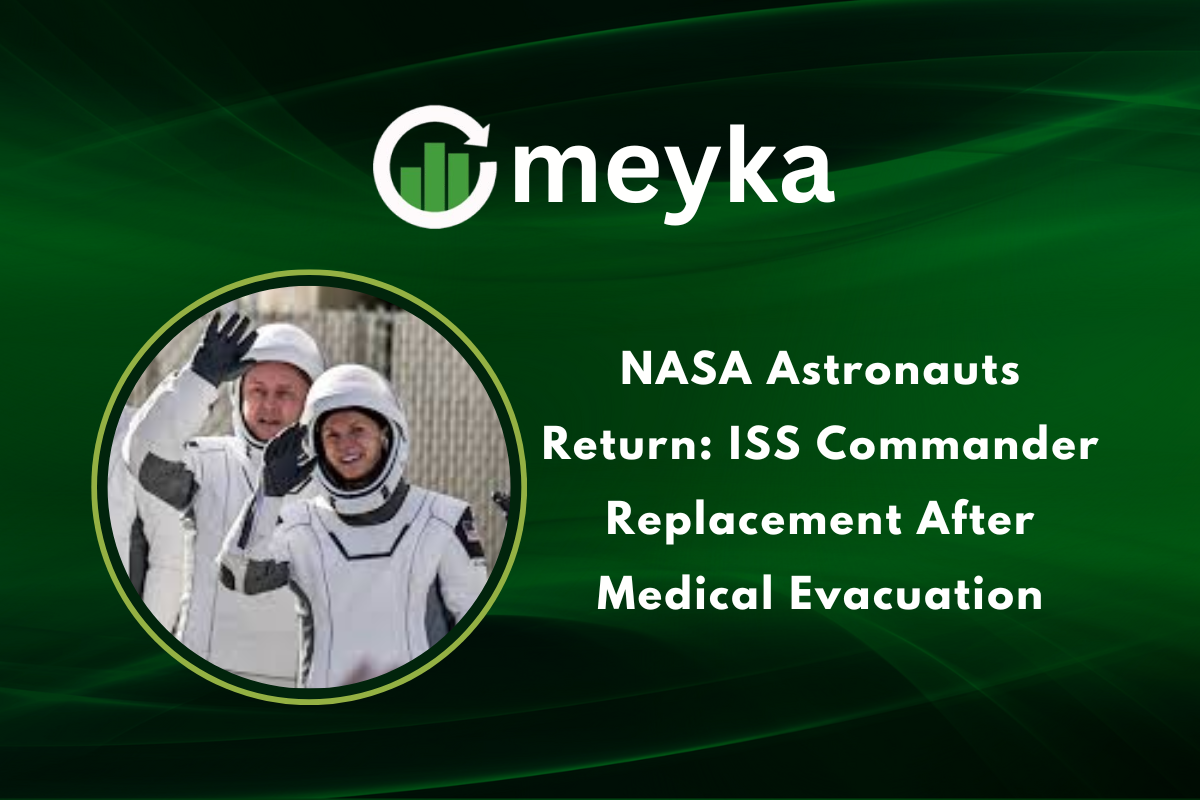
NASA Astronauts Return: ISS Commander Replacement After Medical Evacuation
NASA astronauts return to Earth following one of the most unusual and carefully managed situations in recent spaceflight history. A medical emergency aboard the International Space Station forced NASA to make a rare and unprecedented decision, bringing one astronaut home early and appointing a new ISS commander to maintain mission safety and stability.
This event has drawn global attention because medical evacuations from orbit are extremely rare. The International Space Station is more than four hundred kilometers above Earth, moving at thousands of miles per hour. Every decision made in such moments must balance human health, spacecraft safety, and international mission responsibilities.
So what exactly happened on the ISS, why did NASA act so quickly, and what does this mean for future space missions? Let us explain everything clearly, step by step, using confirmed information and expert context.
What Happened on the International Space Station
The situation began when a NASA astronaut aboard the ISS experienced a medical issue that could not be fully treated in orbit. According to live updates from Space.com, NASA flight surgeons and mission control teams closely monitored the astronaut’s condition before deciding that a return to Earth was the safest option.
Medical events in space are taken very seriously. Astronauts undergo years of training and strict health screening, but spaceflight places unique stress on the human body. Microgravity affects circulation, vision, muscles, and the immune system. Even minor symptoms on Earth can become more complex in orbit.
Why did NASA choose evacuation instead of treatment on the station?
Because the ISS has limited medical equipment. While astronauts are trained in emergency care, certain diagnostics and treatments are only possible on Earth. NASA medical teams concluded that returning the astronaut was the best path to recovery.
Fox News later described the move as an unprecedented call, emphasizing that astronaut safety always comes before mission timelines or scientific goals.
NASA Astronauts Return and the Decision to Act Early
NASA astronauts return missions are planned months or even years in advance. Changing those plans is not simple. Spacecraft schedules, docking ports, and crew assignments all must align perfectly.
In this case, NASA coordinated with international partners to arrange the astronaut’s return aboard a spacecraft already docked at the ISS. The return was carried out safely, following strict reentry and landing protocols.
Why act early instead of waiting?
NASA experts say early action reduces risk. Waiting too long could worsen symptoms or limit recovery options. Acting early gives doctors more control and better outcomes.
A widely shared post from NASAWatch captured the seriousness of the decision and the attention it received across the space community:
ISS Commander Replacement and Mission Continuity
When one astronaut leaves early, it affects more than just crew numbers. The ISS commander’s role is critical. The commander is responsible for crew coordination, safety procedures, and communication with mission control.
After the medical evacuation, NASA and its partners appointed a replacement ISS commander from the remaining crew. This ensured leadership continuity and avoided operational gaps.
Why is the commander role so important?
The ISS operates twenty-four hours a day. Experiments, maintenance, and emergency readiness depend on clear leadership. A smooth transition helps maintain normal operations and crew morale.
NASA confirmed that the commander replacement followed established protocols and did not disrupt ongoing scientific work.
How Medical Evacuations From Space Work
Medical evacuations from the ISS are rare but planned for. Every long duration mission includes contingency procedures for illness or injury.
Key elements include:
- Medical monitoring by flight surgeons on Earth
- Emergency return vehicles docked to the ISS
- Trained crew members capable of assisting during emergencies
Astronauts returning early undergo immediate medical checks after landing. These tests help doctors understand how spaceflight affected the condition and guide recovery.
Experts note that the ability to bring astronauts home safely at short notice is a major achievement of modern spaceflight systems.
NASA Astronauts Return and Human Spaceflight Safety
NASA astronauts return stories remind the public that space exploration is still risky, even with advanced technology. Human safety remains the top priority.
Over the years, NASA has improved onboard medical training, telemedicine support, and emergency planning. These systems proved effective in this case.
Why does this matter for future missions?
Because upcoming missions to the Moon and Mars will involve longer travel times. Lessons learned from ISS medical cases help NASA design safer missions farther from Earth.
Public and Expert Reaction to the NASA Decision
The space community largely praised NASA for acting quickly and transparently. Experts emphasized that the agency followed best practices and placed astronaut health first.
Public interest surged as people followed live updates and official statements. Many noted how calm and controlled the process appeared, even under pressure.
Fox News coverage highlighted expert opinions that supported NASA’s call, noting that medical evacuation from orbit is never taken lightly.
Key Reasons NASA Chose an Early Return
- Protect astronaut health before symptoms worsen
- Ensure access to full medical facilities on Earth
- Maintain safety and stability aboard the ISS
- Avoid long-term mission risks
What Changed on the ISS After the Evacuation
- Crew roles were reassigned smoothly
- A new commander took charge
- Scientific experiments continued as planned
- Communication with Earth remained uninterrupted
What This Means for NASA’s Future Missions
This event will likely influence planning for Artemis missions and future deep space travel. Medical autonomy will become even more important as missions move farther from Earth.
NASA continues to study how the human body responds to spaceflight. Each real-world event adds valuable data that improves training, equipment, and decision-making.
Some analysts note that mission planning now uses advanced simulation tools similar to those applied in AI Stock research, where scenarios are modeled before decisions are made. In spaceflight, these simulations can save lives.
The Role of Technology in Astronaut Health Monitoring
Modern spacecraft rely on constant data streams. Heart rate, sleep patterns, and physical activity are monitored daily. These systems allow early detection of health issues.
As technology evolves, NASA may adopt more predictive systems similar to AI stock analysis methods, where trends are identified before problems escalate.
This blend of human judgment and data-driven insight is shaping the future of space medicine.
Why NASA Transparency Builds Public Trust
NASA’s clear communication during this event helped build confidence. Regular updates, expert explanations, and open acknowledgment of the situation prevented misinformation.
In a time when space missions are watched closely, transparency is as important as technology.
Conclusion: NASA Astronauts Return Safely and Lessons Learned
The NASA astronauts return following a medical evacuation marks a rare but important moment in spaceflight history. It shows how far human space exploration has come and how safety systems work when it matters most.
From early detection to a smooth return and seamless commander replacement, NASA demonstrated careful planning, expert decision-making, and a strong commitment to human life.
As missions grow longer and more complex, these experiences will shape the future of space travel. For now, the safe return of the astronaut and the continued success of the ISS mission stand as a reminder that in space, preparation and care make all the difference.
Disclaimer
The content shared by Meyka AI PTY LTD is solely for research and informational purposes. Meyka is not a financial advisory service, and the information provided should not be considered investment or trading advice.