Netflix Q4

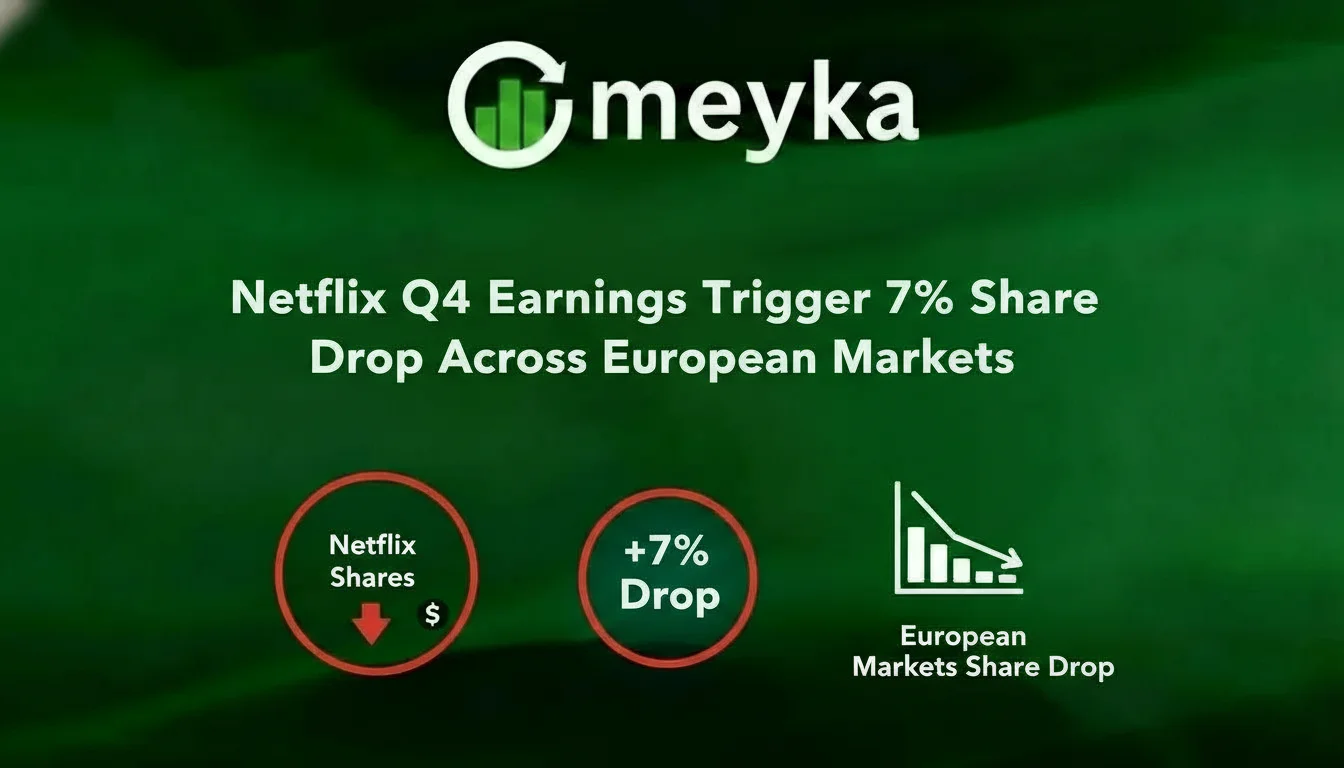
Netflix Q4 Earnings Trigger 7% Share Drop Across European Markets

Netflix Q4 earnings recently made headlines after the company reported its fourth quarter results, yet even with solid numbers. The stock fell sharply across European markets, particularly on major exchanges like Frankfurt where shares slid about 7% in early trading, marking a negative reaction from investors despite beating expectations on revenue and earnings. This market response highlights how investor sentiment and forward-looking guidance can outweigh positive top-line results in the modern stock market environment, especially for high-profile tech and media companies.

Strong Q4 Results but Weak Market Reaction

Netflix’s fourth quarter numbers were strong on paper with revenue of about $12.05 billion, up roughly 18 % year-over-year, and earnings per share of $0.56, slightly surpassing analyst forecasts, supporting a narrative of continued growth as subscriber numbers climbed to over 325 million global paid members.

Despite updating global reach and beating most Wall Street estimates, the market reaction was surprisingly weak in Europe. Shares of Netflix fell about 7% on the Frankfurt exchange, even though the company reported these strong quarterly figures. The reasons go beyond the headline numbers and into investor expectations and future plans.

Why Netflix Shares Dropped in European Markets

1. Forward Guidance and Investor Expectations

Even though Netflix Q4 results beat expectations, the company gave forward guidance for future quarters that was less optimistic than some analysts had hoped. This includes slightly softer revenue and earnings predictions for the next quarter and operating margin guidance that did not fully meet consensus, which triggered caution among investors.

This kind of sentiment often drives short-term market reactions more than actual results because investors are constantly forward-looking. When guidance signals slower growth or a more conservative outlook, stocks may fall even if the underlying results exceed expectations.

2. Impact of Strategic Moves and Cash Allocation

Netflix also announced it would pause its share buyback program to conserve cash, in part to support its ongoing bid to acquire Warner Bros. Discovery, which has raised questions about capital allocation and raised concerns over debt or dilution risks. This strategic shift may have contributed to investor anxiety, leading to the share drop, especially in European markets where foreign investor sentiment can be more sensitive to corporate finance decisions.

The decision to pause buybacks in favor of other strategic investments signals that Netflix is willing to prioritize long-term content and M&A strategy even at the cost of short-term shareholder returns. For some investors, this trade-off can trigger selling pressure, particularly in markets like Europe where dividend and buyback strategies are heavily valued.

3. Slowing Subscriber Growth Concerns

Another factor influencing the share price was the pace of subscriber growth. Although Netflix added members and now sits above 325 million subscribers, growth in the fourth quarter was not as explosive as some market participants hoped. Slower subscriber expansion can dampen enthusiasm among traders who view membership increases as critical to future monetization plans.

Market Conditions and Broader Investor Sentiment

The stock market is highly sensitive to sentiment, particularly for stocks in competitive and high-growth sectors like streaming media and entertainment. Changes in interest rates, global economic concerns, and emerging competition from other digital platforms also play a role in how investors evaluate Netflix’s prospects relative to other potential investments.

Additionally, comparisons to AI stocks and tech companies with strong growth narratives can shift investor interest away from traditional digital entertainment firms toward businesses perceived as having massive future returns fueled by emerging technology trends.

How Netflix Q4 Results Stack Up for Investors

Despite the negative short-term reaction, many long-term analysts and investors view the Q4 performance as fundamentally solid. The revenue growth of nearly 18 % year-over-year and consistent subscriber momentum show that Netflix continues to expand its global footprint and diversify its revenue streams, including advertising revenue, which is expected to grow significantly in the coming year.

For investors conducting stock research, key metrics to watch include:

  • Revenue growth vs. operating costs to see how efficiently Netflix is scaling.
  • Subscriber additions and retention rates, which can drive future revenue.
  • Profit margins and content spending, as these impact long-term profitability.
  • Cash flow and capital allocation, especially in light of strategic spend like acquisitions.

These factors are critical in understanding whether the company’s strategy will translate into sustainable long-term value for shareholders even if short-term price action is volatile.

Comparisons With Other Streaming and Tech Stocks

In the broader market context, Netflix’s stock behavior after quarterly earnings is not unusual. Many growth stocks, particularly in the tech sector, can see share price declines after earnings reports if investors interpret forward guidance as too cautious or if broader economic conditions are uncertain.

Comparisons to AI-driven firms, cloud computing businesses, or other digital media companies further influence how investors allocate capital. Stocks that are seen as part of the AI revolution may attract more bullish sentiment even on similar growth metrics, which can widen valuation divergences between different sectors.

What Investors Should Consider Going Forward

  1. Focus on Long-Term Fundamentals: While share price volatility is common after earnings, long-term value often aligns with revenue trends, margin expansion, and subscriber growth over many quarters rather than single-quarter guidance.
  2. Evaluate Competitive Position: Netflix continues to lead in streaming but faces rising competition from other platforms and content ecosystems. Investors should assess how competitive pressures affect future growth rates.
  3. Monitor Strategic Investments: The impact of the Warner Bros. bid and other strategic decisions should be weighed against the company’s underlying financial health and ability to generate cash flow in future periods.
  4. Macro-Economic Environment: Broader economic conditions impact consumer spending on entertainment and subscription services, which can influence growth trends for Netflix and similar companies.

Conclusion

Netflix’s Q4 results demonstrated continued growth in revenue, profit, and subscriber numbers, underscoring the company’s dominant position in global streaming entertainment. Yet Netflix Q4 also revealed the delicate balance between reporting strong financial performance and managing investor expectations.

The approximately 7% share drop across European markets reflects the market’s sensitivity to future guidance, strategic capital decisions, and overall sentiment toward growth stocks. For investors willing to look beyond short-term price movements, Netflix’s performance remains rooted in meaningful business trends that could support long-term value creation.

FAQs

Why did Netflix shares fall in Europe despite good Q4 earnings?

Netflix shares fell because investors focused on forward guidance, paused share buybacks, and ongoing strategic investments, which raised concerns about future growth and capital allocation even though revenue and earnings beat expectations.

How did Netflix perform in Q4 overall?

Netflix posted revenue around $12.05 billion with earnings per share of $0.56 and reached over 325 million paid subscribers, marking solid growth compared to the prior year.

Should investors be worried about the share drop?

Short-term share drops are common after earnings when guidance is cautious, but long-term investors may find value in Netflix’s subscriber growth, expanding revenue streams, and global reach if they focus on fundamentals and broader trends.

Disclaimer:

The content shared by Meyka AI PTY LTD is solely for research and informational purposes. Meyka is not a financial advisory service, and the information provided should not be considered investment or trading advice.

Similar Posts

Leave a Reply

Your email address will not be published. Required fields are marked *