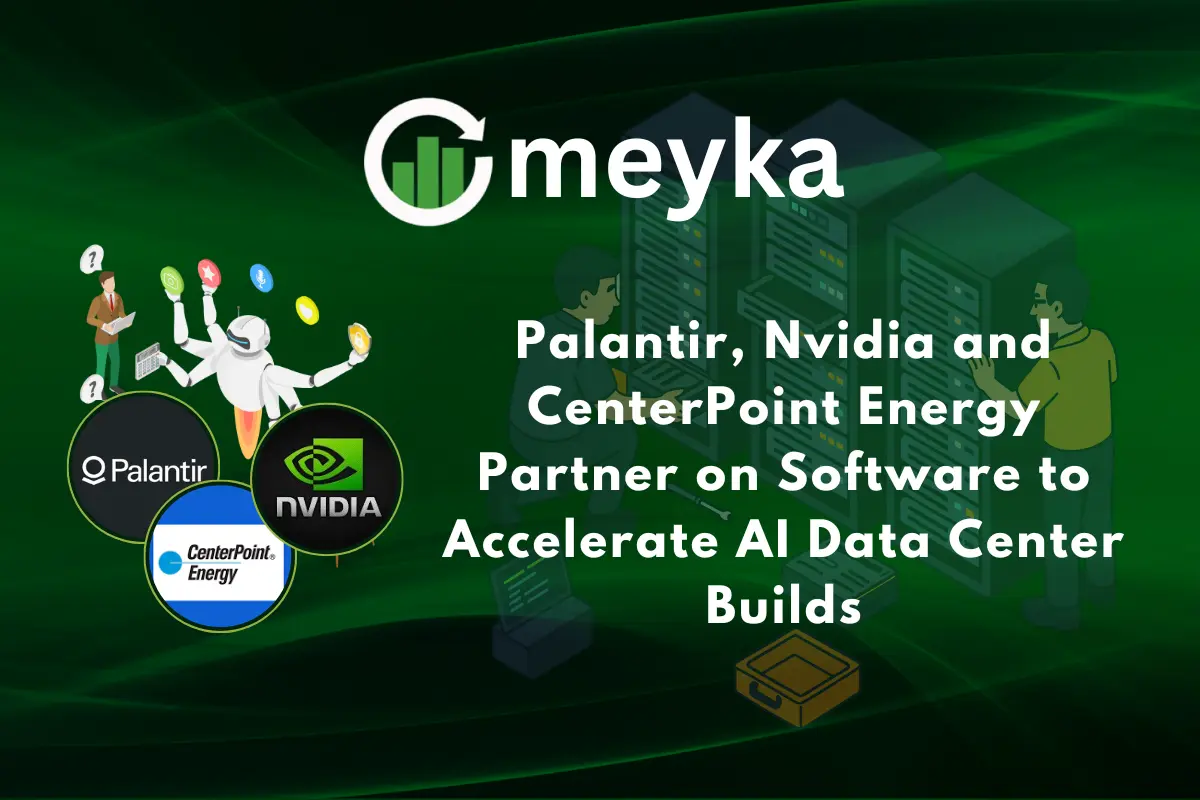
Palantir, Nvidia and CenterPoint Energy Partner on Software to Accelerate AI Data Center Builds
The race to build AI data center just got a big boost. On December 4, 2025, Palantir Technologies announced a new software platform. It teams up with NVIDIA and CenterPoint Energy. Their goal: speed up the construction of data centers built for heavy AI workloads.
AI is growing fast. But building AI-ready data centers is slow, costly, and hard. Power supply, approvals, and infrastructure planning often cause long delays. This new collaboration uses software to tackle those challenges. If successful, it could radically shorten the time from plan to operation.
This matters. Faster build times mean new AI services can go live sooner. It also means companies can better plan power, cooling, and logistics before spending billions. In short: this venture could reshape how fast the world builds AI infrastructure.
What Triggered this Alliance?
AI models are getting bigger fast. That pushes companies to build massive compute farms. These farms need more power than many towns. At the same time, utilities face long interconnection queues and parts shortages. Permits, transformers, and cooling systems also take time.
The result: projects stall for months or years. Palantir says software can help here. The company wants to use its data tools to spot delays and plan around them. Nvidia brings compute simulation and model acceleration. CenterPoint supplies grid knowledge and real-time telemetry. Together, they aim to tackle the common choke points that slow builds.
What Each Partner Actually Brings?
Palantir offers data integration and operations software. Its Foundry platform can gather messy data from many places. That includes emails, permits, utility reports, and supplier notes. Palantir then turns that data into a single view for planners. Nvidia contributes advanced simulation and GPU acceleration.
Nvidia’s stack helps model thermal loads, airflow, and compute placement quickly. CenterPoint Energy brings on-the-ground grid expertise. It can share grid maps, load forecasts, and constraints. Together, the stack connects project planning to real grid constraints. This reduces guesswork before big investments are made.
How the Joint Software Stack Speeds Builds?
Chain Reaction links Palantir’s data layer to Nvidia’s simulation tools and CenterPoint’s grid telemetry. That lets teams run predictive scenarios. For example, planners can test if a site will need new transmission lines or if existing feeders can handle future GPU clusters. The stack also flags permit risks and supply chain gaps early. This prevents late-stage redesigns that cost time and money.
In effect, the software acts like a project control room. It shows where to invest first and which tasks to fast-track. Palantir says this approach can compress feasibility studies and risk reviews. Nvidia and CenterPoint add domain-specific checks so predictions match reality.
Real-World Impact Operators can Expect
Operators could see fewer surprises. They will know sooner whether a site needs extra transformers, can simulate cooling needs for specific GPU racks. They can also map supply chain lead times for critical gear. In practical terms, this lowers the chance of costly mid-build pauses.
Early partners and spokespeople suggest timelines for approvals and interconnections can shrink when data is unified. Faster builds let companies bring AI products to market sooner. That matters for firms racing to host large language models and other heavy workloads.
Why does the AI Data Center build a New Infrastructure Bottleneck?
Past data centers were sized around modest server loads. AI centers use high-density GPU clusters. These clusters draw far more power and require specialized cooling. That changes how planners must think about sites. Where older centers might get by with existing feeders, AI mega-centers often demand new substations. The grid, supply chains, and local permitting were not built for this sudden demand. This means software that understands all three grids, supply chain, and construction becomes a strategic advantage. The Chain Reaction pitch is built on that idea.
Strategic Implications: Who Benefits?
Cloud providers gain speed. They can avoid bidding wars for scarce sites. Utilities like CenterPoint gain better forecasts. That lets them plan grid upgrades in a less disruptive way. Cities and regulators get clearer impact studies to make decisions faster. Investors can spot firms that scale AI infrastructure quickly.
Using an AI stock research analysis tool could help investors compare how partners might translate faster build times into revenue. This tech also raises the profile of companies that can link software to physical infrastructure.
Competitive Landscape: Why this Collaboration is Different?
Other firms offer parts of the solution. Schneider Electric, Siemens, and Vertiv provide hardware and design. But few bring a unified software layer that ties simulation, decisions, and the utility grid together. Palantir’s edge is in integrating messy data at scale. Nvidia’s edge is compute and simulation speed.
CenterPoint’s value is real-world grid access. This three-way mix reduces blind spots that otherwise lead to delays. If the approach proves reliable, it could set a new standard for how large-scale AI infrastructure projects are run.
Challenges and Risks
Software is not a silver bullet. Models can be wrong if inputs are incomplete. Regulators could still impose slow permit processes. Supply chain shortages for transformers, chillers, and even GPUs remain real risks. There is also public scrutiny over AI energy use and environmental impact.
Utilities must balance local needs with the demands of hyperscalers. Finally, over-reliance on predictive models can backfire if a rare event like a weather disaster breaks assumptions. Good governance and ongoing human oversight remain essential.
Closing Note
Chain Reaction is a clear answer to a growing problem. Palantir, Nvidia, and CenterPoint have combined software, simulation, and grid know-how to cut friction in AI data center builds. The partnership was announced on December 4, 2025, and it targets the precise choke points that slow modern infrastructure projects. If the collaboration delivers as promised, it could make AI facility builds faster, cheaper, and more predictable. That would change how companies scale AI in the years ahead.
Frequently Asked Questions (FAQs)
The partnership announced on December 4, 2025 uses smart software and fast simulations to spot delays early. This helps teams plan power, cooling, and construction steps much faster.
AI centers need huge electricity, which many grids cannot supply quickly. Long permit times, slow upgrades, and limited transformers cause delays across many regions in 2025.
Palantir launched Chain Reaction on December 4, 2025. It brings project data, grid limits, and energy needs into one platform to help teams plan new AI sites more clearly and faster.
Disclaimer
The content shared by Meyka AI PTY LTD is solely for research and informational purposes. Meyka is not a financial advisory service, and the information provided should not be considered investment or trading advice.