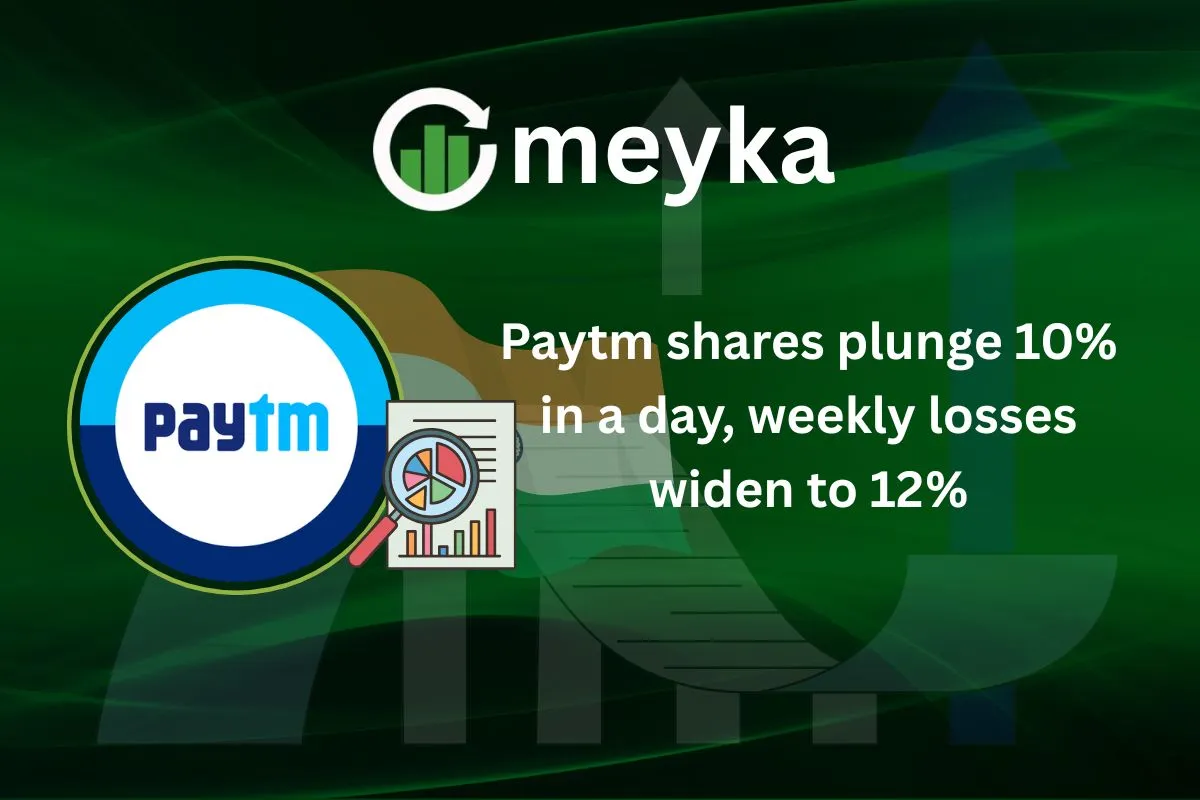
Paytm shares plunge 10% in a day, weekly losses widen to 12%
On Friday, January 23, 2026, shares of Paytm, One97 Communications, fell sharply in the stock market. The stock dropped about 10% in one trading day as investors reacted to weak sentiment on Dalal Street.
This fall pushed Paytm’s weekly losses to about 12%, a sign of rising pressure on the digital payments leader. The decline surprised many traders. Just weeks earlier, there were hopes that growth in digital payments and new revenue streams could lift the stock.
But selling pressure picked up quickly. Investors began weighing the risks of slower profits, tough competition, and policy uncertainty.
Let’s explore the real reasons behind the slide and what it might mean for Paytm’s future.
What Happened? The Paytm Shares 10% Plunge
On Friday, January 23, 2026, shares of One97 Communications, the parent of Paytm, fell sharply. The stock dropped about 10% in a single session on the Bombay Stock Exchange. This move extended Paytm’s weekly losses to roughly 12%. The decline also marked the stock’s fourth drop in five sessions, hinting that investors are uneasy about the stock’s near‑term outlook.

The steep fall came as traders reacted to a mix of market sentiment and fresh news around digital payments policy. The selling pressure was heavy. Many investors appeared to reduce their positions quickly rather than hold through uncertainty. This kind of sharp drop often signals both short‑term fear and deeper concerns about future earnings and industry risks.
The Regulatory Cloud Over Paytm
Regulatory developments have shaped investor views on Paytm for months. A key issue has been talk around Merchant Discount Rates (MDR) on Unified Payments Interface (UPI) transactions. Earlier media reports suggested the Indian government might reintroduce MDR fees, which are charges paid by merchants for payment services. Such fees could offer new revenue for digital payment firms like Paytm.
However, on January 1, 2026, the Finance Ministry officially denied plans to bring back MDR for UPI. The ministry called the earlier media claims “false, baseless, and misleading,” and said no new fees would be added. This policy clarity was meant to reassure the market, but it instead removed a potential revenue stream that some investors had hoped might help Paytm’s profitability.
The UPI system handles most retail payments in India, and Paytm earns little from it due to current zero‑fee rules. The denial of future MDR removed a possible source of recurring income, deepening concerns about how Paytm will grow profits as competition intensifies.
Structural Business Concerns Behind the Paytm Share Price Slide
Even as the stock falls, the business faces real challenges:
Profitability and Earnings Trends
Paytm’s path to profit has been uneven. The company did report its first operational profit in Q1 FY26, showing strength in cost control and revenue growth. Even then, stock performance remained weak as investors focused on short‑term market signals and broader profit sustainability.

Revenue Growth and Slowdown
Both revenue and transaction growth have shown signs of slowing. While Paytm’s payment volumes still rank high in India’s massive digital payment ecosystem, the pace of growth has declined from earlier years when rapid adoption drove earnings hopes. Analysts see slowing UPI adoption as an industry‑wide trend that could affect Paytm’s valuation.
Leadership Turnover and Strategic Moves
Paytm has seen turnover in key leadership roles in past quarters. Frequent changes in senior management can unsettle investors and add doubt about execution of long‑term plans.
Industry Competition
Paytm competes with major players like PhonePe and Google Pay, which hold significant market share in UPI transactions. This competition puts pressure on Paytm to innovate and defend its user base.
Technical Market Factors Amplify the Paytm Shares Decline
While fundamentals matter, market dynamics also play a role:
Technical charts from market platforms like Meyka AI have shown short‑term weakness signals, meaning that momentum indicators were turning negative even as earnings improved. Some analysts interpreted these signals as reasons for traders to reduce positions.

In markets with heightened volatility, stocks that once delivered strong gains can fall quickly as traders rush to safeguard capital. The overall sell‑off in financial tech names and broader market pressures also weighed on sentiment. These technical shifts often exaggerate price swings, especially when news headlines appear negative or uncertain.
Paytm Shares Performance Today: What Does This Means for Investors?
The recent price slide shows that investor confidence is fragile. In the short term, the stock may keep swinging as the market digests new data and news. Traders often react faster than company fundamentals, leading to larger price moves than business performance alone would suggest.
Looking ahead, clarity on policy changes and stronger profit growth are key catalysts that could restore confidence. Without such drivers, investors may remain cautious. For Paytm, the path to sustained recovery will likely depend on consistent earnings growth, innovation in financial products, and strategic expansion both inside and outside India.
Final Words
Paytm’s fall on January 23, 2026, was more than a one‑day event. It reflected deeper market concerns about revenue potential, regulatory direction, and long‑term growth in a highly competitive fintech space. Although the drop raised alarms for many shareholders, the underlying digital payments market in India continues to grow. How Paytm adapts to its challenges will shape its future stock performance and investor trust.
Frequently Asked Questions (FAQs)
Paytm shares fell nearly 10% after the Finance Ministry denied reports that MDR fees would return on UPI payments. This weakened investor hopes for extra revenue.
It is not clear if the stock will rise soon. The MDR denial removed a possible revenue boost, so investors are cautious. Future results and policy clarity will matter most.
UPI policy affects Paytm because the platform earns little without fees like MDR. Changes or uncertainty in UPI rules can make the stock move sharply.
Disclaimer
The content shared by Meyka AI PTY LTD is solely for research and informational purposes. Meyka is not a financial advisory service, and the information provided should not be considered investment or trading advice.