Rio Tinto

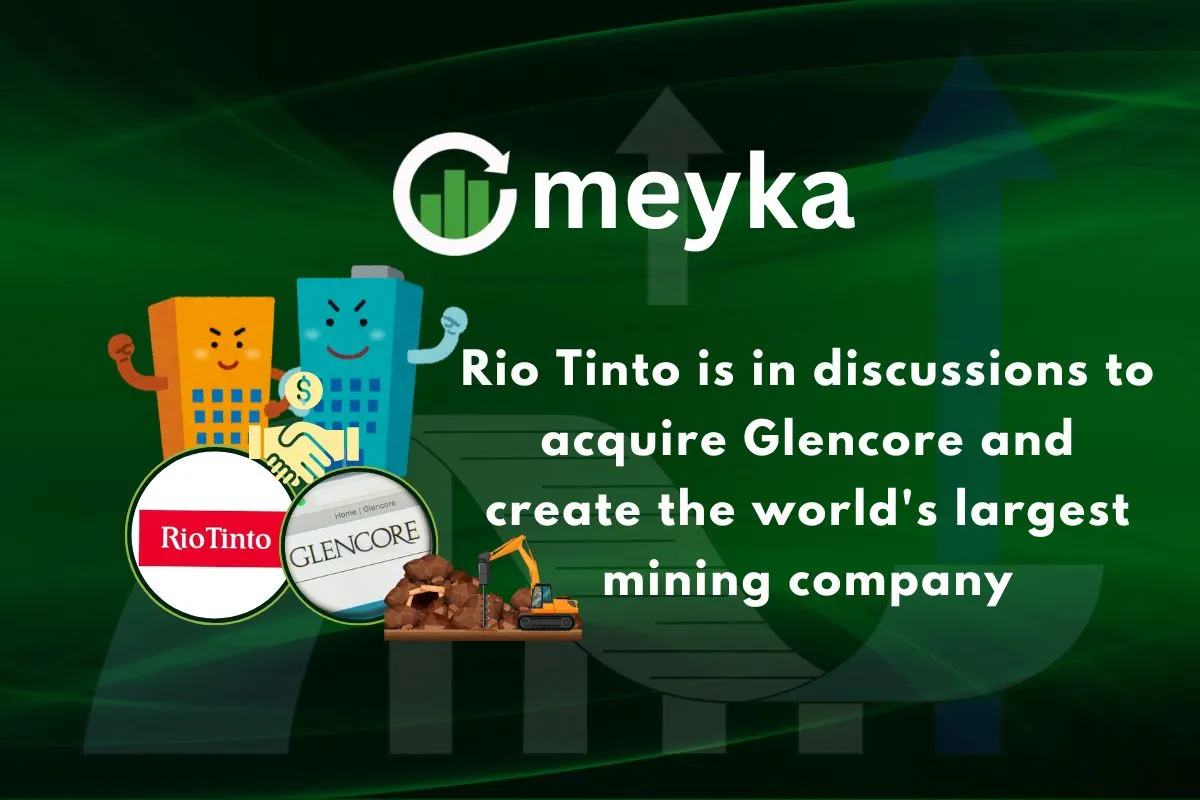
Rio Tinto is in discussions to acquire Glencore and create the world’s largest mining company

On January 8-9, 2026, mining giants Rio Tinto and Glencore confirmed they have restarted talks about joining forces. The discussions are early. No deal has been signed yet.

If this move goes ahead, it could create the largest mining company in the world, with a combined value of more than $200 billion-$260 billion.

Both firms say the talks are preliminary. They have not agreed on price, structure, or leadership. They also stress there is no guarantee a merger will happen at all.

Under UK takeover rules, Rio Tinto has until February 5, 2026, to make a formal offer or walk away. Investors, markets, and industry watchers are paying close attention. A deal like this would reshape the global mining landscape and influence metals markets around the world. 

Rio Tinto & Glencore: A Historic Deal in Early Stages

Rio Tinto and Glencore are once again in early talks about a possible merger that could reshape the mining industry. On January 8-9, 2026, both companies confirmed they had held preliminary discussions about combining all or parts of their businesses. These renewed talks follow an earlier attempt in 2024 that did not progress past initial negotiations.

Under strict UK takeover rules, Rio Tinto must either announce a firm intention to make an offer for Glencore or walk away by 5 p.m. London time on February 5, 2026. The potential transaction, possibly structured as a court-sanctioned scheme of arrangement, could create the world’s largest mining company with a combined enterprise worth around US $260 billion-$207 billion.

Investors and market watchers are treating these developments as tentative but significant. At this stage, the discussions are exploratory. No agreed terms, price, or leadership plan has been disclosed. Both Rio Tinto and Glencore stress that there is no certainty that a deal will be finalized.

Strategic Rationale Behind the Rio Tinto Move

A key driver of the talks is the growing global demand for copper and other critical metals. Copper prices have surged in recent years due to rapid growth in electrification, renewable energy systems, and emerging technologies. By aligning its assets, the combined entity would command a much larger share of the copper market, reinforcing its role in the low-carbon transition.

Rio Tinto brings strong positions in iron ore, aluminium, lithium, and copper assets, such as its stake in the Escondida mine and the Oyu Tolgoi project. Glencore’s copper portfolio includes major operations that are among the top producers globally. Pooling these assets could make the new company a dominant force in key metals markets.

However, the deal’s complexity lies not just in combining assets but also in deciding what to do with Glencore’s coal businesses, which Rio Tinto exited entirely in 2018. Glencore’s coal mines span Australia and remain significant within its portfolio. Structuring such assets into a combined company or spinning them off will be a major negotiation point.

Market and Investor Reaction to the Rio Tinto and Glencore Acquisition

News of the talks sparked swift moves in financial markets. Glencore’s shares rose strongly by about 6% on some exchanges, reflecting optimism about a possible takeover premium. In contrast, Rio Tinto’s stock dropped sharply, indicating investor caution about the financial cost and execution risk of such a large deal.

Meyka AI: Glencore plc (GLNCY) Stock Overview, January 2026

Analysts are split on the merits of the potential merger. Some point to scale and diversification benefits, especially in copper, as strong strategic arguments. Others worry the complex merger process may lead to disagreements over valuation, cultural integration, and asset mix.

Meyka AI: Rio Tinto Group (RIO) Stock Overview, January 2026

The broader mining sector has seen a wave of consolidation as companies aim to secure supply for metals critical to the energy transition. This potential Rio-Glencore union fits into that trend, but it also highlights how difficult mega-mergers can be to execute across multiple jurisdictions and business lines.

Cultural & Structural Hurdles for Rio Tinto

Beyond financial and regulatory challenges, the cultural fit between the two companies could be a barrier. Rio Tinto is known for its more traditional mining operating model, while Glencore combines mining with a large and complex global trading business. Aligning these different cultures and business styles may pose internal challenges.

Another structural issue is the fate of non-core assets, especially coal. Rio Tinto’s long-term strategy has been to reduce fossil fuel exposure, and it exited coal entirely years ago. Glencore, however, remains a major coal producer. Negotiating what to do with these assets, whether to divest, spin off, or retain them, will be critical in any deal.

Competitive and Industry Implications

If completed, this merger could dethrone existing industry leaders and signal a new phase in mining consolidation. A combined Rio-Glencore would rival or surpass competitors like BHP in enterprise value and influence over commodities markets.

Regulatory scrutiny will be intense. Authorities in key markets, including the UK, EU, and China, will evaluate competition concerns, especially in segments like copper and coal. Approval hurdles could delay or reshape the deal.

Other major miners, such as Anglo American, BHP, and Freeport-McMoRan, have all explored strategic moves in recent years. This development follows that pattern and highlights how critical scale and diversified portfolios have become in navigating commodity cycles and supply constraints.

Rio Tinto and Glencore Acquisition: Risks and Deal Breakers

Despite the potential upside, this merger faces significant risks. A key issue is the uncertainty of a formal offer; neither company has committed to terms or a timetable beyond the February deadline imposed by UK rules.

Valuation gaps between Rio Tinto and Glencore could also derail negotiations. This includes disagreement over the value of certain assets, especially those tied to coal or trading operations. Integration risk, or how well the companies can combine their operations, is another major concern.

Finally, shareholder and regulatory resistance could stop the deal. Investors in both firms may demand higher premiums, clearer strategic benefits, or more attractive governance terms before backing any transaction.

Conclusion: What Comes Next?

This potential tie-up between Rio Tinto and Glencore represents one of the most ambitious merger talks in mining history. The combination could reshape global metals markets and accelerate consolidation trends tied to the energy transition.

For now, the discussions remain early and exploratory. The companies must navigate valuation, structure, cultural fit, and regulatory review before a formal offer can be confirmed. The outcome by February 5, 2026, will be a key milestone to watch. 

Frequently Asked Questions (FAQs)

Is Rio Tinto really acquiring Glencore?

As of January 2026, Rio Tinto and Glencore confirmed early talks. No deal is final yet. Both companies said discussions are preliminary and could still end.

How big would a Rio Tinto and Glencore merger be?

If completed in 2026, the merger could create the world’s largest mining company, valued at $200 billion, making it larger than most global mining rivals.

Why are Rio Tinto and Glencore discussing a merger now?

In January 2026, rising demand for copper, energy metals, and industry consolidation encouraged major miners to explore large strategic merger opportunities.

Disclaimer

The content shared by Meyka AI PTY LTD is solely for research and informational purposes. Meyka is not a financial advisory service, and the information provided should not be considered investment or trading advice.

Similar Posts

Leave a Reply

Your email address will not be published. Required fields are marked *