Silver

Silver Prices today. Dec 04: Pullback From Record High as Traders Take Profits

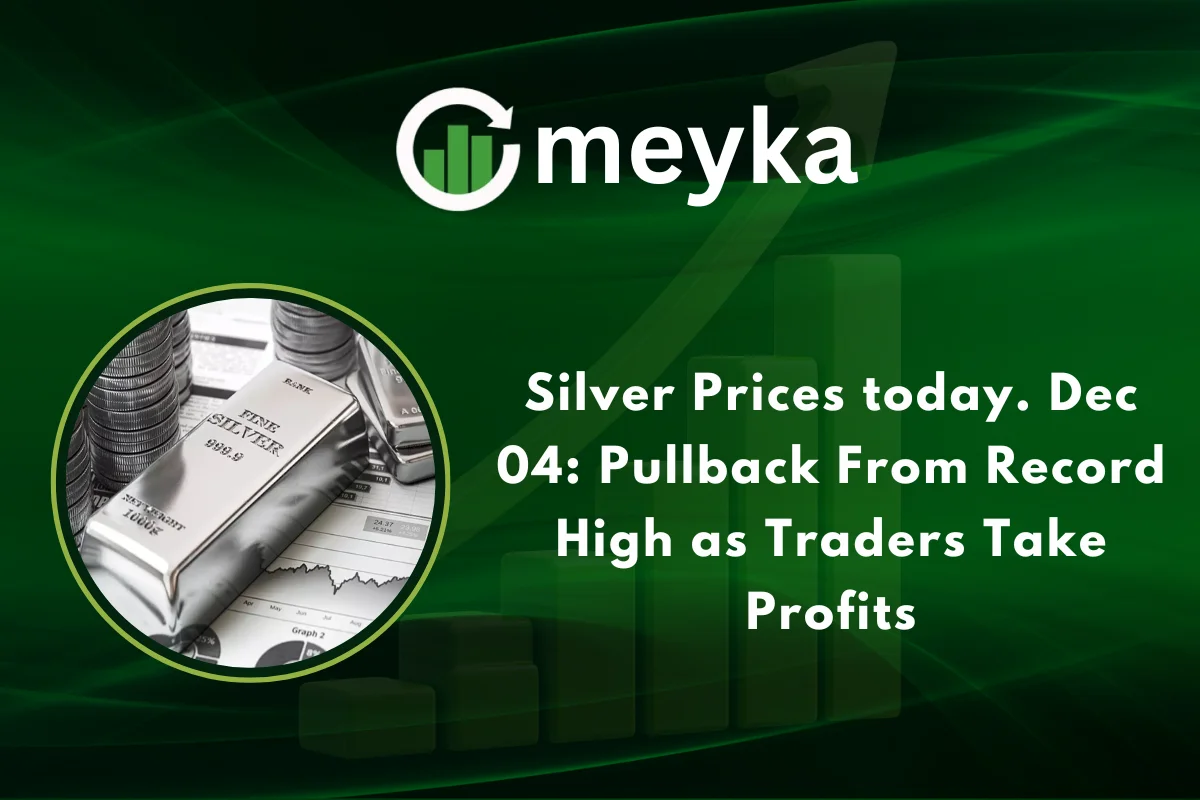
Silver recently surged to record highs after months of strong demand, driven by a mix of investment interest, industrial demand, and global economic uncertainty. However, on December 4, the metal saw a notable pullback as many traders locked in profits following the recent rally. While the drop was sharp, market watchers say the fundamentals behind silver remain largely intact — making this a potentially strategic moment for investors to evaluate long-term opportunities.

What Pushed Silver to Its Peak?

Demand from Industry and Renewables

Unlike gold, silver is used heavily in industry — from electronics to solar panels, from medical devices to electric vehicle components. That industrial demand adds a structural element to silver’s value beyond just investor speculation.

As green technologies expand globally, demand for silver — critical in solar cells and EV production — has been growing. This supply-demand imbalance has helped push silver prices upward.

Safe-Haven & Inflation Hedge Appeal

With inflation still a concern in many parts of the world and financial markets volatile, silver has attracted investors looking for safety. As a real asset with intrinsic value, silver often benefits when faith in fiat currencies weakens or when interest rates fall.

Weak Dollar & Monetary Policy Trends

Silver prices tend to move inversely to the U.S. dollar. In 2025, a relatively softer dollar and expectations of looser monetary policy boosted silver’s appeal. Lower interest rates reduce the “opportunity cost” of holding non-yielding assets like silver.

Tight Supply & Market Deficits

Global mine output has not kept pace with growing industrial and investment demand. Silver, often mined as a byproduct of other metals, is facing a structural deficit. These supply constraints help support higher price levels over the medium to long term.

Why the Pullback on Dec 04 — Profit-Taking and Market Calm

After reaching a peak, many traders decided to book gains — a natural response in markets where prices have run up quickly. This trend of profit-taking often leads to sharp but short-lived drops in assets like silver, which tend to be more volatile than gold or larger commodities.

In addition, some investors may have paused new buying as the recent run pushed silver into a high valuation zone. Overheated rallies often invite short-term corrections before the next wave of buying.

Macro factors also play a role: expectations around U.S. interest rate decisions, currency strength, and global economic data may influence investor sentiment and cause short-term swings.

Should Investors be Worried? Not Necessarily

Although the drop from record highs can look alarming, many analysts believe the correction reflects healthy market behavior rather than a collapse of silver’s bullish case. Here’s why:

  • Structural imbalance remains: Demand from industry, clean energy, electronics, and investment continues to rise — supply constraints are unlikely to vanish immediately.
  • Safe-haven demand is intact: With economic uncertainty still high, many investors view silver as a hedge against inflation and currency risks, supporting underlying demand.
  • Volatility offers opportunity: For long-term investors, dips can serve as entry points. Silver’s dual role — as industrial metal and store of value — means it may offer upside over time despite short-term swings.

That said, silver’s history of sharp moves means the path forward may remain choppy, so investors should approach with a longer time horizon and balanced expectations.

What to Watch Next — Key Factors That Will Drive Price

If you’re following silver for investment or hedging, these are the main indicators to monitor:

  1. Industrial demand trends — Growth in solar power, electric vehicles, electronics manufacturing, and renewable energy adoption will support silver demand.
  2. Global supply and mining output — Any signs that mine production, scrap supply, or silver recycling improve (or worsen) can impact price action.
  3. Monetary policy and real yields — Central bank decisions, interest rates, and inflation expectations globally will affect silver’s appeal as a safe-haven.
  4. Currency strength — especially the U.S. dollar — A weaker dollar usually boosts silver and other precious metals priced in dollars.
  5. Investor flows via ETFs & bullion demand — Large inflows (or outs) into silver-backed funds, or spikes in physical demand, often influence market sentiment and price volatility.
  6. Geopolitical and macroeconomic risks — Instability, global tensions, and economic uncertainty tend to push investors toward precious metals for safety, benefiting silver.

Conclusion

Silver’s recent pullback after hitting record highs reflects healthy profit-taking, some macro uncertainty, and short-term market psychology. Yet the fundamental reasons that drove its rally, industrial demand, supply constraints, monetary trends, and safe-haven appeal, remain intact.

For long-term investors and those watching commodity markets, silver remains a compelling option. While volatility must be expected, the metal’s dual role as an industrial component and store of value gives it a unique place in diversified portfolios.

In short, this recent dip may not mark an end to silver’s upward potential — rather, it could be a pause before the next leg up.

FAQs

Why is Silver more volatile than gold?

Silver markets are smaller and less liquid than gold markets. Also, silver has a dual role, both as an industrial metal and a precious metal, making it sensitive to changes in both sectors. That makes its price more prone to sharp swings with supply-demand shifts or macroeconomic news.

Is the recent price drop a sign that silver’s rally is over?

Not necessarily. The drop likely reflects profit-taking after a strong rally, and many of the structural drivers — like industrial demand and supply tightness — remain intact. For long-term investors, dips can be potential entry points.

What should I watch if I consider buying silver now?

Focus on global industrial demand (especially green energy and electronics), central-bank/monetary policy moves, dollar strength, and supply conditions. Also monitor ETF flows and bullion demand to gauge investor sentiment.

Disclaimer:

The content shared by Meyka AI PTY LTD is solely for research and informational purposes. Meyka is not a financial advisory service, and the information provided should not be considered investment or trading advice.

Similar Posts

Leave a Reply

Your email address will not be published. Required fields are marked *