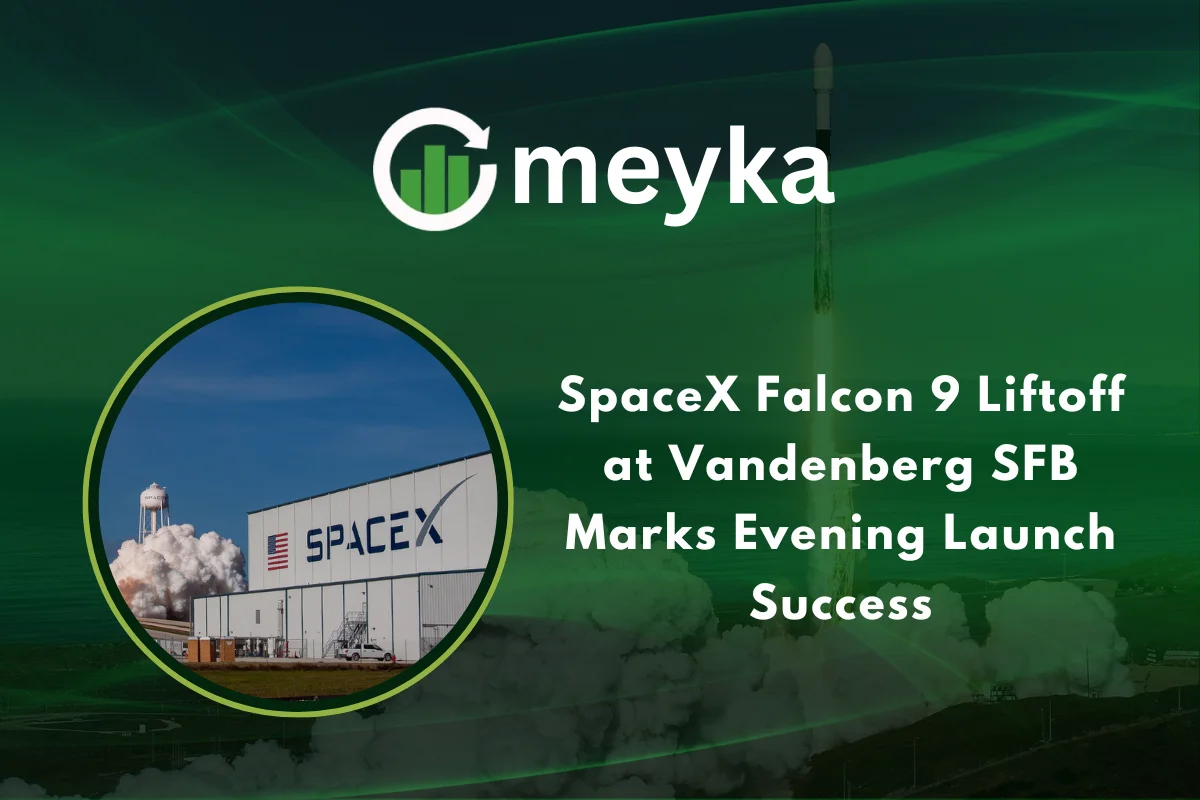
SpaceX Falcon 9 Liftoff at Vandenberg SFB Marks Evening Launch Success
The recent evening liftoff of Falcon 9 from Vandenberg Space Force Base (SFB) marked another success for SpaceX, reaffirming its dominance in orbital launches and satellite deployment. The mission deployed a fresh batch of satellites into orbit and demonstrated once again the capability of Falcon 9 to deliver payloads reliably into space. This launch underscores why Falcon 9 remains a backbone of modern space missions, from commercial broadband to scientific and defense payloads.
Evening Launch Details: A Smooth Liftoff from California
On December 1, 2025, Falcon 9 lifted off from Space Launch Complex 4 East (SLC-4E) at Vandenberg SFB, carrying a batch of 27 satellites intended for the company’s broadband-internet constellation. The launch occurred late in the evening local time, making the ascent visible against California’s night sky, a dramatic moment for both space-watchers and coastal communities.
Approximately eight and a half minutes after liftoff, the rocket’s first-stage booster successfully landed on the drone ship “Of Course I Still Love You” in the Pacific Ocean, marking yet another successful booster recovery for SpaceX. The smooth ascent, satellite deployment, and booster recovery highlight the operational reliability and reusability that have become hallmarks of Falcon 9 missions.
Falcon 9’s Legacy: Why It Matters for Space Access
Falcon 9 has become one of the most flown and reliable rockets in history. The rocket’s design, reusable first stage, two-stage architecture, and a proven track record have enabled SpaceX to launch frequently, with lower costs and shorter turnaround times.
Since its Block 5 version was introduced, Falcon 9 has supported a wide variety of missions: from mass-deployment of consumer-internet satellites, to scientific spacecraft, and even national security payloads. Launching from both Vandenberg (West Coast) and Cape Canaveral / Kennedy (East Coast) allows SpaceX to serve nearly any orbital requirement, from polar orbits to geostationary transfer orbits.
The reusability of the booster, landing on drone ships or landing zones, helps reduce launch costs significantly. That, in turn, opens opportunities for more frequent, diverse missions, benefiting not just SpaceX but satellite firms, scientific missions, and governments worldwide.
Why This Launch Matters Right Now
1. Sustaining Global Connectivity and Internet Access
The satellites launched this time are part of a broader constellation designed to provide affordable global internet coverage, especially in remote or underserved regions. Such deployments are crucial for expanding broadband access worldwide, bridging the digital divide, and supporting emerging markets. The success of this Falcon 9 launch moves that vision forward.
2. Reliable Reusable Rockets = More Frequent Launches
The smooth booster recovery demonstrates that reusable rockets are not just a novelty but a dependable cornerstone of modern spaceflight. That reliability encourages customers, commercial, governmental or scientific, to plan more missions, knowing that cost and schedule uncertainty is reduced.
3. Strategic Advantage for SpaceX and U.S. Space Infrastructure
With frequent successful launches from Vandenberg SFB, SpaceX strengthens U.S. capability for polar and sun-synchronous orbit deployments. This is especially important for Earth-observation satellites, defense payloads, and global communication systems. The evening launch underscores SpaceX’s operational flexibility: they can launch day or night, as needed.
What To Watch Ahead: Future of Falcon 9 and Space Launches
- More Starlink / Broadband Launches: Given the global demand for internet access, more launches of broadband-internet satellites via Falcon 9 are likely — pushing the total constellation higher.
- Increased Use of Reusability: Booster reuse is now mature. Expect SpaceX to continue prioritizing cost-effective, rapidly reusable flights.
- Diverse Payloads: Beyond broadband, expect more scientific, Earth-observation, defense, and commercial missions launched via Falcon 9, thanks to its versatility and launch cadence.
- West Coast Expansion: With Falcon 9 launches from Vandenberg now regular, expect more use of U.S. West Coast infrastructure — valuable for polar-orbit launches or time-sensitive missions.
Challenges and Considerations
Although Falcon 9 has a strong track record, no launch system is without risk. Each mission relies on timing, weather, ground support, and precision operations. As launch frequency increases, maintaining high reliability and safety remains vital.
There is also growing environmental concern, especially from coastal and wildlife regulators, about the impact of frequent launches, sonic booms, marine traffic for drone-ship landings, and possible disruptions to ocean ecosystems. For instance, regulatory bodies have recently expressed reservations over expanding West Coast launch rates.
Finally, competition in the satellite-internet and launch sectors is increasing. While Falcon 9 remains dominant, other players and technologies may challenge its leadership in the years to come.
What This Means for Space Enthusiasts and Industry Observers
For people watching the evolution of the space industry, from commercial satellite providers to space-economy analysts, each successful Falcon 9 launch is a data point in a larger trend: rapid, cheaper, and more frequent access to space.
Reliable launches lower the barrier for startups, nation-states, and research institutions to deploy satellites. That democratization could accelerate innovations in communications, Earth observation, climate monitoring, global navigation, and more.
Additionally, as reusable rockets become the norm, space missions may transition from rare, expensive events to routine infrastructure — akin to shipping containers in global trade. This could usher in a new era where space is as accessible as air travel is today.
Conclusion
The evening liftoff of Falcon 9 at Vandenberg SFB stands as a clear demonstration of what modern rocketry can achieve: reliability, reusability, and rapid turnaround, all while delivering critical payloads into orbit.
SpaceX continues to shape the future of space access, connecting the globe with satellites, supporting science and security missions, and proving that reusable rockets are more than just a promise. Every successful launch adds confidence to the idea that space is not just a frontier for a few but a domain open to many.
As we look ahead, we can expect more missions, more satellites, and more steps toward a connected, space-enabled future. With rockets like Falcon 9 leading the way, that future is nearer than ever.
FAQs
Falcon 9 is a two-stage, reusable rocket built by SpaceX. It is important because it lowers the cost and increases the frequency of satellite and spacecraft launches. Its reusability and reliability have transformed access to space.
Vandenberg SFB, especially its SLC-4E pad, enables launches into polar and sun-synchronous orbits, ideal for Earth observation, weather, and communication satellites. Launches from the West Coast also allow versatility in scheduling and orbit trajectories.
A successful booster landing demonstrates that rockets can be reused safely and reliably. This reduces cost per launch, speeds up turnaround times, and makes frequent space access more feasible, benefiting satellite firms, governments, research organizations, and broader space-industry growth.
Disclaimer:
The content shared by Meyka AI PTY LTD is solely for research and informational purposes. Meyka is not a financial advisory service, and the information provided should not be considered investment or trading advice.