Steel Products Tarrif

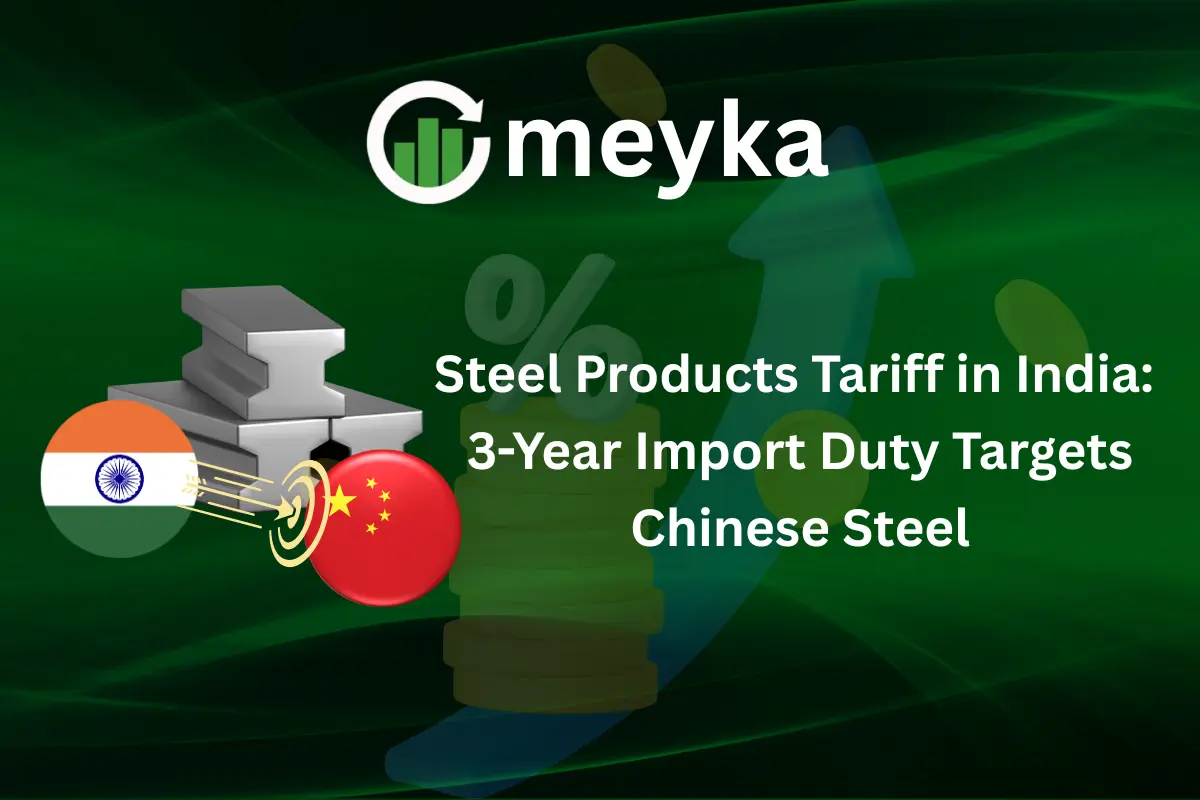
Steel Products Tariff in India: 3-Year Import Duty Targets Chinese Steel

On December 30-31, 2025, the Indian government announced a big change in steel trade policy. It imposed a three-year import tariff on certain steel products. The duty starts at 12% and slowly falls to 11% over three years. This move is meant to slow down cheap steel coming into India, especially from China.

Many Indian steelmakers have been under pressure from low-priced imports. Local mills say they struggle to compete with cheap foreign steel. This new tariff aims to give them breathing room. It also reflects a growing global trend of countries protecting their key industries from unfair trade practices.

Let’s look at what the tariff means, why it matters, and how it could shape India’s steel market in the years ahead.

Background: Steel Imports & Market Pressures in India

India has become one of the largest steel markets in the world. Despite huge production at home, finished steel imports have spiked sharply in recent years. Domestic mills saw low-cost foreign steel cutting into their sales. Many of these imports came from China, Vietnam, and Nepal. This surge pushed India to act.

Before the latest move, New Delhi applied a temporary safeguard duty of 12% on steel imports for 200 days, starting April 21, 2025. That brief protection helped reduce some cheap inflows but expired in November 2025.

Trade authorities found that the sudden rise in steel imports was causing injury to Indian producers. They pointed to falling capacity utilisation, squeezed margins, and a loss of market share for local companies. This set the stage for a broader, longer-term trade remedy.

Detailed Breakdown of the New Three-Year Tariff  on Steel

India’s government has now approved a phased three-year import tariff on specific steel products. The duty begins at 12% in Year 1, drops to 11.5% in Year 2, and then falls to 11% in Year 3. This structure is intended to give time for adjustment without shocking the market.

The safeguard duty focuses on a wide range of non-alloy and alloy flat steel products, such as hot-rolled coils and cold-rolled sheets. Items like electrical steel, stainless steel, and other specialty steels are excluded to avoid supply disruptions for critical downstream industries.

Unlike the earlier duty, this three-year version offers predictability for businesses. It is now part of a formal policy meant to shield Indian producers from prolonged import pressure.

Government Rationale: Protecting Domestic Producers

The Ministry of Commerce and the Directorate General of Trade Remedies (DGTR) based their recommendation on data showing that cheap imported steel volumes rose sharply and harmed domestic producers. The DGTR found imports were not only increasing but threatening serious injury to Indian steel mills.

SEAISI Source: India Steel Import Overview 2024

Officials have stressed that the tariff is not meant to stop all imports. Instead, it seeks to prevent pricing distortions caused by very low-priced foreign shipments, especially from China. The policy reflects India’s effort to balance free trade with fair competition for its mills.

Steel Products Tariff: Economic & Sectoral Impact Analysis

Domestic Steel Industry

The new tariff gives Indian steelmakers a softer price floor. Local producers like Tata Steel, JSW Steel, and SAIL have faced tight margins due to cheap imports. With added duty, their products may become more competitive domestically. Market reaction on December 31, 2025, showed steel stocks rising significantly after the tariff news.

Meyka AI: Steel Authority of India Limited (SAIL.NS) Stock Overview, December 2025

Market Response

The Nifty Metal index and major steel company shares climbed as investors saw relief for the industry. Tata Steel and JSW Steel saw notable gains as traders priced in improved future profitability.

Consumers & Downstream Users

However, higher import duties could push up steel prices for industries like construction, automobile, and machinery. Some sectors that depend on cheaper imported steel might face cost increases. This is a key trade-off policymakers are watching.

Trade & Diplomatic Implications

This tariff move comes at a time of heightened global trade tensions, especially around steel. Countries like the United States and those in Europe also use tariffs or anti-dumping duties to manage foreign inflows. India’s action fits this broader pattern but also risks diplomatic friction.

Beijing could view the tariff as protectionist, even though New Delhi excludes some products and nations under WTO rules. Long-term, trade partners might raise concerns about fairness and market access. (global trade context)

Comparison with Global Steel Tariff Trends

India’s phased safeguard duty echoes policies in other large economies. For example, the U.S. has maintained steel tariffs and quotas at times to protect its mills. Many Asian countries have also adopted anti-dumping levies on Chinese steel imports. These global trends show a pattern where governments respond to surges in low-priced foreign products with trade remedies.

India’s move, while targeted, aligns with broader global strategies aimed at preserving domestic industry competitiveness without fully closing markets.

Steel Products Tariff: Expert Views & Industry Voices

Economists and steel analysts generally see the three-year tariff as a measured approach. Some argue it gives local mills time to strengthen infrastructure and improve technology. Others caution that long-term protection can reduce pressure on producers to innovate.

Industry bodies have largely welcomed the duty, saying it stabilises the sector after years of import shocks. Many also urge parallel efforts to boost high-value steel production at home.

Future Outlook & Policy Recommendations

Looking ahead, India may review the tariff’s impact before April 2028, when the three-year duty expires. Policymakers will likely monitor import patterns, domestic production levels, and global steel prices. There are calls to pair tariff protections with incentives for domestic capacity building, such as production-linked schemes that encourage advanced steel manufacturing.

A balanced approach could help India strengthen its steel industry while keeping prices fair for domestic buyers.

Conclusion: Strategic Impact of Steel Tariff Policy

India’s new three-year tariff on steel imports is a strategic response to rising cheap imports that have pressured domestic producers. By introducing a phased duty, the government aims to protect local steelmakers while still allowing imports that are fairly priced. This measure reflects a wider global trend of careful trade defence policies. The coming months and years will show how this policy shapes India’s steel market, industry resilience, and trade relationships.

Frequently Asked Questions (FAQs)

Why did India impose a steel products tariff?

India imposed the tariff in December 2025 to protect local steel makers from cheap imports, mainly from China, which were hurting prices, profits, and factory operations.

What is India’s steel import duty rate in 2025?

As of December 30, 2025, India applies a safeguard duty of 12% in the first year, which will gradually reduce to 11.5% and 11% over three years.

Which steel products face India’s safeguard duty?

The duty covers selected non-alloy and alloy flat steel products like hot-rolled coils, cold-rolled sheets, and plates, while specialty and stainless steel products are excluded.

Disclaimer

The content shared by Meyka AI PTY LTD is solely for research and informational purposes. Meyka is not a financial advisory service, and the information provided should not be considered investment or trading advice.

Similar Posts

Leave a Reply

Your email address will not be published. Required fields are marked *