Stock Market hours
|

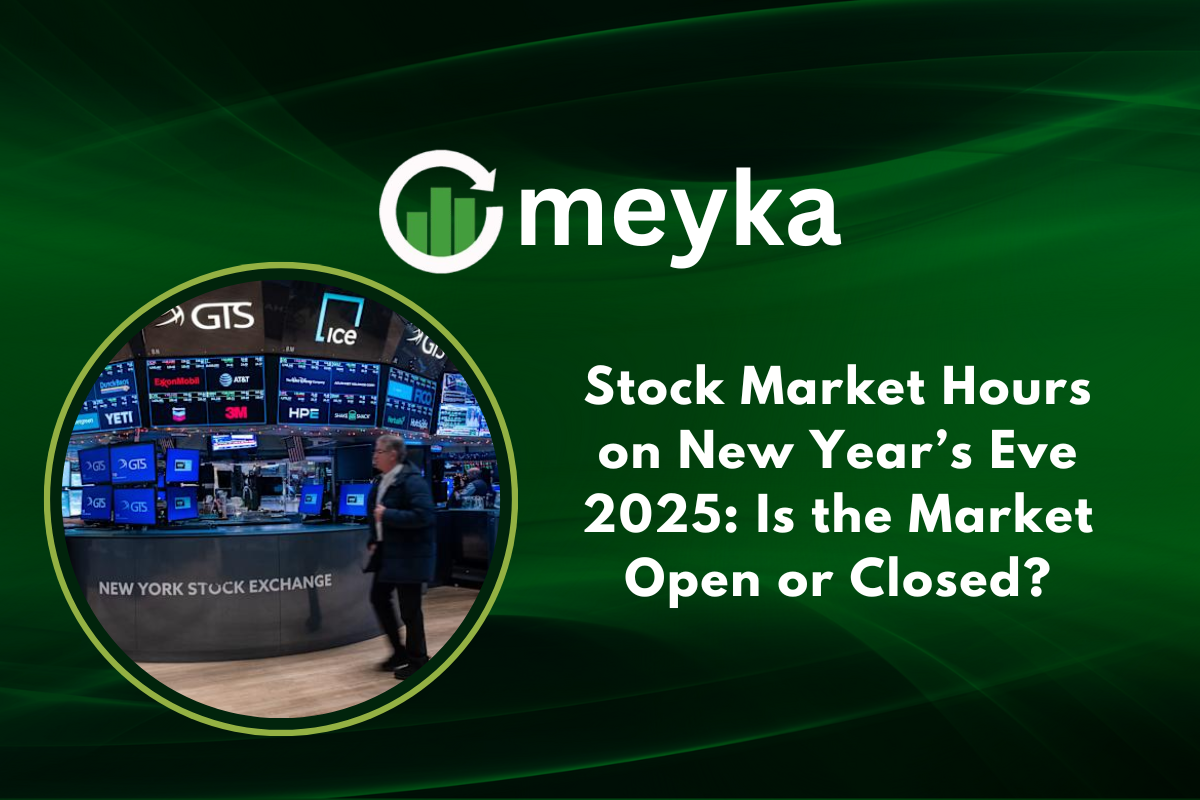
Stock Market Hours on New Year’s Eve 2025: Is the Market Open or Closed?

As the year comes to an end, investors across the United States are asking one key question: Are stock markets open on New Year’s Eve 2025? With portfolios to rebalance, last-minute trades to place, and global market cues in focus, understanding Stock Market hours becomes crucial for traders, investors, and financial planners alike.

New Year’s Eve often brings confusion because it is not a federal holiday, yet trading patterns can shift depending on market rules, liquidity trends, and institutional behavior. This detailed guide explains everything you need to know about stock market operations on December 31, 2025, including trading hours, what remains open, and what to expect as markets head into the new year.

Are Stock Markets Open on New Year’s Eve 2025?

Yes, U.S. stock markets are open on New Year’s Eve 2025. Both the New York Stock Exchange and Nasdaq will operate on their regular trading schedules.

That means investors can buy and sell stocks during normal market hours, which run from 9:30 a.m. to 4:00 p.m. Eastern Time.

This often surprises new investors because many assume markets close early or shut down entirely before New Year’s Day. However, historically, New Year’s Eve is treated as a standard trading day unless it falls on a weekend.

The real closure comes on New Year’s Day, when U.S. markets remain fully closed.

Why Are Markets Open on New Year’s Eve?

New Year’s Eve is not classified as a federal holiday in the United States. Because of this, major exchanges such as the NYSE and Nasdaq continue regular operations.

Market regulators aim to maintain consistency and liquidity in the final trading session of the year. This also allows institutional investors to complete portfolio adjustments before annual books are closed.

Another reason is global alignment. Many international markets remain active around the same time, and closing U.S. markets early could disrupt global trading flows.

Stock Market Hours on New Year’s Eve 2025 Explained

On December 31, 2025, the following schedule applies:

• NYSE opens at 9:30 a.m. Eastern Time
• Nasdaq opens at 9:30 a.m. Eastern Time
• Both markets close at 4:00 p.m. Eastern Time
• Bond markets typically close early at 2:00 p.m. Eastern Time

After-hours trading may still be available through select broker platforms, depending on individual broker policies.

What About Pre-Market and After-Hours Trading?

Pre-market trading usually begins at 4:00 a.m. Eastern Time, while after-hours trading can extend until 8:00 p.m. However, liquidity tends to be thinner on holiday-adjacent days.

Investors should use caution when trading outside regular hours because price swings can be sharper and spreads wider.

How Does New Year’s Eve Trading Usually Behave?

Trading volumes on New Year’s Eve are often lower than average. Many institutional investors complete their year-end positioning earlier in December. Retail participation also drops as people focus on holidays.

Lower volumes can lead to mild volatility, but major market moves are uncommon unless driven by significant global news.

This quieter environment makes New Year’s Eve more about closing books than opening new positions.

Stock Market Hours and Global Market Influence

Global markets also play a role in shaping investor sentiment on New Year’s Eve. Asian markets often close earlier, while European exchanges operate on limited schedules.

Any late-breaking global economic data or geopolitical developments can still influence US stocks during trading hours.

Currency markets and futures trading remain active, giving traders insight into how the new year may begin.

How Investors Typically Approach New Year’s Eve Trading

Many long-term investors use the final trading day to rebalance portfolios, harvest tax losses, or lock in profits. Short-term traders may avoid large positions due to lower liquidity.

Professional fund managers often complete year-end reporting before December 31, making the final session relatively calm.

Retail traders, on the other hand, may use the session to prepare strategies for January, often called the January effect.

Stock Market Hours on New Year’s Eve Compared to Other Holidays

Unlike Thanksgiving or Christmas Eve, which often have shortened trading sessions, New Year’s Eve maintains full hours.

This consistency allows markets to finish the year on a stable note. The real pause comes on New Year’s Day when all major US exchanges are closed.

What Happens on New Year’s Day 2026?

On January 1, 2026, the New York Stock Exchange and Nasdaq will remain fully closed. No trading will take place across equities, options, or most bond markets.

Normal trading resumes on January 2, 2026.

Why Stock Market Hours Matter for Investors

Understanding trading hours helps investors plan entries and exits efficiently. It also helps avoid unnecessary losses due to low liquidity or unexpected closures.

Investors using automated systems should ensure their strategies account for holiday schedules to avoid execution errors.

Key Trading Tips for New Year’s Eve 2025

  • Monitor volume closely, as liquidity may be thin
  • Avoid impulsive trades based on low-volume price moves
  • Use limit orders instead of market orders
  • Review tax implications before closing positions
  • Plan January strategies ahead of time

Stock Market Hours and Investor Psychology

The final trading day often carries emotional weight. Some investors chase last-minute gains, while others prefer to close positions for peace of mind.

Understanding market psychology can help investors avoid emotional decisions and stick to long-term plans.

What Experts Say About Year-End Trading

Market analysts suggest that year-end trading is less about profit and more about positioning. Portfolio rebalancing, window dressing, and tax planning dominate market behavior.

Experts also advise retail investors to avoid chasing momentum during thinly traded sessions.

Why This Information Matters for 2026 Planning

Knowing how markets behave at year’s end helps investors prepare for the new calendar year. It sets expectations for liquidity, volatility, and early January trends.

Many long-term strategies are built on patterns observed during year-end trading sessions.

Quick Summary of Stock Market Hours on New Year’s Eve 2025

• Markets are open at normal hours
• NYSE and Nasdaq trade from 9:30 a.m. to 4:00 p.m. ET
• Bond markets close early
• Lower volume expected
• Full closure on New Year’s Day

Final Thoughts on Stock Market Hours for New Year’s Eve 2025

The stock market remains open on New Year’s Eve 2025, giving investors one final opportunity to adjust portfolios before the year ends. While trading activity may be lighter, the session plays an important role in setting the tone for the new year.

Understanding Stock Market hours allows investors to trade confidently, avoid surprises, and enter 2026 with a clear strategy.

As always, staying informed and planning ahead remains the best approach for navigating holiday trading sessions successfully.

FAQ’S

Are U.S. stock markets open on New Year’s Eve 2025?

Yes, both the NYSE and Nasdaq are open on December 31, 2025, following their regular trading hours from 9:30 a.m. to 4:00 p.m. Eastern Time.

Will there be early closures on New Year’s Eve 2025?

No, unlike some holidays, the No, all major U.S. exchanges, including NYSE and Nasdaq, remain fully closed on January 1, 2026, resuming normal operations on January 2.NYSE and Nasdaq maintain full trading hours on New Year’s Eve; however, bond markets may close early around 2:00 p.m. ET.

What happens to after-hours trading on New Year’s Eve?

After-hours trading may continue on certain broker platforms, but liquidity is typically lower, and price volatility can be higher than usual.

Are U.S. stock markets open on New Year’s Day 2026?

No, all major U.S. exchanges, including NYSE and Nasdaq, remain fully closed on January 1, 2026, resuming normal operations on January 2.

How should investors approach trading on New Year’s Eve?

Investors should monitor lower liquidity, use limit orders, avoid impulsive trades, and plan their year-end strategies carefully to minimize risk.

Disclaimer

The content shared by Meyka AI PTY LTD is solely for research and informational purposes.  Meyka is not a financial advisory service, and the information provided should not be considered investment or trading advice.

Similar Posts

Leave a Reply

Your email address will not be published. Required fields are marked *