Stock Market Sends Clear Signal to Trump on Greenland as Allies’ Warnings Fall Flat
The Stock Market delivered a loud and unmistakable message as global investors reacted to former President Donald Trump’s renewed rhetoric around Greenland. While diplomatic allies issued warnings and urged restraint, markets appeared far less patient. Equity movements, bond flows, and currency shifts together showed that investors were focused less on political theater and more on real economic risk.
Across the US, Europe, and parts of Asia, asset prices reflected growing concern that aggressive language on Greenland, trade leverage, and strategic control could reignite geopolitical instability, hurt alliances, and disrupt long term capital planning. The response was not emotional. It was calculated. Markets do not vote, but they do price risk with brutal honesty.
Why the Stock Market Reaction Matters More Than Political Warnings
Allies across Europe publicly cautioned against escalating rhetoric tied to Greenland, emphasizing diplomacy and cooperation. Yet these warnings failed to calm markets. Instead, traders reacted by adjusting exposure to equities, rotating into safer assets, and reassessing regional risk premiums.
The Stock Market often reacts faster than diplomats. Investors focus on second-order effects, trade retaliation, defense spending shifts, currency volatility, and policy uncertainty. Even a hint of instability in transatlantic relations can ripple through earnings forecasts and capital flows.
European equities remained largely flat, as noted in market coverage, despite signs of Trump softening some language. This flat performance itself carried meaning. It suggested hesitation rather than confidence, a wait-and-see approach that signals uncertainty rather than relief.
Greenland, Strategy, and Investor Psychology
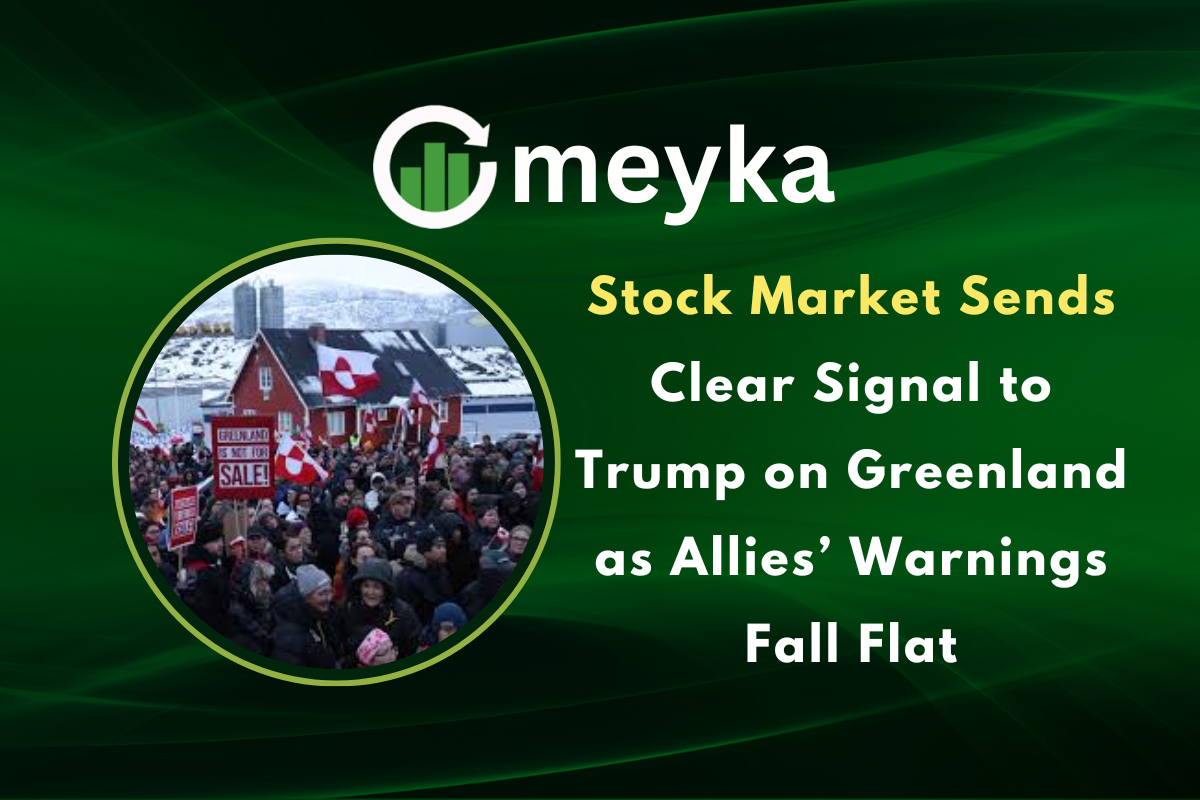
Greenland may seem distant from daily market concerns, but its strategic value makes it central to long-term geopolitical planning. Rich in rare earth minerals and positioned along key Arctic routes, Greenland has become symbolic of global power competition.
When political leaders frame such regions as bargaining chips, markets begin to price in disruption. Investors ask practical questions. Will this lead to tariffs, sanctions, or fractured alliances? Could defense spending rise at the expense of growth-focused investment? Will supply chains face new friction?
These questions explain why the Stock Market reacted with caution rather than enthusiasm.
A widely shared post from ChampsCryptoCom on X captured this investor mood by pointing out how markets react faster than governments when policy risks rise
The post gained traction because it echoed what traders were already seeing on their screens.
How Markets Responded Across Key Asset Classes
• US equities showed mixed movement, with defensive sectors holding firmer than growth names
• European stocks stayed flat, reflecting uncertainty rather than confidence
• Bond yields eased as investors sought safety
• Gold prices remained supported as a hedge against political risk
These moves may appear modest on the surface, but together they send a powerful message. Markets were not panicking, but they were exercising caution.
US Stocks and the Message Beneath the Numbers
On Wall Street, stocks struggled to build momentum. While there was no crash, rallies lacked conviction. This matters. A strong market shrugs off political noise. A hesitant market listens closely.
Investors appeared to discount the likelihood that aggressive Greenland rhetoric would translate into immediate policy. However, they did not dismiss the risk entirely. Instead, they adjusted portfolios to reflect higher uncertainty.
This is where professional investors rely on AI Stock research tools to simulate geopolitical scenarios and assess earnings sensitivity across sectors. Defense, energy, and commodities tend to behave differently in such environments than consumer or technology stocks.
Europe Feels the Pressure More Directly
European markets sit closer to the center of this debate. Greenland’s ties to Denmark make European investors particularly sensitive to shifts in tone. Coverage from Ireland and broader European financial media highlighted how stocks stayed flat despite some cooling in rhetoric.
Why did allies’ warnings fall flat with markets?
Because markets care less about statements and more about policy follow-through. Until clarity emerges, investors remain cautious.
European companies with exposure to US trade policy, defense contracts, or Arctic logistics face higher uncertainty. This uncertainty does not always lead to selloffs. Often, it leads to stagnation, reduced volumes, and lower risk appetite.
Question Investors Are Asking
Is the market overreacting?
At this stage, the reaction looks measured, not extreme. That suggests investors are hedging risk, not fleeing it.
What the Stock Market Is Really Signaling
• Investors want stability over spectacle
• Trade and alliance uncertainty raises risk premiums
• Long-term capital prefers predictability
• Markets punish ambiguity even without immediate policy changes
This signal matters because it reaches decision makers in ways diplomatic warnings often cannot. Markets directly affect borrowing costs, currency strength, and corporate investment.
The Role of Tariffs and Trade Threats
Experience has taught investors to take trade rhetoric seriously. Even if no immediate tariffs are imposed, the threat alone can slow investment decisions. Companies delay expansion, revise supply chains, and hold cash.
Morningstar analysis of global stocks has repeatedly shown that tariff escalation tends to compress valuation multiples, especially for multinational firms. This pattern appears to be resurfacing.
Investors using modern trading tools are tracking these signals closely, watching volatility indexes, options positioning, and cross asset correlations for clues about next moves.
How Technology and AI Stocks Fit Into the Picture
Technology stocks often thrive on global cooperation, shared standards, and open markets. Political tension threatens this environment. While no direct tech policy changes were announced, the broader tone weighed on sentiment.
This is where AI stock analysis becomes relevant. By analyzing earnings exposure to geopolitical risk, investors can differentiate between companies likely to withstand uncertainty and those more vulnerable to policy shifts.
The message from the Stock Market was not anti-growth. It was pro clarity.
The Greenland Issue as a Symbol, Not Just a Location
Greenland has become a symbol of broader questions about global leadership, alliance cohesion, and economic influence. Markets react to symbols because they shape expectations.
Fortune’s coverage emphasized that investors see such disputes as potential markers of declining cooperation. Whether that view is fair or not, it influences capital flows.
Investors do not need a crisis to adjust their behavior. They only need credible uncertainty.
Why Allies’ Warnings Did Not Calm Markets
Diplomatic warnings often aim to de-escalate tension. Markets, however, respond to incentives and probabilities. Without concrete policy shifts or reassurance mechanisms, words alone rarely restore confidence.
This gap explains why allies’ statements fell flat while asset prices continued to reflect caution. Investors are waiting for actions, not reassurances.
What Comes Next for the Stock Market
Looking ahead, much depends on follow-through. If rhetoric softens further and is matched by policy clarity, markets could stabilize and even rally. If tensions escalate or remain ambiguous, caution may persist.
Short-term forecasts suggest range-bound trading with elevated sensitivity to political headlines. Long-term investors, however, will focus on fundamentals, earnings growth, and global cooperation trends.
Final Takeaway for Investors
The Stock Market has sent a clear, data-driven signal. Stability matters more than posturing. Allies’ warnings may shape diplomacy, but markets shape capital.
By pricing risk calmly rather than emotionally, investors are urging restraint and clarity. Whether political leaders listen remains uncertain. What is clear is this: markets have spoken, and they are watching closely.
Disclaimer
The content shared by Meyka AI PTY LTD is solely for research and informational purposes. Meyka is not a financial advisory service, and the information provided should not be considered investment or trading advice.