Taiwan

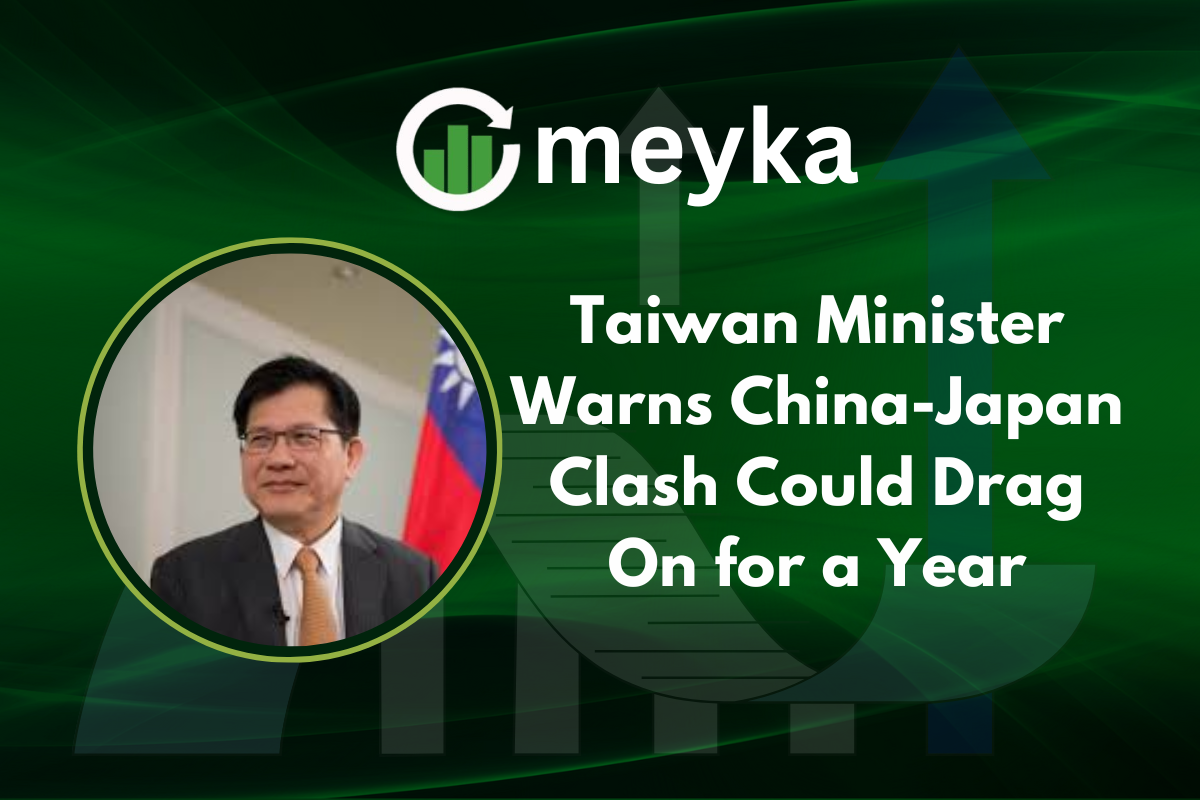
Taiwan Minister Warns China-Japan Clash Could Drag On for a Year

Taiwan sounds alarm as China-Japan tensions escalate

A senior official in Taiwan has cautioned that the escalating clash between China and Japan may linger for up to a year, urging calm and diplomacy even as diplomatic tensions and regional uncertainty rise. The remarks come at a delicate moment for regional security and highlight Taiwan’s concerns over long-term instability in East Asia.

The warning underscores how Taiwanese leaders view the fallout from contentious remarks by Japanese politicians and China’s strong reactions as a potential drag on regional stability. For Taiwan, this means heightened vigilance and a careful balancing act between diplomacy and defence readiness.

What prompted the warning from Taiwan

Comments by Japan’s prime minister triggered backlash

The tensions began after Japanese Prime Minister Sanae Takaichi suggested that Japan might consider military action if China attacked Taiwan, a statement Beijing responded to strongly. 

China reacted harshly with diplomatic protests, military posturing near disputed islands, and economic countermeasures. In this tense climate, Taiwan’s foreign minister publicly cautioned that resolution may take up to a year.

Why would Taiwan expect the clash to continue for a year?
Diplomatic tensions, military warnings, and economic reprisals all contribute to a long-running conflict cycle that won’t fade quickly without mutual de-escalation.

Taiwan’s stance — calm, solidarity, and soft diplomacy

Calling for restraint and advocating for diplomatic channels

Taiwan’s foreign minister urged restraint from all sides. He emphasized that increasing tension yields no benefit, especially for regional stability. He called for cooling down the rhetoric and returning to diplomatic dialogue. 

Taipei also proposed showing support for Japan through non-political means, encouraging cultural exchanges and tourism, rather than contributing to the spiral of retaliation and boycott pressure from China.

Regional impact — What it means for East Asia

Rising risk of maritime and military incidents

Recent incidents near disputed islands, including conflicting maritime claims and coast-guard encounters, demonstrate how tensions might translate into dangerous flashpoints.

Any such altercation risks escalation and draws in multiple stakeholders. For Taiwan, this creates uncertainty and underlines the importance of regional diplomacy and defence preparedness.

Economic and diplomatic fallout

China’s retaliation has included travel advisories, trade measures, and cultural-exchange suspensions, especially against Japan. Taiwan finds itself watching closely, given its own economic links across the region. 

Taiwan’s approach, combining support for Japan and caution toward conflict, reflects its hopes to navigate the crisis responsibly while protecting its strategic interests.

What Taiwan is doing: Defence readiness and diplomatic balance

Strengthening defence, reaffirming sovereignty

Taiwan’s President Lai Ching-te recently stated that there is “no room for compromise” when it comes to the island’s security and sovereignty, signalling Taipei’s unwillingness to yield under external pressure.

At the same time, Taiwan is enhancing its military readiness, preparing reservists and modernizing defence systems, in response to increased Chinese military activity in nearby waters.

Navigating diplomatic pressure and alliances

Despite rising pressure, Taiwan urges international partners, including Japan, to act responsibly and avoid escalation. Officials continue to stress diplomacy over confrontation.

At the same time, Taiwan supports Japan culturally and economically to counterbalance China’s aggressive responses, offering a route of “soft diplomacy” rather than provocative alliances. 

Why the Taiwan warning matters for global observers

Stability in East Asia is fragile

Taiwan’s warning highlights how regional tensions extend beyond bilateral China-Japan relations. Any prolonged clash could destabilize trade routes, diplomatic relations, and security across East Asia.

Global investors, regional governments, and international observers are watching closely. An extended standoff could affect supply chains, tourism, foreign investment, and regional cooperation frameworks. Taiwan’s caution reflects broader concern over long-term disruption.

Role of international diplomacy and pressure

International diplomacy and multilateral pressure may be key to de-escalation. Taiwan’s call for calm invites allies and partners to emphasize dialogue, respect for sovereignty, and peaceful resolution, a message aimed at preventing miscalculation or accidental escalation.

What can other countries do to help reduce tension?
Support open diplomacy, offer mediation or neutral forums, and avoid incendiary rhetoric that may provoke retaliation or military reactions.

Conclusion

Taiwan’s warning that the China-Japan clash “could persist for a year” underscores how fragile regional security remains in East Asia. As tensions widen across diplomatic, military, economic, and cultural fronts, Taiwan is calling for calm, diplomacy, and balanced action.

At the same time, Taipei is strengthening its defence and signalling readiness, a dual approach of caution and preparation, rooted in national interest.

For global watchers, investors, and regional partners, the coming months will be critical. How China and Japan respond, whether cooler heads prevail, and whether international pressure influences diplomacy will determine whether East Asia drifts closer to conflict or finds a path back to stability.

Taiwan remains vigilant, urging dialogue over division, readiness over risk, and hope over hostility.

FAQ’S

Why did the Taiwan minister say the China-Japan clash could last a year?

The Taiwan minister warned that the clash could last a year because both China and Japan remain firm in their positions. He noted that the diplomatic tensions are unlikely to cool quickly without major efforts from both sides. Long-standing territorial and political disputes make fast resolution difficult.

What triggered the recent China-Japan clash mentioned by Taiwan?

The clash escalated after Japan made strong comments about defending Taiwan in case of conflict. China reacted sharply with diplomatic protests and increased pressure. This exchange created a chain of political and military tensions.

How is Taiwan affected by the China-Japan tensions?

Taiwan is concerned that prolonged tension could impact regional security and trade routes.
The island relies on stable relations among neighboring countries for economic stability.
Taiwan also fears being pulled deeper into geopolitical rivalry.

What is Taiwan urging China and Japan to do?

Taiwan is urging both countries to exercise restraint and return to dialogue. Officials stress that rising tensions benefit no one in East Asia. Taiwan encourages diplomatic solutions instead of military or economic confrontation.

Could the China-Japan clash impact East Asia’s security?

Yes, prolonged tensions could raise the risk of maritime incidents and military miscalculations. Such disputes affect trade, investment, and political stability across the region. Experts warn that even small confrontations could escalate without careful diplomacy.

Disclaimer

The content shared by Meyka AI PTY LTD is solely for research and informational purposes.  Meyka is not a financial advisory service, and the information provided should not be considered investment or trading advice.

Similar Posts

Leave a Reply

Your email address will not be published. Required fields are marked *