Taiwan Provides Update on South Korea Cooperation Amid US Chip Tariff Talks

Taiwan Provides Update on South Korea Cooperation Amid US Chip Tariff Talks

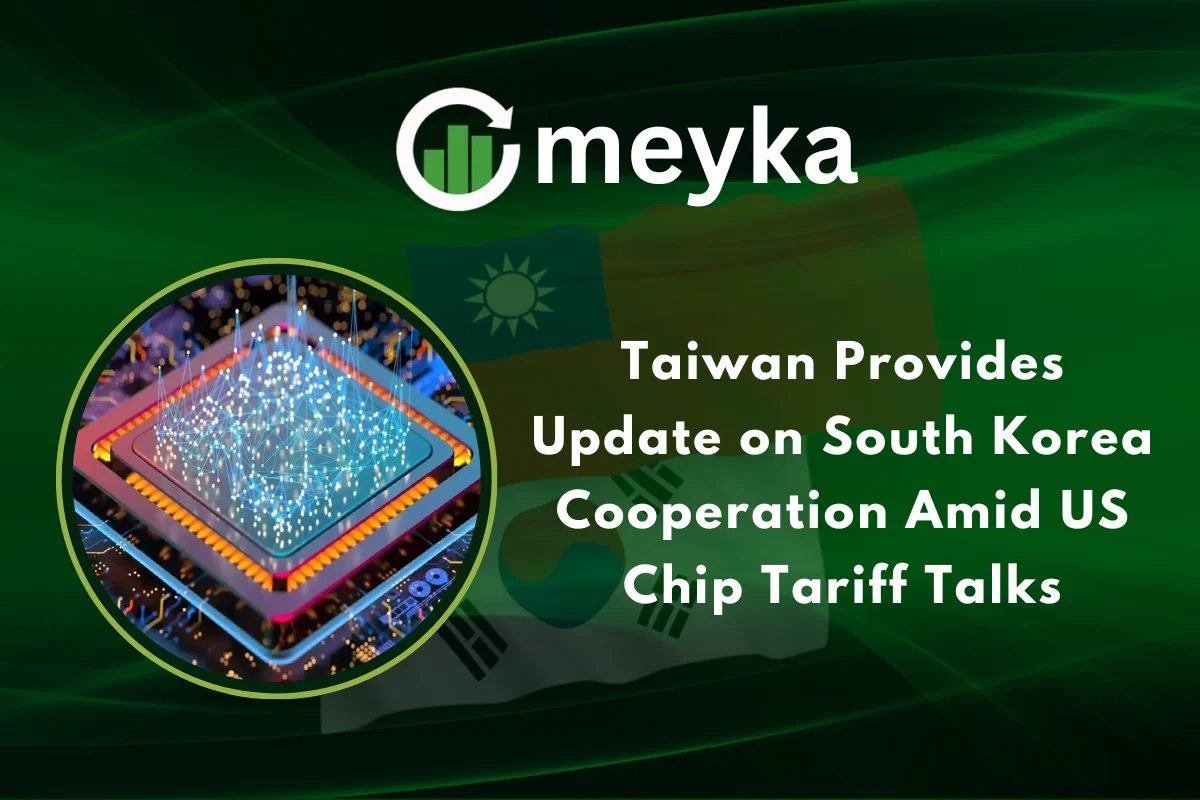
Taiwan recently addressed claims that it was coordinating with South Korea in response to potential U.S. tariffs on semiconductors. The island’s leadership clarified that no such cooperation is underway, saying Taiwan is currently engaging only with the United States directly. This clarification comes amid growing tension in the global chip supply chain, especially as U.S. policymakers consider new trade measures targeting high-tech exports.

What Taiwan Says: No Joint Negotiations with South Korea

Taiwan’s Premier, Cho Jung‑tai, told lawmakers that he has “no information” about any formal cooperation with South Korea on U.S. chip tariffs. According to him, Taiwan’s trade negotiators are holding one‑on‑one talks with the U.S. only, not working in tandem with other countries.

The remarks came after South Korea’s trade minister suggested there was “room for cooperation” between Seoul and Taipei on potential U.S. tariffs targeting chips. But Premier Cho emphasized the current arrangements are purely bilateral. He also described competition between Taiwan and South Korea in chip manufacturing as relatively “benign,” pointing out that both sides are strong in different segments of the semiconductor industry. 

Why This Statement Matters

Strategic Independence in Trade Talks

By distancing itself from a formal alliance with South Korea, Taiwan underscores a strategy of direct engagement with the U.S. This gives Taiwan more control and flexibility in negotiations over its key exports. Because semiconductors are deeply strategic for Taiwan’s economy, led by its powerhouse firm TSMC, this approach helps the government protect its interests without being tied to a joint diplomatic front.

Risk Management Amid U.S. Pressure

Although Taiwan is pushing to reduce a 20% tariff on certain exports to the U.S., current tariff proposals reportedly do not apply to semiconductors. By clarifying it is not coordinating with South Korea on these tariff discussions, Taiwan may be aiming to avoid complicating the negotiations or being pulled into broader trade blocs that could restrict its bargaining power.

Supply-Chain Competition, Not Confrontation

Taiwan’s leadership referred to its relationship with South Korea in tech as “benign competition.” That likely refers to the fact that Taiwan and South Korea dominate slightly different niches: Taiwan’s TSMC leads in advanced logic and foundry services, while South Korea’s Samsung and SK Hynix are giants in memory chips. By framing their rivalry in neutral or even positive terms, Taiwan helps signal stability to global partners.

Broader Context: Why the Tariff Talk Is Important

U.S. policymakers are reportedly considering imposing semiconductor tariffs under a Section 232 investigation, raising alarm among major chip‑producing economies. Because of this, both Taiwan and South Korea are under pressure. South Korea already announced a major fiscal package, nearly US$5 billion, to support its domestic semiconductor sector. 

In parallel, Taiwan is also majorly engaged in global supply‑chain policy. At last month’s APEC summit in South Korea, Taiwan’s representative Lin Hsin‑i met with U.S. Treasury Secretary Scott Bessent to discuss secure semiconductor supply chains and Taiwan’s critical role in global chip production.

These leverages and alliances matter for global stability: Taiwan’s semiconductor firms are central to the supply of high-end chips used in everything from smartphones to AI hardware. If tariffs were imposed, it could reshape investment flows, production strategies, and even influence the outlook for AI stocks and other technology-linked equities.

What This Means for the Tech and Stock-Market Watcher

For Investors in Semiconductor‑Heavy Stocks

Taiwan’s statement may reassure shareholders in TSMC and other semiconductor-linked firms that the government is not locked into complex multi-country negotiations that could limit its options. That, in turn, could preserve Taiwan’s flexibility to protect key export lines and maintain its global leadership in chip manufacturing.

For Global Trade and Supply‑Chain Risk

Clarifying that Taiwan is not aligning in a formal coalition with South Korea could lower the risk of unintended geopolitical fallout. It reduces the chance of being boxed into any bloc that imposes strict trade conditions. That kind of diplomatic independence is likely favorable for investors tracking the stock market exposure of global high‑tech supply chains.

For Long-Term Growth and AI

Taiwan’s core role in supplying advanced logic chips supports the infrastructure for AI stocks globally. Whether in cloud computing, smartphones, data centers, or electric vehicles, Taiwan’s stable access to markets helps reinforce confidence in long-term technology investments.

Risks and Challenges to Watch

  • Tariff Risk Remains: Even if Taiwan avoids a joint effort with South Korea, the possibility of U.S. tariffs remains. If imposed, they could hit other export lines.
  • Supply‑Chain Vulnerabilities: The broader semiconductor supply chain is fragile. Geopolitical tensions or sudden policy shifts could disrupt production or sourcing.
  • Competition Pressure: Taiwan and South Korea are competing and that competition could grow more intense if global incentives shift to favor one region over another.
  • Negotiation Complexity: Direct talks with the U.S. give Taiwan more control, but also place the burden solely on Taiwanese negotiators to secure favorable terms.
  • Long‑Term Dependency: Many global tech companies rely heavily on Taiwan-based companies like TSMC. Any instability could ripple into markets for AI stocks, cloud infrastructure, and consumer electronics.

Conclusion

In recent remarks, Taiwan clarified it has no formal cooperation with South Korea regarding U.S. chip tariffs, stating that it is negotiating directly with Washington. This stance shows Taiwan’s strategic independence and commitment to protecting its semiconductor-led economy. As global tensions escalate, Taiwan’s role in the chip supply chain remains vital and its decisions will likely have major implications for stock research, AI stocks, and the broader stock market.

FAQs

Why did Taiwan deny cooperation with South Korea on U.S. chip tariffs?

Taiwan’s premier said there is “no information” on any joint effort. According to him, Taiwan is speaking directly with the U.S. only, not forming a bloc with South Korea. 

What is the current tariff issue facing Taiwan?

Taiwan currently faces a 20% U.S. tariff on non-semiconductor exports. While Taiwan is negotiating to reduce this rate, its chip exports are reportedly not subject to the proposed U.S. tariff.

Why is Taiwan’s stance important for the global chip industry?

Taiwan is home to TSMC, a major player in advanced semiconductor production. Its diplomatic positioning affects not just its own trade, but global supply chains, including those used by companies in cloud, AI, and consumer tech sectors.

Disclaimer:

The content shared by Meyka AI PTY LTD is solely for research and informational purposes. Meyka is not a financial advisory service, and the information provided should not be considered investment or trading advice.

Similar Posts

Leave a Reply

Your email address will not be published. Required fields are marked *