Tata Technologies

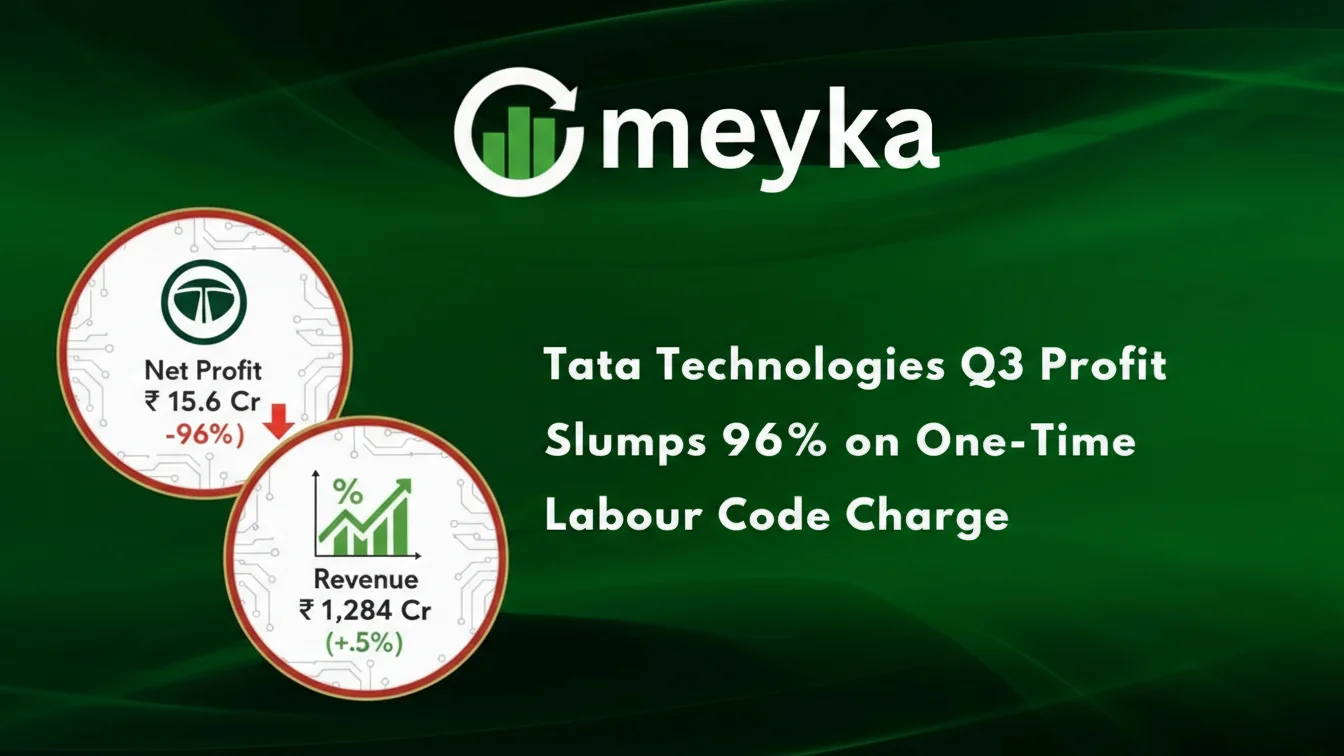
Tata Technologies Q3 Profit Slumps 96% on One-Time Labour Code Charge

Tata Technologies, a global product engineering and digital services company, reported a steep 96% drop in net profit for the third quarter of fiscal year 2026, with profit falling to ₹6.64 crore from ₹168.64 crore in the same period last year. The sharp decline was mainly due to a one-time exceptional charge related to India’s new labour codes, which significantly increased statutory liabilities and weighed down earnings even as revenue continued to grow moderately. The results have drawn attention from both investors and analysts tracking stock market reactions and company fundamentals.

Quarterly Numbers: Profit Plunge and Revenue Growth

For the quarter ended December 31, 2025, Tata Technologies posted a consolidated net profit of ₹6.64 crore, representing a staggering 96% year-on-year decline from ₹168.64 crore recorded in Q3 FY25. This dramatic reduction was largely driven by an exceptional charge of about ₹139.87 crore booked due to the implementation of new labour laws in India.

Despite the fall in profit, the company’s revenue from operations grew modestly by around 3.67% year-on-year to ₹1,365.73 crore, compared with ₹1,317.38 crore in the corresponding quarter last fiscal. Total expenses jumped higher as well, rising to about ₹1,217.99 crore from ₹1,119.31 crore a year earlier, reflecting the added costs related to statutory labour code adjustments and other operating expenses.

On a sequential basis, revenue also grew, rising around 3% from the ₹1,323 crore reported in the previous quarter, indicating continued demand and some underlying business resilience.

Impact of the New Labour Codes

The biggest factor driving the profit slump in Tata Technologies’ Q3 results was the one-time exceptional charge linked to India’s new labour codes that came into effect in late 2025. Under the new regulations, employee wages must constitute at least 50% of the total cost of the company, and benefits such as gratuity and paid leave calculations were revised accordingly, leading to significantly higher statutory provisions.

This change forced the company to recognize increased liabilities for gratuity and compensated absences, accounting for a substantial part of the profit reduction. Excluding these exceptional items, Tata Technologies reported a much stronger profit before tax of around ₹137 crore, showing that the operational business remained fundamentally robust.

Segment Performance: Services and Technology Solutions

The services segment remained a solid growth driver for Tata Technologies during the quarter. Revenue from services jumped about 4.7% quarter-on-quarter (QoQ) to ₹1,060 crore, and in dollar terms this was reported at around $118.6 million, showing sequential growth of roughly 2.6%.

The technology solutions segment, while still contributing to total revenues, showed flat growth, reflecting a more cautious demand environment for certain engineering services.

Analysts note that the services business, which focuses on product engineering, digital transformation, and software development, remains a key area of strategic growth for the company, and continued momentum here could support future performance even if exceptional charges momentarily depress profit figures.

Cost Structure and EBITDA Margins

Tata Technologies’ operating EBITDA for Q3 2025 was approximately ₹193 crore, translating to an EBITDA margin of about 14.1%, down from prior quarter levels, reflecting the impact of labour code changes and elevated costs.

Even when adjusted to exclude exceptional items, the adjusted net income margin stood at roughly 9.9%, offering analysts and investors a clearer picture of the company’s underlying performance without accounting for one-off statutory effects.

Management has highlighted that margin pressures felt in the third quarter are expected to be temporary, with plans to stabilize margins and exceed previous run-rates as the year progresses.

Management Commentary and Future Guidance

Tata Technologies’ leadership struck a cautiously optimistic tone despite the subdued quarterly profit. CEO and Managing Director Warren Harris noted that while Q3 showed some short-term headwinds due to labour code adjustments and seasonal softness, the business continued to show resilience and strength in underlying operations.

CFO Uttam Gujrati said margin headwinds from Q3 are largely behind the company, and management expects to return to or exceed the Q2 adjusted margin run-rate in the coming quarters, signalling confidence in operational execution.

The company also completed a full acquisition of Es-Tee Group of Germany, a firm known for automotive engineering expertise, through its wholly owned subsidiary, Tata Technologies Pte Ltd, Singapore, which may bolster growth opportunities in advanced engineering and connected vehicle technologies over the long term.

Stock Market Reaction and Investment Perspective

Investors and analysts tracking Tata Technologies reacted to the Q3 earnings with mixed sentiment. While the stock market sometimes penalizes steep profit declines, many market participants viewed the drop as largely technical and driven by one-off statutory costs rather than weaker core performance.

Analysts conducting stock research emphasise that underlying revenue growth, sequential performance, and adjusted margins provide a more accurate assessment of the company’s health. They also note that the acquisition and strategic partnerships could expand future revenue streams in key verticals like automotive engineering and digital services.

Given that many technology and engineering firms are also impacted by similar regulatory cost changes, comparisons with peers will be essential for investors assessing relative stock performance.

Industry Context: Labour Code Impact on IT and Tech Firms

The impact of new labour codes is not unique to Tata Technologies. Several major Indian tech firms, including Tata Consultancy Services and HCLTech, have also reported one-time charges linked to new employee benefit provisions, which have affected quarterly profits across the sector.

This broader context helps explain why profit volatility might be elevated across technology and services firms in recent quarters, while core operations continue to show resilience in revenue growth and client demand.

Outlook: What Investors Should Watch Next

Looking ahead, key indicators to watch for Tata Technologies include:

  • Sequential revenue growth, particularly in services and digital transformation projects
  • Adjusted margins excluding one-off charges to see if profitability stabilises
  • Deal wins and pipeline strength in advanced engineering and connected technologies
  • Integration success of the Es-Tee Group acquisition and its contribution to revenue growth

If these trends continue positively, investors may view Tata Technologies as a strong long-term play in engineering services, even as short-term earnings figures remain affected by one-time costs.

FAQs

Why did Tata Technologies’ net profit slump 96% in Q3?

The net profit fell steeply due to a one-time exceptional charge of around ₹139.87 crore booked under the new Indian labour codes, which raised statutory liabilities and reduced the reported bottom line.

Did Tata Technologies’ revenue grow despite the profit drop?

Yes, consolidated revenue from operations rose about 3.67% year-on-year to ₹1,365.73 crore, showing continued demand for the company’s services.

What is management’s outlook after the Q3 results?

Management expects margins to improve and return to or exceed prior quarter levels, with sequential revenue growth of over 10% expected in Q4, and believes the temporary margin headwinds are largely behind the company.

Disclaimer:

The content shared by Meyka AI PTY LTD is solely for research and informational purposes. Meyka is not a financial advisory service, and the information provided should not be considered investment or trading advice.

Similar Posts

Leave a Reply

Your email address will not be published. Required fields are marked *