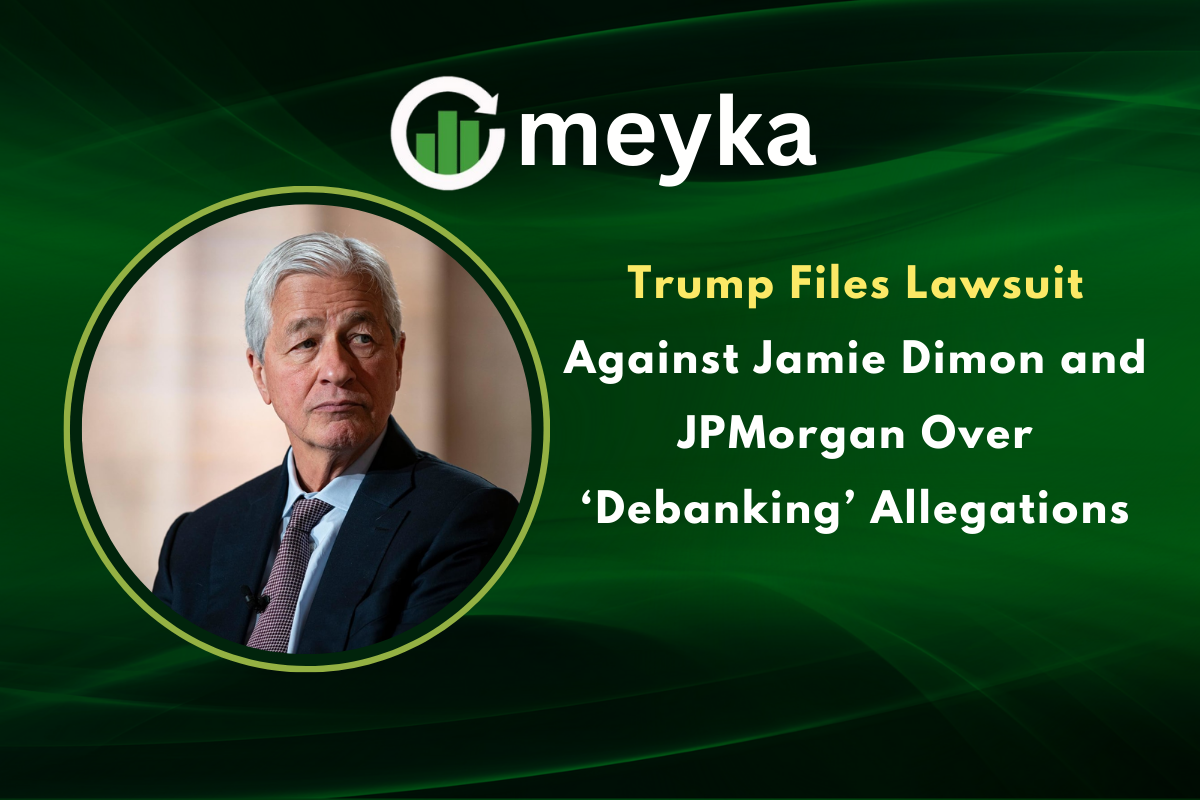
Trump Files Lawsuit Against Jamie Dimon and JPMorgan Over ‘Debanking’ Allegations
President Donald Trump has filed a sweeping new lawsuit against JPMorgan Chase & Co. and its long-time CEO Jamie Dimon, seeking $5 billion in damages over claims that the bank unlawfully cut him and his affiliated businesses off from financial services for political reasons. The legal action, lodged in Miami-Dade County, Florida, marks a dramatic escalation in Trump’s broader campaign against what he terms politically motivated “debanking” by major financial institutions.
The lawsuit represents one of the most high-profile legal contests between a political figure and a leading Wall Street bank in recent memory, touching on sensitive issues of banking access, political bias, reputational harm, and corporate governance. It also adds a new chapter to ongoing debates about the role of major banks in American political and economic life.
This article provides a complete breakdown of the lawsuit, what Trump is alleging, JPMorgan’s response, and why this case matters for Wall Street, corporate America, and consumers.
What the JPMorgan Lawsuit Claims
The lawsuit alleges that JPMorgan and Jamie Dimon engaged in unlawful account closures and “debanking” actions against Trump, the Trump Organization, family members, and related entities following the January 6, 2021, US Capitol attack.
According to the complaint, multiple bank accounts were closed in early 2021 with only a 60-day notice and no clear explanation, leaving Trump and his companies without necessary banking access.
At the heart of the complaint is an accusation that JPMorgan’s actions were driven not by normal risk, compliance, or regulatory reasons, but by political motivations and internal beliefs that the bank needed to distance itself from Trump and his conservative views. The lawsuit frames this as a case of political discrimination and harmful corporate conduct.
Trump’s lawyers also allege that Dimon created or directed a so-called “blacklist,” shared with other federally regulated banks, which warned other institutions against doing business with Trump and his affiliates.
This alleged blacklist, the lawsuit claims, caused reputational harm and led other banks to treat Trump and his companies as high-risk or undesirable clients.
In addition to claims of political bias, the lawsuit includes accusations of trade libel, breach of good faith and fair dealing, and violations of Florida’s Unfair and Deceptive Trade Practices Act. These legal grounds aim to show that JPMorgan’s conduct went beyond normal business decisions into harmful and unlawful actions.
JPMorgan’s Firm Response
In response to the lawsuit, JPMorgan Chase issued a statement asserting that it does not close accounts based on political or religious reasons. The bank emphasized that account closures occur when there is legal or regulatory risk, and it denied any suggestion that political bias played a role in its decisions.
A spokesperson for JPMorgan stated that while the bank regrets being sued, it believes the lawsuit has no merit and will vigorously defend itself in court. The bank also noted that regulatory rules sometimes force institutions to make difficult decisions about client relationships to comply with laws designed to prevent money laundering, fraud, and other risks.
JPMorgan’s official line aims to separate the lawsuit’s political tone from what it characterizes as normal risk management practices required of major financial institutions. This response sets the stage for a court battle that could touch on fundamental questions of banking law and corporate conduct.
Key Allegations in the JPMorgan Lawsuit
• Trump claims his accounts were closed without a valid explanation in early 2021
• The lawsuit alleges actions were driven by political bias, not regulation
• Trump accuses Dimon and JPMorgan of creating a “blacklist” of banking clients
• The lawsuit seeks $5 billion in financial and reputational damages
• Legal claims include trade libel and deceptive trade practice violations
These points highlight the main focus of Trump’s legal claims against JPMorgan and its chief executive.
Why Trump Filed the Lawsuit Now
This lawsuit comes amid a broader push by Trump and his allies to address what they label “debanking”, the practice of financial institutions ending relationships with clients based on perceived political or ideological differences rather than legitimate risk factors. While banks typically cite regulatory compliance and risk assessment for closing accounts, Trump and some conservative leaders argue these decisions reflect bias, particularly against conservative voices.
The timing of the lawsuit also coincides with Trump’s second term in office, during which he has taken steps to limit what he sees as politically motivated actions in the banking sector. These include executive orders aimed at curbing “reputational risk” as a justification for account closures, as well as similar legal actions against other banks such as Capital One.
Trump’s legal campaign frames this issue as a matter of public interest, arguing that banks should not use political beliefs or affiliations as criteria for denying services. Proponents of the lawsuit suggest that this case could shape how banks interact with politically exposed persons and high-profile clients going forward.
How This Affects JPMorgan’s Reputation and Operations
A lawsuit of this scale against JPMorgan, one of America’s largest and most influential banks, has potential implications far beyond the courtroom. Investors and clients may interpret the case as a test of corporate governance and risk management practices within major financial institutions. At the same time, JPMorgan’s defenders argue that banks must balance access to services with legal obligations to mitigate financial and regulatory risks.
Some financial analysts believe that the lawsuit could pressure the banking industry to clarify policies around account closures and client selection. Others caution that political sensitivity in banking decisions is not simple, given strict regulatory requirements designed to protect the financial system.
Legal Experts Weigh In on the Case
Legal experts note that the lawsuit’s success will depend on how convincingly Trump’s attorneys can demonstrate that political bias, rather than legitimate banking risk, led to account closures. Traditionally, banks have wide latitude to manage relationships, especially when they cite regulatory concerns.
Lawyers for JPMorgan will likely argue that closing accounts was consistent with compliance and risk management duties and not discriminatory. The interpretation of Florida’s laws on political discrimination in financial services will also be central to the case’s outcome.
Many observers expect a complex legal battle that could involve extensive discovery, arguments about internal bank communications, and testimony from both regulatory and banking experts.
Public Reaction and Social Media Buzz
Public reaction to the lawsuit has been intense, with responses spread across social media and political discussion forums.
One user highlighted the dramatic nature of the lawsuit and how it showcases tensions between political leaders and major financial institutions.
Another social media post noted the perceived larger battle over banking practices and corporate power in modern democracy.
These reactions reflect how the lawsuit has captured attention beyond legal and financial circles, touching on broader public sentiments about bias, power, and economic fairness.
Questions Investors and Public Are Asking
What exactly does “debanking” mean?
Debanking refers to closing or restricting a customer’s access to banking services, often accused of being based on non-financial reasons like political views or beliefs.
Why is JPMorgan named in the lawsuit?
JPMorgan is accused of closing Trump’s accounts and allegedly blacklisting him, his family, and his entities, causing financial and reputational harm.
What is Trump trying to achieve?
Trump seeks at least $5 billion in damages and wants to challenge what he sees as unfair banking practices that target political viewpoints.
Why This Lawsuit Matters to Wall Street and Beyond
The outcome of this legal case could influence how banks handle politically exposed persons and high-profile clients going forward. If Trump succeeds in proving political motivations behind account closures, financial institutions might face new scrutiny over their risk management and client relationship criteria.
For corporate America, the lawsuit highlights the tension between regulatory compliance and customer access, especially for clients with controversial public profiles.
For the broader public, the case symbolizes the intersection of finance, politics, and civil rights in modern society.
Final Outlook on the JPMorgan Legal Battle
The lawsuit filed by Trump against JPMorgan and CEO Jamie Dimon is likely to be a lengthy and highly contested legal process. As both sides prepare arguments, the financial world and the public alike will watch closely. The case challenges assumptions about how banks manage risk, handle politically charged clients, and balance compliance with fairness.
Whether the courts find in favor of Trump or uphold JPMorgan’s autonomy in client decisions, the trial will undoubtedly leave a lasting mark on the debate over banking practices and political influence in the financial sector.
As the story unfolds, stakeholders from investors to everyday bank customers will be paying attention because the implications extend well beyond a single lawsuit.
Disclaimer
The content shared by Meyka AI PTY LTD is solely for research and informational purposes. Meyka is not a financial advisory service, and the information provided should not be considered investment or trading advice.