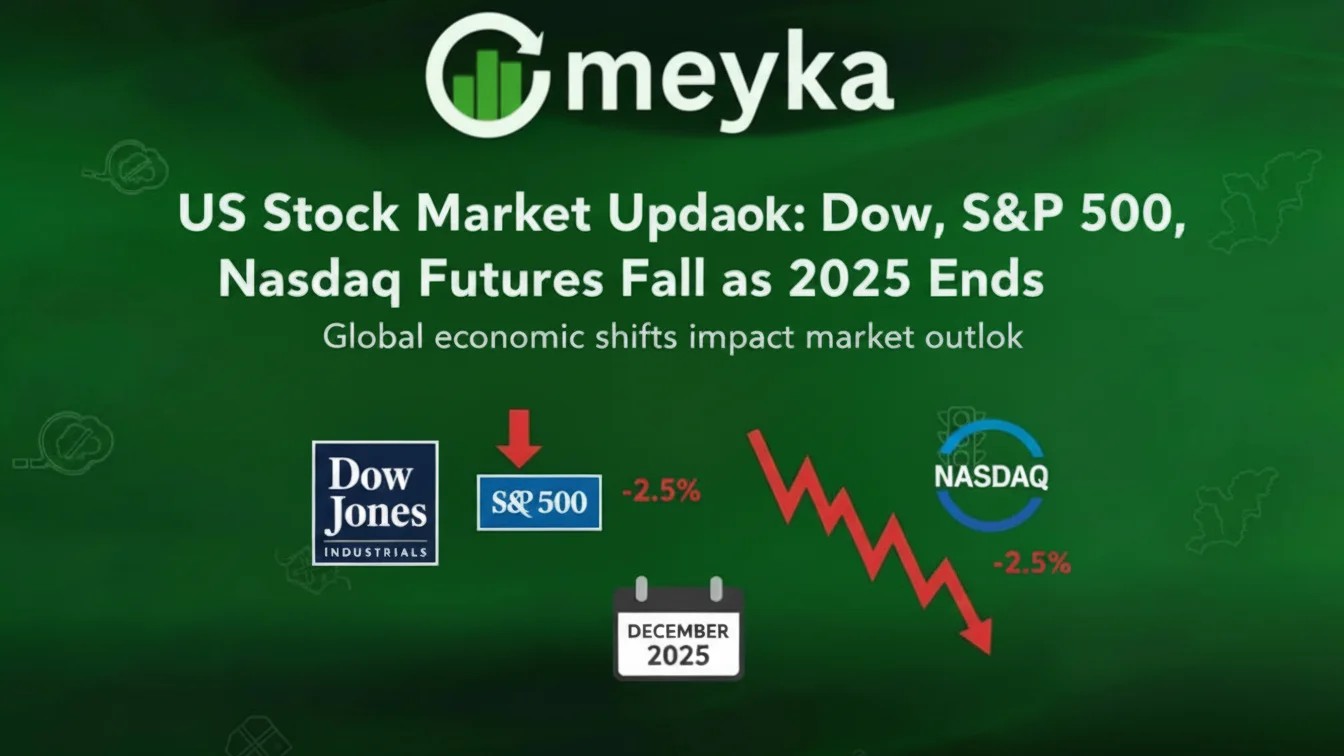
US Stock Market Update: Dow, S&P 500, Nasdaq Futures Fall as 2025 Ends
As 2025 draws to a close, the US Stock Market is showing signs of caution with futures tied to the Dow Jones Industrial Average, S&P 500 and Nasdaq 100 trending lower in early trading, signaling a potential softer start to the final week of the year after a strong rally that pushed benchmarks to record levels late last week.
Major U.S. stock index futures slipped on Monday following a holiday‑shortened week that saw the S&P 500 and Dow close at record highs, a climb that many attributed to strong technology and earnings momentum earlier in December.
Early Week Signals Softness in Major Index Futures
In early trading for the final week of 2025, Dow futures showed modest weakness while S&P 500 futures were down around 0.22 percent and Nasdaq 100 futures dipped about 0.40 percent, reflecting less confident sentiment among investors returning from the Christmas break and preparing for year‑end positioning.
This slight pullback comes after a holiday‑shortened rally that left the S&P 500 up more than 17 percent for the year, the Nasdaq up over 21 percent, and the Dow Jones Industrial Average climbing more than 13 percent year‑to‑date. Such solid gains make the market sensitive to profit‑taking and reduced trading volume as holidays approach.
How 2025 Played Out for Major Indexes
Wall Street wrapped up the last full week before the year closed with a mix of optimism and caution. On Friday’s lighter‑than‑usual trading session, all three major U.S. indexes ended slightly lower as institutional investors wound down positions ahead of year‑end. The S&P 500 slipped by about 2.11 points, the Dow Jones Industrial Average declined around 20.19 points, and the Nasdaq composite fell roughly 20.21 points amid reduced trading activity.
Despite these minor drops, the broader trajectory for 2025 was positive, with strong performance in sectors tied to innovation and technology, including AI stocks, which helped support investor confidence throughout the year.
What’s Behind the Current Market Mood
The current US Stock Market mood can be attributed to several key factors:
- Holiday Volume: Trading volumes are typically lighter at the end of December as many portfolio managers and traders take time off, leading to quieter markets and higher sensitivity to small moves.
- Profit Taking: After a strong rally in December and record highs for major indexes, some investors appear to be locking in gains before year‑end.
- Economic Signals: While inflation and employment data have shown signs of stability, expectations about future Federal Reserve policy in 2026 remain mixed. Some traders are cautious as they await upcoming economic releases and comments from policymakers.
- Geopolitical Developments: Global issues, including geopolitical negotiations, can impact risk appetite and market positioning. Comments about progress toward peace agreements, for example, have influenced investor views on risk assets.
Why Futures Matter to Investors
Futures markets act as early indicators of how stocks might open and trade when regular market hours begin, especially on the first trading days of the week. A downturn in futures tied to the Dow, S&P 500 and Nasdaq may suggest caution among institutional players and algorithm‑based traders as they weigh economic data, earnings expectations and year‑end flows.
For investors conducting thorough stock research, observing futures trends can provide insights into broader market sentiment and potential leadership shifts among sectors like technology, energy, financials or consumer stocks.
Seasonal Patterns and the Santa Claus Rally
Each year, traders watch for a potential “Santa Claus rally,” a seasonal trend where the US Stock Market posts gains in the final trading days of December and the first two days of January. This phenomenon often arises from a mix of holiday cheer, light trading volume and end‑of‑year portfolio adjustments.
However, this seasonal effect can be uneven depending on broader economic signals, earnings outlooks and investor sentiment. Despite mixed futures today, markets may still find support if the rally resumes once year‑end news fades and new catalysts for growth come into focus.
Tech and AI Stocks Still in Focus
Throughout 2025, technology stocks and AI stocks played a pivotal role in driving market gains, with major tech firms reporting strong earnings and maintaining high valuations. Leadership from this sector helped the Nasdaq produce substantial gains relative to other indexes.
Even as futures dip slightly, tech and AI‑related equities remain a key area of investor focus, especially for long‑term holders who view innovation trends as central to future growth prospects.
Looking Ahead to 2026 Trading
Investors preparing for the first trading days of 2026 are watching several indicators:
- Fed Policy Expectations: Economic data and Federal Reserve commentary on inflation, interest rates and employment will be crucial for early‑year market direction.
- Earnings Forecasts: Corporate earnings outlooks, especially from major U.S. companies, will guide sentiment in the first quarter.
- Global Economic Data: Trends in global growth, trade and supply chains will influence risk appetite.
Seasoned traders will be mindful of the January barometer, an old market adage suggesting that the market’s performance early in January can be a gauge for the full year, though its predictive power varies in different cycles.
Strategies for Investors Near Year‑End
Given the current environment, investors may consider several approaches:
- Review Portfolios: With the year ending, reviewing asset allocation, risk exposure and sector weighting is prudent.
- Focus on Fundamentals: Long‑term investors should prioritize companies with strong balance sheets, consistent earnings and growth prospects, rather than reacting to short‑term sentiment swings.
- Stay Informed on Macro Trends: Economic indicators and policy decisions can shift market dynamics, so staying updated is key for effective decision‑making.
- Manage Volatility: Year‑end thin markets can lead to heightened price swings, so careful position sizing and risk controls help protect portfolios.
Conclusion
As 2025 comes to a close, the US Stock Market shows a blend of resilience and caution with futures for the Dow, S&P 500 and Nasdaq trending lower in early trading. This reflects the typical holiday‑shortened trading environment where lighter volume and profit taking can lead to modest dips in futures, even after strong gains throughout the year.
nvestors tracking market movements, including those focused on AI stocks and broader equity trends, will be watching how the final days of the year unfold and what early signals 2026 may bring. By combining solid stock research with awareness of economic data and seasonal trends, market participants can better navigate the transition from one year to the next.
FAQs
Futures are dipping due to lighter trading volume, profit taking after record highs and investor caution ahead of year‑end economic data.
A dip in futures often signals cautious sentiment and may lead to a softer open in regular trading, but it is not always a predictor of long‑term trends.
Yes, seasonal patterns can influence short‑term moves, but they should be considered alongside fundamental economic and corporate performance indicators.
Disclaimer:
The content shared by Meyka AI PTY LTD is solely for research and informational purposes. Meyka is not a financial advisory service, and the information provided should not be considered investment or trading advice.