vedanta share price

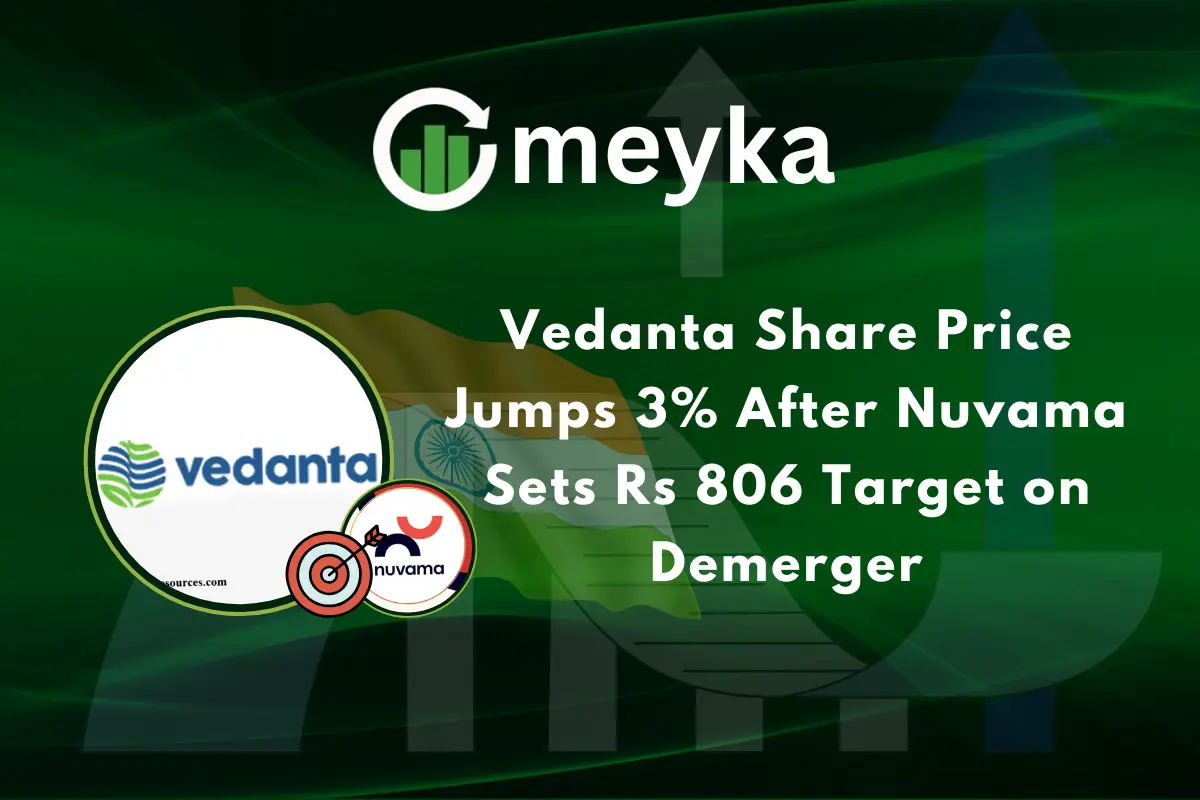
Vedanta Share Price Jumps 3% After Nuvama Sets Rs 806 Target on Demerger

On January 14, 2026, Vedanta’s share price shot up sharply after a major brokerage pushed its target to ₹806 per share. This move grabbed attention across Indian markets. Investors were quick to notice. The stock climbed more than 3-6% as traders reacted to the new outlook.

But this rise is not just about a higher number on a price chart. It ties to something bigger, the company’s plan to split into new listed businesses. Analysts believe this restructuring could unlock value that has been hidden for years.

Let’s explain why the Vedanta share price jumped. We look at what Nuvama sees, why the demerger matters, and what it means for investors now and ahead. 

What Triggered the Vedanta Share Price Rally? Nuvama’s ₹806 Target Explained

Vedanta’s share price climbed sharply on January 14, 2026, after Nuvama Institutional Equities raised its target price to ₹806 per share. This new target was much higher than recent trading levels and pushed the stock up more than 6% to a record high as investors reacted positively.

Investing.com Source: Vedanta Share Price Current Overview, January 14, 2026

The revised target did more than just lift sentiment. It signaled that analysts see strong value creation from the company’s demerger plan. Nuvama’s call reflects the growing belief that Vedanta could deliver better profits and clearer business value once its units operate independently.

This reaction stood out in a broader market where key indices like Sensex and Nifty were trading lower on the same day. Despite pressure from crude prices and foreign selling, metal stocks, including Vedanta, gained ground.

The rally was about more than one number. It showed that investors see structural change and clearer focus as drivers of future gains. The rest of this article breaks down why that matters, what the demerger really means, and the risks and opportunities ahead.

Vedanta Share Price: The Demerger

The root of the stock move lies in Vedanta’s long-planned demerger scheme that has now cleared key legal hurdles. On January 9, 2026, the National Company Law Tribunal (NCLT), Mumbai Bench, approved the scheme of arrangement for the company’s subsidiaries. This approval opens the path for operational split and a clearer corporate focus.

In essence, the demerger aims to break Vedanta into several standalone listed firms. The goal is to let each business grow on its own. A recent Financial Express report explains that the tribunal’s order allows focused, sector-leading companies covering aluminium, oil and gas, power, and iron and steel verticals, among others.

This change matters because investors often value pure-play companies higher than diversified conglomerates. When businesses operate independently, they can make decisions faster, raise capital on their own terms, and attract more specific investor interest. This trend has helped stock prices in many global resource companies, and Vedanta’s plan mirrors that global model.

The NCLT’s approval came despite earlier objections from the Ministry of Petroleum and Natural Gas, which had raised concerns over disclosure and financial risk. The tribunal found that the company met necessary legal standards and that necessary shareholder and creditor approvals were in place.

Quantifying the Opportunity: How Big Can Vedanta Move?

The ₹806 target from Nuvama implies a significant upside from recent prices. This makes analysts and investors rethink their models on Vedanta’s growth path. The strong reaction on January 14, 2026, underscores this shift in view.

Other brokerages have also adjusted their targets and views following the demerger progress. For example, Investec recently raised its valuation assumptions and revised EBITDA growth expectations, while Citi maintained a buy rating with a mid-range target. These calls reflect expectations that the separate entities could gain higher valuations than the consolidated group.

With regulatory hurdles now easing, Vedanta aims to complete the demerger by March 2026. This timetable gives markets a clear line of sight on the structural change and keeps momentum alive for the stock.

More importantly, each new listed entity could attract a different set of investors. Some may like pure metals plays while others may prefer energy or power assets. This diversification of investor bases can support sustainable price growth over time.

Vedanta Share Price: Risks Investors Must Not Ignore

The demerger brings promise, but it also carries real risks. First, execution risk is high because splitting a large conglomerate into separate listed companies involves many moving parts. Assigning assets, reallocating debt, and securing regulatory sign-offs are complex tasks that can take time.

Second, although the NCLT has approved the scheme, the broader regulatory environment is still important. Earlier objections from government authorities highlighted that state claims and asset disclosures are sensitive areas. Any delays in finalizing demerger conditions could affect investor confidence.

Third, broader market pressures like commodity price swings, currency moves, and global economic trends could still influence Vedanta’s share price. Even if the demerger unlocks value, these macro factors will continue to shape returns.

Thus, while the restructuring is a key growth story, investors must weigh sector volatility and execution timelines carefully.

Vedanta Share Price Movement: What This Means for Investors

In the short term, positive ratings like Nuvama’s ₹806 target and clear demerger progress could support further momentum trading. Traders often seize on news catalysts that can move prices quickly within days or weeks.

For long-term investors, the demerger could offer deeper gains once each business unit begins independent operation. Pure-play companies often trade at higher valuation multiples than diversified groups because they are easier to analyze and value. If Vedanta’s split unlocks such valuation uplift, shareholders stand to benefit.

However, the full effects will take shape only after the separate listings and operational shifts are final. Investors should follow key dates such as the announcement of record dates and actual listing launches.

Conclusion: A Defining Moment for Vedanta Share Price

Vedanta’s share price surge in early 2026 is not a random spike. It reflects real structural progress backed by a powerful catalyst, a long-awaited corporate demerger that has now gained legal approval and momentum. As markets digest this change, the stock’s direction will depend on how smoothly the company executes its strategic plans, fulfills regulatory conditions, and communicates progress to investors.

Frequently Asked Questions (FAQs)

Why did Vedanta shares rise after Nuvama’s ₹806 target?

Vedanta’s shares rose sharply on January 14, 2026, after Nuvama raised its price target to ₹806 per share. This higher target showed strong confidence in the company’s future. The move also reflects expected gains from Vedanta’s demerger plan, which investors see as a value booster.

What is Vedanta’s demerger plan?

Vedanta’s demerger plan splits the company into five new, focused businesses like aluminium, oil and gas, and power. It got a key legal nod from the NCLT in December 2025, moving the process forward. This change aims to make each business easier to value and manage.

Will shareholders get new Vedanta shares after the split?

Yes. After the demerger, existing Vedanta shareholders are expected to receive shares in the new companies. For each Vedanta share held, investors will get one in each new entity, keeping ownership balanced. 

Disclaimer

The content shared by Meyka AI PTY LTD is solely for research and informational purposes. Meyka is not a financial advisory service, and the information provided should not be considered investment or trading advice.

Similar Posts

Leave a Reply

Your email address will not be published. Required fields are marked *