Warner Bros

Warner Bros Set to Reject $108.4 Billion Paramount Offer, Sources Say

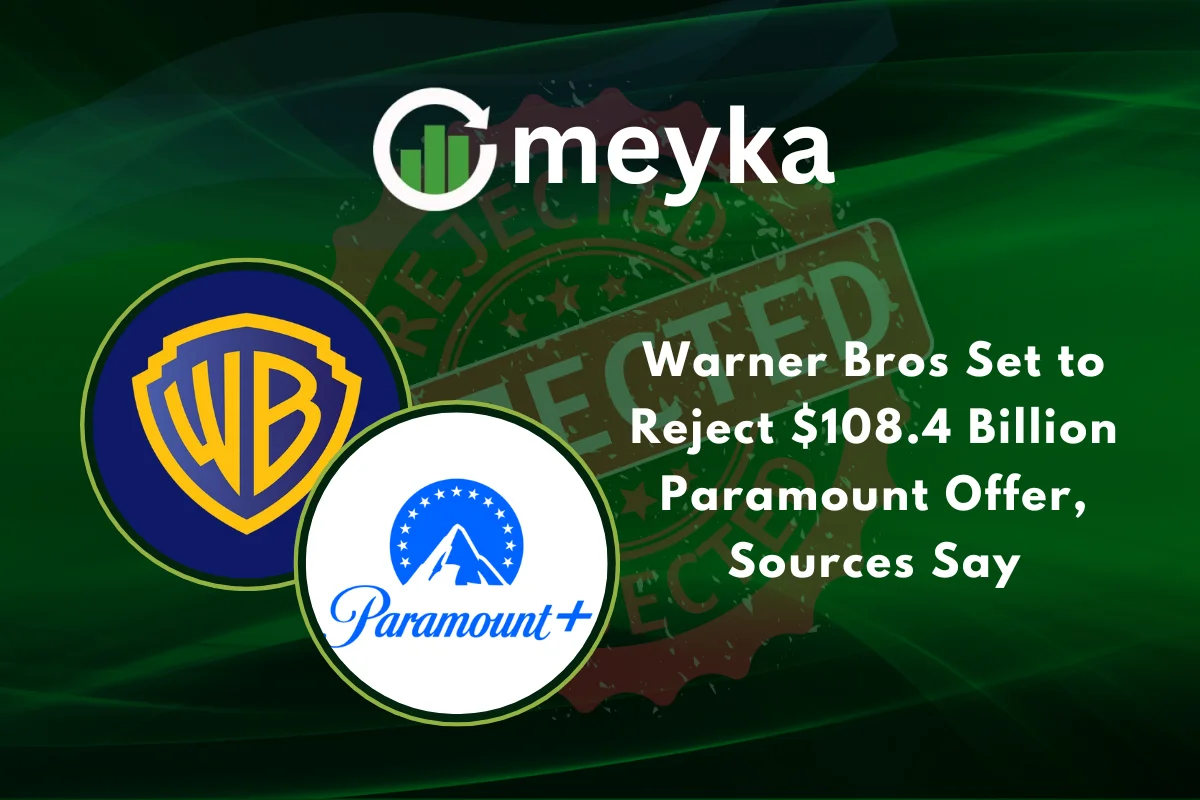
We are witnessing a critical shift in the global media landscape as Warner Bros prepares to reject a reported $108.4 billion acquisition offer from Paramount, according to multiple industry sources. This decision is not just about valuation; it reflects deeper strategic priorities, evolving market conditions, and the future direction of one of the world’s most influential entertainment companies.

The proposed merger would have been one of the largest media mergers in history, reshaping Hollywood’s power structures and influencing global content distribution for decades. However, signals from insiders suggest that Warner Bros views the offer as misaligned with its long-term growth vision, especially at a time when digital transformation, streaming economics, and AI-driven media strategies are redefining the industry.

Why the Paramount Offer Falls Short

Sources close to the matter indicate that the $108.4 billion bid undervalues Warner Bros’ assets, intellectual property, and future earnings potential. The company controls a vast portfolio including premium film franchises, global television networks, and streaming platforms with strong international reach.

We understand that Warner Bros leadership believes the offer fails to reflect several key strengths.

First, its content library continues to generate recurring revenue across theaters, licensing, and streaming. Second, operational restructuring over the past few years has started to stabilize cash flows. Third, investments in data analytics and artificial intelligence are improving content targeting and advertising efficiency.

In today’s stock market, media valuations increasingly depend on digital scalability rather than traditional box office performance alone. This shift has strengthened Warner Bros’ confidence in remaining independent.

Strategic Independence Over Consolidation

The broader media industry has seen aggressive consolidation as companies chase scale to compete with tech-driven streaming giants. However, consolidation also brings regulatory risk, cultural clashes, and operational complexity.

By stepping away from the Paramount offer, Warner Bros signals a preference for strategic independence rather than rapid consolidation. We see this as a move to maintain creative control, protect brand identity, and avoid lengthy regulatory scrutiny in the United States and international markets.

Regulators have already tightened oversight on mega mergers, especially those involving content distribution and advertising influence. A deal of this magnitude would likely face extended reviews from institutions such as the US Department of Justice and the Federal Trade Commission, adding uncertainty for investors and employees.

Implications for Investors and the Stock Market

From an investor’s perspective, the decision carries meaningful implications. Media stocks have faced volatility amid slowing advertising growth and rising content costs. However, rejecting the offer suggests confidence in internal growth plans and long-term shareholder value creation.

Market analysts conducting stock research note that Warner Bros has been actively reducing debt, optimizing production budgets, and focusing on higher-margin content. These actions support a stronger balance sheet and improve resilience against economic downturns.

In the context of AI stocks, media companies that integrate artificial intelligence into production planning, marketing, and viewer analytics are attracting renewed interest. Warner Bros has already signaled deeper AI adoption to predict audience behavior and enhance monetization, positioning it favorably within evolving market trends.

The Role of Streaming and Digital Expansion

Streaming remains central to Warner Bros’ future. While the sector has matured, profitability rather than subscriber growth is now the primary goal. Warner Bros has adjusted its strategy by prioritizing quality releases, targeted international expansion, and bundled offerings.

We observe that management believes these initiatives will deliver higher lifetime customer value than a short-term premium from an acquisition. The company’s leadership appears convinced that operational execution will unlock greater upside than selling at the current stage.

This belief aligns with broader stock market sentiment, where investors increasingly reward disciplined spending and predictable cash flows over aggressive expansion.

Paramount’s Position and Industry Reaction

Paramount’s reported interest highlights its own need for scale and diversification. Facing competitive pressure from global streaming leaders, Paramount has explored partnerships and mergers to strengthen its market position.

However, industry reaction suggests skepticism about the strategic fit between the two companies. Integrating overlapping studios, distribution channels, and corporate cultures would require years of restructuring. During that time, competitors could gain ground.

We see this as a reminder that size alone does not guarantee success in modern media markets. Execution speed, technological adaptability, and content relevance now matter more than sheer scale.

Global Media Trends Shaping the Decision

Several global trends reinforce Warner Bros’ stance.

Advertising models are shifting toward data-driven targeting, supported by AI and advanced analytics. Content consumption is fragmenting across platforms and regions. Viewers demand personalization, flexibility, and consistent quality.

Warner Bros has positioned itself to respond to these changes through strategic partnerships, technology investments, and selective content expansion. These moves reduce reliance on traditional revenue streams and support sustainable growth.

Trusted institutions such as the Motion Picture Association and financial analysts cited by Reuters and Bloomberg have repeatedly emphasized that future media leaders will be those who balance creativity with technological efficiency.

What Comes Next for Warner Bros

Looking ahead, we expect Warner Bros to continue refining its business model rather than pursuing transformative mergers. This includes disciplined content spending, expansion in high-growth international markets, and deeper integration of AI tools.

The company’s rejection of the Paramount offer sends a clear message to the market. Warner Bros believes its best days lie ahead as an independent powerhouse, not as part of a larger conglomerate.

For long-term investors, this approach may offer steadier returns, lower regulatory risk, and exposure to innovation within the entertainment sector.

FAQs

Why is Warner Bros rejecting the Paramount offer?

We understand that leadership believes the $108.4 billion valuation does not fully reflect the company’s assets, future growth, and strategic potential in streaming and AI-driven media.

How does this decision affect Warner Bros stock?

In the short term, market reactions may be mixed. Over the long term, investors focused on fundamentals and stock research may view independence as a positive signal of confidence and discipline.

Will Warner Bros consider other mergers in the future

While no major deals are currently expected, the company may pursue selective partnerships or acquisitions that align with its digital and international growth strategy.

Disclaimer:

The content shared by Meyka AI PTY LTD is solely for research and informational purposes. Meyka is not a financial advisory service, and the information provided should not be considered investment or trading advice.

Similar Posts

Leave a Reply

Your email address will not be published. Required fields are marked *