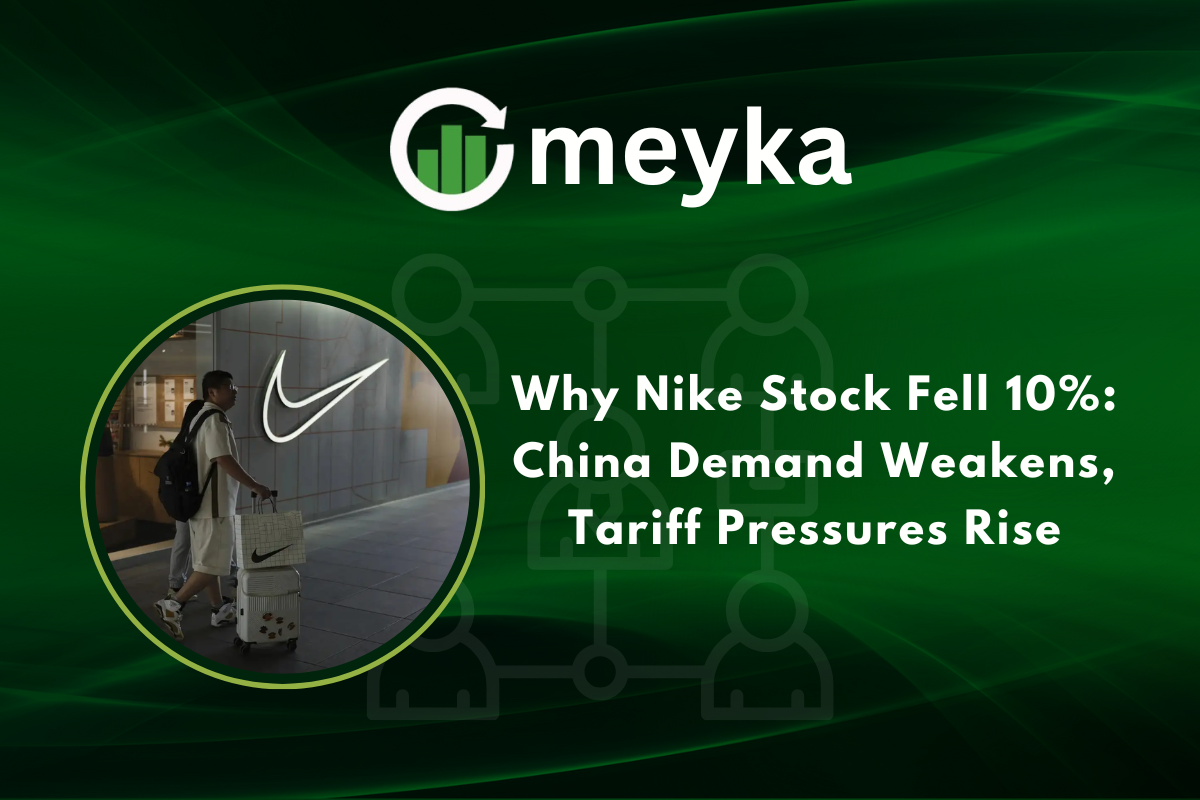
nike stock
|

Why Nike Stock Fell 10%: China Demand Weakens, Tariff Pressures Rise

Why Nike Stock Fell 10% and Why the Market Is Watching Closely

Nike stock shocked Wall Street after falling nearly 10 percent in a single session, raising serious questions about global demand, cost pressure, and future growth. Investors reacted fast after fresh updates showed China’s demand weakening, along with rising tariff pressure that could squeeze margins in the coming quarters.

Nike (NKE) is one of the world’s most trusted sportswear brands. So why did the market turn so sharply?

This detailed report breaks down every reason behind the Nike stock fall, explains what went wrong, and looks at what could come next. 

Nike Stock Price Crash Explained in Simple Words

What happened to Nike stock today?

Nike stock (NKE) dropped about 10 percent after investors reacted to signs of slower growth in China and higher cost risks from tariffs. While Nike beat some revenue expectations, the bigger picture worried the market.

The stock fall reflects fear, not panic, but fear backed by numbers.

Why does this matter to investors?

Nike (NKE) is often seen as a bellwether brand. When Nike stock falls this hard, it signals deeper issues in global consumer demand, supply chains, and pricing power.

Nike Stock and China Demand Weakness

Why is China so important for Nike stock?

China is one of Nike’s largest growth markets. Sales growth in China helps support Nike’s global revenue and profit outlook.

But recent data shows a slowdown.

According to reporting from The Wall Street Journal, Nike sales in China remain weak, even as other regions show slight improvement. Local brands are growing faster, and Chinese consumers are spending more carefully.

What exactly went wrong in China?

Several factors hit Nike at once.

First, local competition in China has grown stronger. Chinese sportswear brands are cheaper and feel more local.

Second, consumer confidence in China remains weak. Shoppers are cutting back on non-essential items, including premium sneakers.

Third, inventory levels remain uneven, forcing Nike to discount products.

All this hurts margins and weighs on Nike stock.

Nike Stock Under Pressure From Tariffs

What tariff pressure is Nike facing?

Nike (NKE) produces a large share of its products in Asia. Rising tariff pressure between major economies increases costs on shoes and apparel.

Even a small tariff hike can hurt profits when volumes are large.

Why do tariffs matter so much to Nike stock?

Nike already faces higher labor and logistics costs. Tariffs add another layer of cost that is hard to pass on to consumers without hurting demand.

Investors worry that Nike’s margins could shrink, and that fear pushed Nike stock lower.

Nike Earnings Report and Market Reaction

Did Nike beat earnings expectations?

Yes, partially. According to Investing.com, Nike edged past quarterly revenue expectations, showing that demand in some regions remains stable.

But markets do not trade only on the past. They trade on the future.

Why did Nike stock still fall after decent earnings?

Because forward guidance matters more.

Nike warned about:

• Slower growth in China
• Pressure on gross margins
• Ongoing pricing challenges
• Higher costs from tariffs

This cautious outlook spooked investors.

What Analysts Are Saying About Nike Stock

Is this a short-term reaction or a deeper issue?

Analysts are split.

Some say this is a short-term reset. Others believe Nike faces a longer adjustment phase.

A report from Finviz asked a key question many investors are asking now.

Is Nike stock a buy after the crash?

That debate is growing louder.

Social Media Reacts to Nike Stock Drop

Market watchers on social media shared strong views after the sell-off.

One widely shared post highlighted how Nike stock fell faster than expected, raising concerns about global consumer demand.

You can see investor reaction here:

Another market-focused account pointed out how China’s demand remains the key risk for Nike’s near-term recovery.

Traders also discussed valuation reset and margin pressure following the earnings update.

A long-term investor shared concerns about competitive pressure in Asia and future pricing power.

These posts show that sentiment around Nike stock has clearly shifted.

Key Reasons Why Nike Stock Fell 10 Percent

Here are the main reasons Nike stock dropped sharply:

• Weak demand in China
• Rising tariff and cost pressure
• Margin concerns
• Strong local competition
• Cautious future guidance

This clear list helps explain the moves.

Is Nike Losing Its Brand Power?

Not yet, Nike remains one of the most powerful brands in the world.

But brand power alone does not guarantee growth.

Consumers today are price sensitive. They want value, not just logos.

This shift especially affects premium brands like Nike.

Nike Stock Valuation After the Drop

Is Nike stock cheaper now?

Yes. After the fall, Nike stock trades at a lower valuation, making it more attractive to long-term investors. But cheaper does not always mean safe.

What risks remain?

Key risks include:

• Prolonged weakness in China
• More tariffs
• Inventory issues
• Slower global demand

Investors must weigh value against uncertainty.

What Could Help Nike Stock Recover?

Possible positive triggers

Several factors could help Nike stock recover:

• Better China consumer data
• Stabilizing tariffs
• Improved margins
• Strong holiday sales
• Product innovation

Nike has recovered from downturns before. But timing matters.

Should Investors Buy Nike Stock Now?

This depends on your strategy

For long-term investors, Nike remains a quality company with strong global reach.

For short-term traders, volatility may continue.

Ask yourself:

Do you believe China’s demand will recover?
Do you believe tariffs will ease?

Your answers shape your decision.

Expert View on Nike Stock Outlook

Nike’s leadership, global supply chain experience, and brand strength support long-term trust.

However, earnings visibility remains limited in the short term.

Experts suggest patience rather than panic.

Final Thoughts on Nike Stock Fall

Nike stock falling 10 percent is not just about one earnings report. It reflects deeper concerns about China’s demand, tariffs, and global consumer behavior.

The company is not broken. But it is under pressure.

Investors should watch China data closely, track cost trends, and listen to future guidance.

Nike’s next moves will decide whether this drop becomes an opportunity or a warning.

For now, Nike stock remains one of the most important names to watch in global markets.

FAQ’S

Why did Nike stock fall 10 percent recently?

Nike stock dropped nearly 10 percent after investors reacted to weak demand in China and rising tariff pressures. The company also shared cautious guidance, which raised concerns about future revenue growth and profit margins.

How is weak China demand affecting Nike stock?

China is one of Nike’s largest growth markets. Slower consumer spending, high inventory levels, and reduced foot traffic in China hurt sales expectations, which directly pushed nike stock lower in the market.

What role do tariffs play in the Nike stock decline?

Rising tariff pressures increase Nike’s production and import costs. These higher costs can reduce profit margins, making investors worried about earnings stability, which contributed to the sharp fall in nike stock.

Did Nike’s earnings report trigger the stock drop

Yes, even though Nike met some revenue expectations, earnings guidance was cautious. Investors focused more on future risks, including China weakness and cost inflation, leading to heavy selling in nike stock.

Is Nike stock a buy after the 10 percent fall?

Some analysts believe nike stock could offer long-term value due to its strong brand and global presence. However, short-term risks remain due to China demand uncertainty and tariff-related cost pressures, so investors are advised to be cautious.

Disclaimer

The content shared by Meyka AI PTY LTD is solely for research and informational purposes.  Meyka is not a financial advisory service, and the information provided should not be considered investment or trading advice.

Similar Posts

Leave a Reply

Your email address will not be published. Required fields are marked *