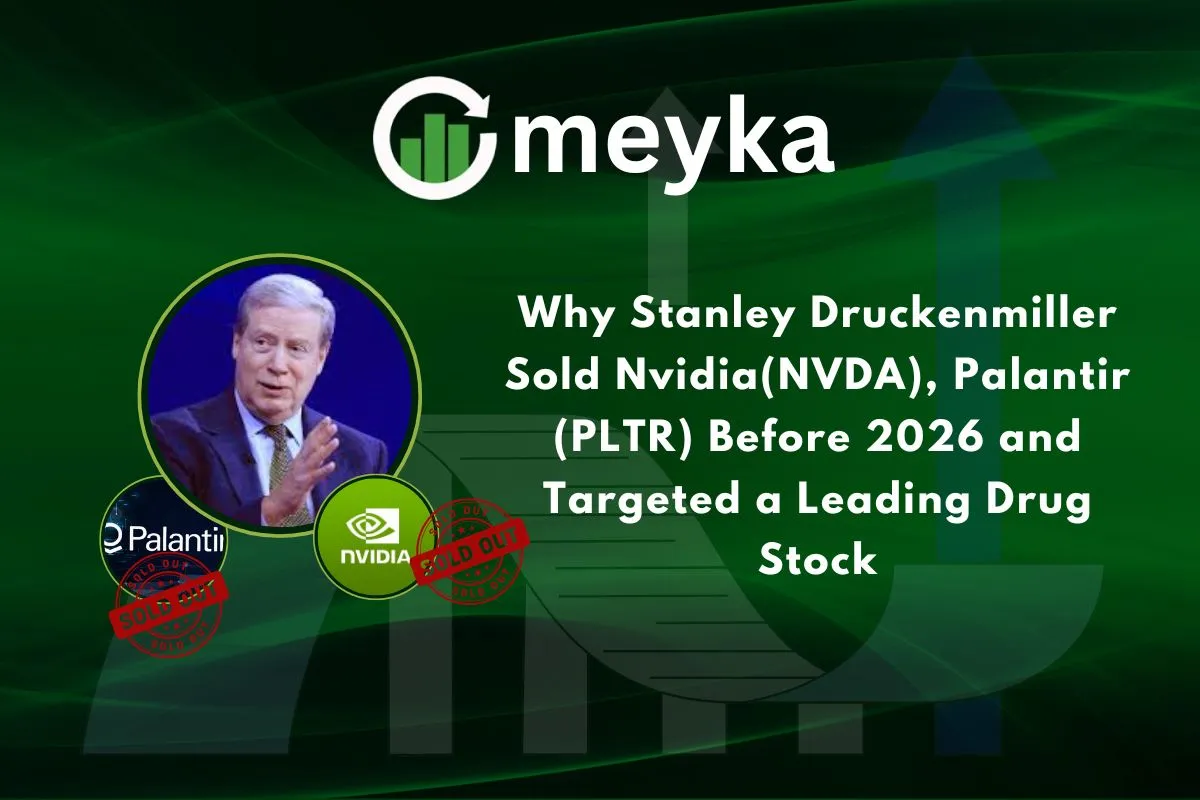
Why Stanley Druckenmiller Sold Nvidia(NVDA), Palantir (PLTR) Before 2026 and Targeted a Leading Drug Stock
In November 2025, new SEC filings caught Wall Street’s attention. Stanley Druckenmiller quietly reduced his exposure to some of the market’s most popular AI stocks. Nvidia and Palantir were among them. These were not random names. Both stocks had surged on strong AI demand and investor excitement. Yet, one of the world’s most respected money managers chose to step back.
Druckenmiller is known for acting early. He does not wait for headlines to turn negative. He studies valuations, cycles, and risk. When prices run far ahead of reality, he adjusts. His latest moves suggest growing caution toward crowded AI trades before 2026.
At the same time, his portfolio showed a clear shift. Capital moved toward a leading drug stock, a sector many investors had ignored. This contrast raises an important question. Why leave high-growth tech while betting on healthcare now? The answer lies in timing, discipline, and long-term market balance.
Who Is Stanley Druckenmiller & Why His Moves Matter?
Stanley Druckenmiller is one of the most respected investors in the world. His long track record includes decades of strong returns without big losses. People pay close attention when his family office, Duquesne Family Office, changes its holdings. These changes show where an experienced money manager sees risk and opportunity. Druckenmiller reports his buys and sells each quarter through SEC Form 13F filings. These filings give the public insight into his strategy before the rest of the market reacts.
His recent activity has drawn major interest. In the past year, he completely sold his stakes in two of the hottest AI stocks in the market: Nvidia (NVDA) and Palantir (PLTR). That is unusual because both companies have been central to the booming AI trend over the past several years.
Investors watch moves like this because they can hint at changing themes in the market. Druckenmiller’s exit from these high-profile tech names suggests he is adjusting his risk view. At the same time, he has moved significant capital into a drug stock that many did not see coming. This contrast offers lessons about valuation, timing, and sector rotation ahead of 2026.
Nvidia & Palantir: The AI Boom That Could Become a Bubble
Nvidia: Peak Valuation, Profit Taking, and Sentiment Shift
Nvidia became one of the biggest winners of the AI revolution. Its AI chips power many of the data centers and cloud services driving modern machine learning. The company’s growth has been stunning, with massive gains in stock price and a huge market valuation. But that success may have also created a valuation risk. In the third quarter of 2024, Druckenmiller’s fund sold all 214,060 shares it held in Nvidia.

Druckenmiller reportedly described selling Nvidia as a “big mistake” later, but remained comfortable letting valuation guide his choice. Nvidia’s valuation had become very high compared with fundamentals, according to some analysts.
Palantir: Strong Growth, But Price Far Ahead of Fundamentals
Palantir also delivered incredible returns over recent years. The company’s AI-driven platforms, Gotham and Foundry, serve defense and enterprise clients with data tools that many rivals cannot match. This led to strong sales and predictable cash flow. However, Druckenmiller reduced and eventually fully exited his 769,965-share position in Palantir between mid-2024 and March 2025.

While profit-taking played a role, valuation concerns also influenced the decision. Some metrics, like forward price-to-sales, suggested that Palantir’s stock price was extremely high relative to its revenue growth. This raised questions about risk if investor sentiment shifted.
AI Valuation Risks and Market Timing
The broader idea behind these moves may have more to do with market dynamics than company fundamentals alone. AI stocks have drawn huge investor interest, but strong price gains can create bubble-like conditions. Druckenmiller once commented that AI might be “overhyped now, but underhyped long term,” signaling he sees real potential in the technology but also risks in near-term pricing extremes.
The Macro Narrative: Rotating Out of Tech at Peak Risk
Across 2024 and 2025, markets have shown volatility. High levels of uncertainty about valuation and economic growth have pushed some investors to reassess risk exposure. Druckenmiller’s portfolio changes reflect this shift. Exiting high-valuation tech stocks like Nvidia and Palantir is consistent with a strategy that favors strong fundamentals over hype-driven price surges.
The average holding period in his fund has remained short, suggesting a readiness to lock in profits and redeploy capital where potential returns appear more balanced.
This isn’t simply abandoning AI. Other filings show that Druckenmiller occasionally buys into other tech names and even other AI-related opportunities. What stands out is selective rotation rather than blanket acceptance of all high-flying tech stocks.
The Drug Stock Pivot: A Strategic Play on Healthcare
Teva Pharmaceuticals: The New Core Position
One of the most notable buys following the tech exits was Teva Pharmaceutical Industries (TEVA). Between Q3 2024 and Q3 2025, Druckenmiller’s fund steadily increased its ownership in Teva. By late 2025, the total position reached over 16 million shares, making it one of the largest holdings in the portfolio.
Teva had faced legal and operational challenges earlier, but the company worked through many of those issues. As the legal overhang reduced, its stock price strengthened. Teva also focuses on both brand and generic drugs, which provides a mix of steady cash flow and growth potential.
Healthcare Stability vs Tech Volatility
Healthcare stocks often behave differently from tech names. They tend to show more stable earnings and less sensitivity to economic cycles. For investors concerned about valuation extremes in technology, drug stocks can offer a more grounded alternative.

Teva’s performance reflects this mix of defensive characteristics plus growth catalysts. Over the past year, Teva’s shares surged while traditional tech volatility spiked, highlighting why Druckenmiller found the sector attractive.
Other Healthcare Moves
Reports also show Druckenmiller adding other healthcare-related positions, such as shares in Eli Lilly (LLY) and biotech firms like Viking Therapeutics (VKTX). These additions hint at a broader theme: exposure to drug makers benefiting from long-term industry trends like new therapies and demographic demand.
Contrarian Wisdom: Lessons From Druckenmiller’s Trade
Druckenmiller’s recent actions highlight several key investing principles. First, valuation matters. Top-performing stocks can carry increased risk when prices run far ahead of earnings or sales. Second, markets go through cycles. When one sector becomes overheated, rotation into undervalued areas may offer better risk-reward opportunities. Finally, shifting allocations doesn’t mean abandoning a theme entirely; it means prioritizing resilience and fundamentals.
What does this mean for Investors?
Not every investor should copy these moves, but Druckenmiller’s pattern offers insights. Watching how seasoned professionals adjust risk can inform timing and sector allocation strategies. It also reminds investors to look beyond headlines and consider value, growth drivers, and potential risks in any stock.
Conclusion: Strategic Takeaways Before 2026
Druckenmiller’s shift out of Nvidia and Palantir and into drug stocks like Teva reflects a thoughtful rebalancing amid changing market conditions. Instead of following hype alone, he emphasized valuation discipline and long-term fundamentals. As markets evolve, this kind of strategy can act as a signal for investors to reassess their own portfolios ahead of 2026.
Disclaimer
The content shared by Meyka AI PTY LTD is solely for research and informational purposes. Meyka is not a financial advisory service, and the information provided should not be considered investment or trading advice.