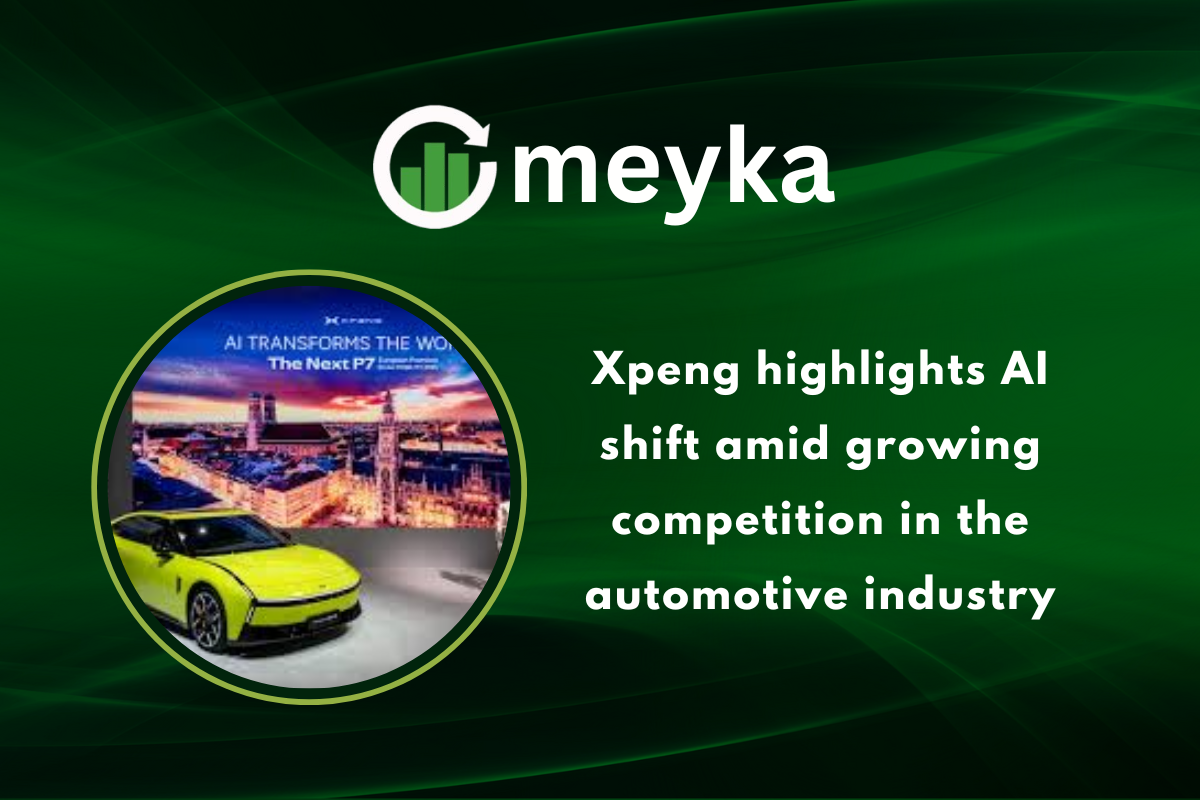
Xpeng Highlights AI Shift Amid Growing Competition in the Automotive Industry
Xpeng, one of China’s most closely watched electric vehicle makers, is placing a strong bet on artificial intelligence as competition in the global auto industry heats up. With pressure rising from local rivals and global giants, the company is reshaping its future around smart software, autonomous driving, and AI-powered mobility. This strategic shift is not just about cars; it is about redefining what driving means in a fast-changing market.
The move comes at a time when the electric vehicle space is crowded, margins are tight, and customers expect more than just range and design. They want intelligence, safety, and seamless digital experiences. Xpeng believes AI is the key to staying ahead.
Why Xpeng Is Focusing on AI Right Now
The global electric vehicle market has entered a new phase. Early growth driven by subsidies and novelty has slowed. Now, brands must compete on technology depth, cost control, and user experience. For Xpeng, AI sits at the center of all three.
According to public comments highlighted in recent industry reports, Xpeng sees AI as a long-term engine for differentiation. Instead of relying only on hardware upgrades, the company is investing heavily in software-driven innovation. This includes smarter driver assistance systems, improved autonomous features, and in-car intelligence that learns from real-world driving data.
Why is this happening now? Because competition has never been tougher. Chinese EV makers like BYD, Nio, and Li Auto are fighting for market share at home, while Tesla continues to push aggressive pricing and software updates. At the same time, traditional automakers are rolling out electric models with deep pockets and global scale.
In such an environment, standing still is not an option.
Xpeng and the AI-Driven Vehicle Vision
How AI Is Changing Xpeng’s Product Strategy
Xpeng’s leadership has made it clear that the company is moving beyond the idea of selling cars as static products. Instead, vehicles are becoming living platforms that improve over time through software updates.
AI plays a major role in this vision. It powers advanced driver assistance systems, intelligent navigation, voice interaction, and real-time decision making on the road. These systems rely on massive amounts of data collected from vehicles, which are then processed to improve performance and safety.
For example, Xpeng’s autonomous driving technology uses AI models trained on millions of kilometers of driving data. This allows the system to recognize road conditions, traffic patterns, and potential hazards more accurately with each update.
A natural question arises here. Does this mean fully self-driving cars are coming soon? The answer is more complex. While full autonomy remains a long-term goal, Xpeng is focused on practical, step-by-step improvements that make driving safer and easier today.
The Role of AI Software in User Experience
Beyond driving itself, AI also enhances the overall user experience. Voice assistants are becoming more natural. Infotainment systems are learning user preferences. Navigation adapts to traffic patterns in real time.
These features matter because modern car buyers increasingly compare vehicles like they compare smartphones. Software quality, update frequency, and ease of use can influence buying decisions as much as horsepower or battery size.
This is where Xpeng wants to stand out, by making its cars feel smarter and more personal over time.
Competitive Pressure in the EV Market
The automotive industry is facing one of its most intense competitive periods in decades. Electric vehicles are no longer niche products. They are mainstream, and almost every major automaker wants a piece of the market.
Chinese EV brands face unique pressure. On one side, domestic rivals compete fiercely on price and features. On the other hand, global brands bring strong brand recognition and international reach.
Tesla remains a benchmark in software and autonomy, while companies like Huawei are entering the auto space through partnerships, bringing deep AI and chip expertise. Traditional manufacturers are also accelerating their digital transformation.
In this environment, Xpeng’s AI shift is as much a defensive move as it is an offensive one. It aims to protect market share while opening new growth paths.
Key Areas Where Xpeng Is Applying AI
Core AI Focus Areas at Xpeng
- Autonomous driving systems that use deep learning and real-time data processing
- Smart cockpit features powered by natural language understanding
- AI-based safety systems that adapt to different driving styles
- Continuous software updates that improve vehicle performance over time
These areas show how AI is not limited to one feature. It touches almost every part of the vehicle.
How Xpeng’s AI Strategy Compares to Rivals
Xpeng is not alone in pushing AI. However, its approach has some unique traits. The company emphasizes in-house development of software and algorithms. This allows tighter integration between hardware and software, which can lead to smoother performance.
Some competitors rely more on partnerships for AI solutions. While this can speed up development, it may limit flexibility. Xpeng believes owning its core AI stack gives it better control over the innovation pace.
At the same time, this approach requires heavy investment. AI research, computing infrastructure, and talent are expensive. This raises an important question.
Can Xpeng sustain this spending while managing profitability?
The company appears aware of this challenge. Management has suggested that scale and software reuse across models will help spread costs over time. As vehicle volumes grow, the per-unit cost of AI development could fall.
Financial and Market Implications of the AI Shift
From an investor’s perspective, the AI focus has both risks and rewards. On the positive side, strong AI capabilities can support premium pricing, customer loyalty, and long-term brand value. Software-driven features can also open new revenue streams, such as subscriptions or paid upgrades.
On the risk side, heavy research spending can pressure margins in the short term. The market may also punish delays or underperformance if promised features do not arrive on time.
This is why analysts are watching Xpeng closely. Many see the AI strategy as necessary, but execution will be key. Success depends on turning technical progress into real customer benefits.
Some investors also use broader market tools and AI stock analysis platforms to track how companies like Xpeng perform relative to peers. These tools highlight trends in innovation spending, delivery growth, and user adoption.
How AI Shapes Xpeng’s Long-Term Vision
Looking ahead, Xpeng sees AI as the foundation of future mobility. This includes not just private cars but also potential applications in shared mobility, robotics, and smart transportation systems.
The company has hinted at exploring areas beyond traditional vehicles, where AI and automation could play a role. While details remain limited, the message is clear. Xpeng does not want to be seen only as a carmaker.
This broader vision aligns with trends across the tech and auto industries, where boundaries are blurring. Cars are becoming computers on wheels, and companies that master software may gain a lasting edge.
Challenges Xpeng Must Overcome
Despite the promise, challenges remain. Regulatory frameworks for autonomous driving vary by region and can slow deployment. Consumer trust in AI-driven systems also takes time to build.
In addition, competition for AI talent is fierce. Tech giants, startups, and automakers all want the same engineers and researchers. Retaining talent will be crucial for Xpeng’s ambitions.
Another concern is market volatility. Demand for electric vehicles can fluctuate due to economic conditions, incentives, and energy prices. Xpeng must balance long-term AI investment with short-term market realities.
What This Means for the Automotive Industry
Xpeng’s AI pivot reflects a broader shift in the automotive world. Vehicles are no longer defined only by engines and batteries. Software intelligence is becoming a core differentiator.
This trend is likely to accelerate. As more data is collected and AI models improve, the gap between smart and basic vehicles could widen. Consumers may come to expect features that today still feel advanced.
For the industry, this means competition will increasingly move into the digital domain. Companies with strong AI capabilities may shape the future of mobility.
Final Thoughts on Xpeng’s AI Strategy
Xpeng is making a bold move by placing AI at the heart of its strategy amid growing competition. This shift is not without risk, but it reflects a clear understanding of where the automotive industry is heading.
By focusing on intelligent driving, smart user experiences, and continuous software improvement, Xpeng aims to stand out in a crowded market. The success of this approach will depend on execution, customer trust, and the ability to turn innovation into value.
As competition intensifies, one thing is clear. AI will play a defining role in the next chapter of the auto industry, and Xpeng wants to be at the center of that story.
Disclaimer
The content shared by Meyka AI PTY LTD is solely for research and informational purposes. Meyka is not a financial advisory service, and the information provided should not be considered investment or trading advice.