XRP Price

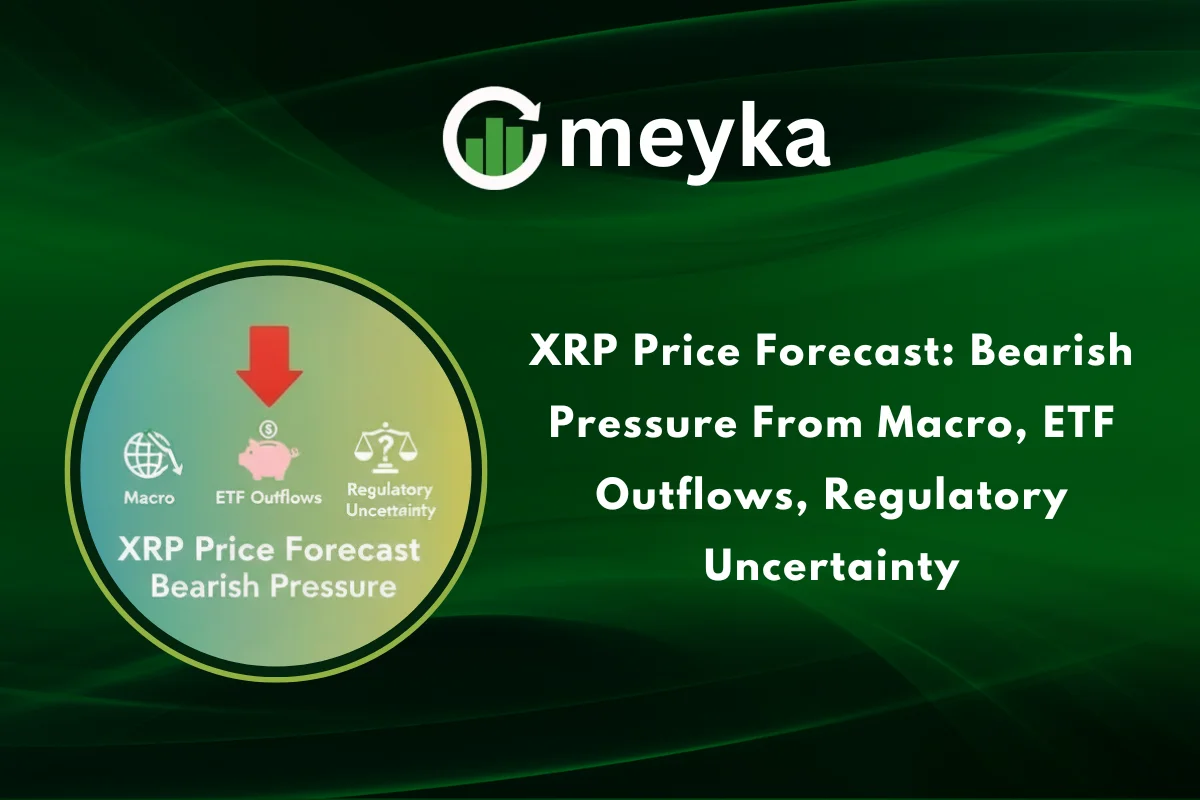
XRP Price Forecast: Bearish Pressure From Macro, ETF Outflows, Regulatory Uncertainty

The XRP Price forecast has shifted toward a more cautious outlook as macroeconomic headwinds, ETF outflows, and ongoing regulatory uncertainty combine to weigh on confidence in Ripple’s native token. Investors in crypto markets are navigating a complex landscape where global liquidity, institutional demand, and legal clarity all play significant roles, and recent trends suggest that XRP is under pressure despite pockets of support from institutional products such as ETFs.

Current Market Context for XR

After periods of strong performance fueled by optimism around ETF approvals and regulatory progress, XRP’s price territory has become more challenging. Recent data shows that institutional investors appear to be shifting capital out of XRP exchange-traded products, with outflows rising and contributing to downward momentum. These withdrawals reflect a broader risk-off sentiment across crypto markets, where macroeconomic uncertainty makes speculative assets like XRP more vulnerable.

Global macroeconomic conditions also remain a central factor in shaping the XRP price forecast. Central banks in major economies have maintained relatively tighter monetary policy stances, reducing expectations of near-term interest rate cuts. This tightening reduces liquidity in financial markets and decreases risk appetite, making traders more cautious about allocating capital to digital assets.

ETF Outflows and Institutional Sentiment

Exchange-traded funds tied to XRP have become an important barometer of institutional demand since their launch. While some ETFs had attracted net inflows shortly after debuting, the recent trend of net outflows, totaling tens of millions in some weeks, suggests that institutional interest is not yet stable. When significant ETF products experience outflows, it signals that large holders are either reallocating capital or reducing exposure due to rising uncertainty or broader market shifts.

This shift has a direct impact on the XRP Price because institutional participation tends to support price stability and reduce volatility. When demand decreases through outflows, selling pressure increases, making it more difficult for XRP to sustain or break higher price levels. Analysts have noted that unless ETF flows reverse or stabilize, short-term downside risks could grow, particularly if key support levels near $2 fail to hold.

Regulatory Uncertainty Continues to Weigh on XRP

One of the biggest long-term risks to XRP remains regulatory uncertainty, especially in the United States. Despite the resolution of Ripple’s high-profile lawsuit with the SEC providing some clarity, additional legislation such as crypto market structure bills has faced repeated delays in Congress. These legislative bottlenecks create ambiguity around how digital assets like XRP will be treated and regulated, which dampens institutional confidence and slows investment decisions.

The crypto market’s sensitivity to regulatory signals is heightened for XRP due to its history and use case. Legal outcomes and clarity in policy can drastically influence institutional participation and long-term valuation models. Without definitive regulatory frameworks, investors must price in greater uncertainty, which often translates into bearish pressure on the XRP Price in the near term.

Macro Headwinds and Risk Appetite

In addition to regulatory issues, macroeconomic trends are playing a significant role in shaping price dynamics for XRP and other digital assets. Strong economic data in major economies like the United States has reduced expectations of sharp interest rate cuts, and central bank caution has kept risk-free yields relatively attractive compared with speculative assets. This environment tends to reduce capital flow into risk-related instruments such as cryptocurrencies, including XRP.

Moreover, geopolitical uncertainty and policy risks in global markets can further depress investor sentiment. Risk assets generally suffer when traders seek safety in government bonds or traditional equities with defensive profiles, and digital assets often see higher volatility and sharper corrections during these periods.

Technical and Price Action Considerations

From a technical perspective, XRP has faced difficulty breaking above key psychological levels in recent months. Prices falling below support points near $2 signal potential continuation of bearish sentiment, and analysts warn that failure to reclaim these levels could open the door to deeper correction toward lower price areas, such as $1.60 or even closer to $1 if negative momentum persists.

Some on-chain and trend indicators also reflect elevated volatility and structural challenges. For instance, extended trading in bearish channels or breaks below trend support lines suggest that momentum remains tilted toward sellers in the short term. This technical backdrop reinforces the idea that macro and regulatory pressures are not just narrative risks but have translated into measurable price signals for XRP.

Potential Long-Term Scenarios

While the XRP Price forecast leans bearish in the near term, there are potential catalysts that could alter the trajectory over a longer horizon. One is improved clarity in regulatory frameworks, which could reduce uncertainty and attract renewed ETF inflows. Institutional participation in regulated products has the potential to significantly reduce circulating supply on exchanges and create a foundation for future price strength.

Another factor is broader adoption of XRP’s underlying technology in cross-border payments and financial infrastructure. If Ripple’s network use grows and on-chain activity increases, it could reshape sentiment and reduce correlation with macro risks. However, these are longer-term drivers that may take time to outweigh the immediate headwinds.

What This Means for Investors

For those watching cryptocurrency markets or using stock research principles to assess risk, the current outlook for XRP underscores the importance of considering macro factors, regulatory trends, and institutional behavior when evaluating digital assets. Unlike traditional equities or AI stocks, cryptocurrencies can react sharply to changes in investor sentiment and policy signals, making them more sensitive to liquidity and risk appetite shifts in capital markets.

Investors focused on the XRP Price should monitor ETF flow data, regulatory announcements, and global liquidity conditions as part of a holistic research strategy. These variables can move price behavior more dramatically than simple technical signals, particularly in periods of heightened uncertainty.

Frequently Asked Questions

What is the current outlook for the XRP price forecast?

The XRP Price forecast is currently bearish in the short term due to macroeconomic headwinds, ETF outflows, and regulatory uncertainty, with downside risks if key support levels fail to hold.

How do ETF outflows affect XRP’s price?

ETF outflows reduce institutional demand and increase selling pressure, making it harder for XRP to sustain or break higher price levels, which contributes to bearish sentiment.

Why does regulatory uncertainty impact XRP more than other crypto assets?

Regulatory uncertainty has a larger effect on XRP because its valuation and institutional products are closely tied to clear legal frameworks, and delays or ambiguity in policy slow investment decisions and heighten risk.

Disclaimer:

The content shared by Meyka AI PTY LTD is solely for research and informational purposes. Meyka is not a financial advisory service, and the information provided should not be considered investment or trading advice.

Similar Posts

Leave a Reply

Your email address will not be published. Required fields are marked *